5 ways our health care system has become utterly insane
We could be on the verge of ending the longest government shutdown in U.S. history—though nothing is guaranteed.
While Congress debates whether to extend subsidies for the Affordable Care Act (ACA) coverage, Americans with all types of insurance are bracing for higher premiums, narrower networks, and more impossible choices.
So, to me, the debate in Washington is far too small. The real story isn’t just whether subsidies stay or go—it’s how completely insane our health care system has become, and whether there will be a serious effort to address underlying costs in the system.
I know juuussstttt enough to get in trouble, so I partnered with the incredible Hayden Rooke-Ley, who is a leading national policy expert in this area, to break down the five ways the entire system has gone off the rails.
Let’s dig in.
1. Costs vs. wages: A 20-year disconnect.
Over the past two decades, the cost of employer-sponsored health insurance—how the vast majority of privately insured Americans obtain their health care—has skyrocketed. Premiums, deductibles, and out-of-pocket costs have all soared—far faster than wages.
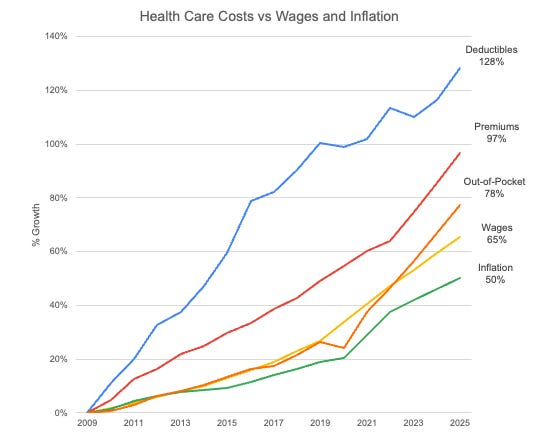
This widening gap means workers earn less, even when their salaries rise on paper. Every dollar going to premiums is a dollar not going to rent, groceries, or childcare.
And the human toll is clear. One in three Americans has medical debt, and more than half worry they’ll fall into debt any time they use the health care system. That fear changes behavior: people delay appointments, skip medications, or avoid care altogether.
Medical debt is now the most common form of debt in collections ahead of credit cards, utilities, or personal loans. Nearly 60% of those in medical debt have insurance.
2. We pay the most and get the least.
The United States spends far more on health care than any other wealthy country yet achieves worse outcomes, less access, and a more demoralized workforce.
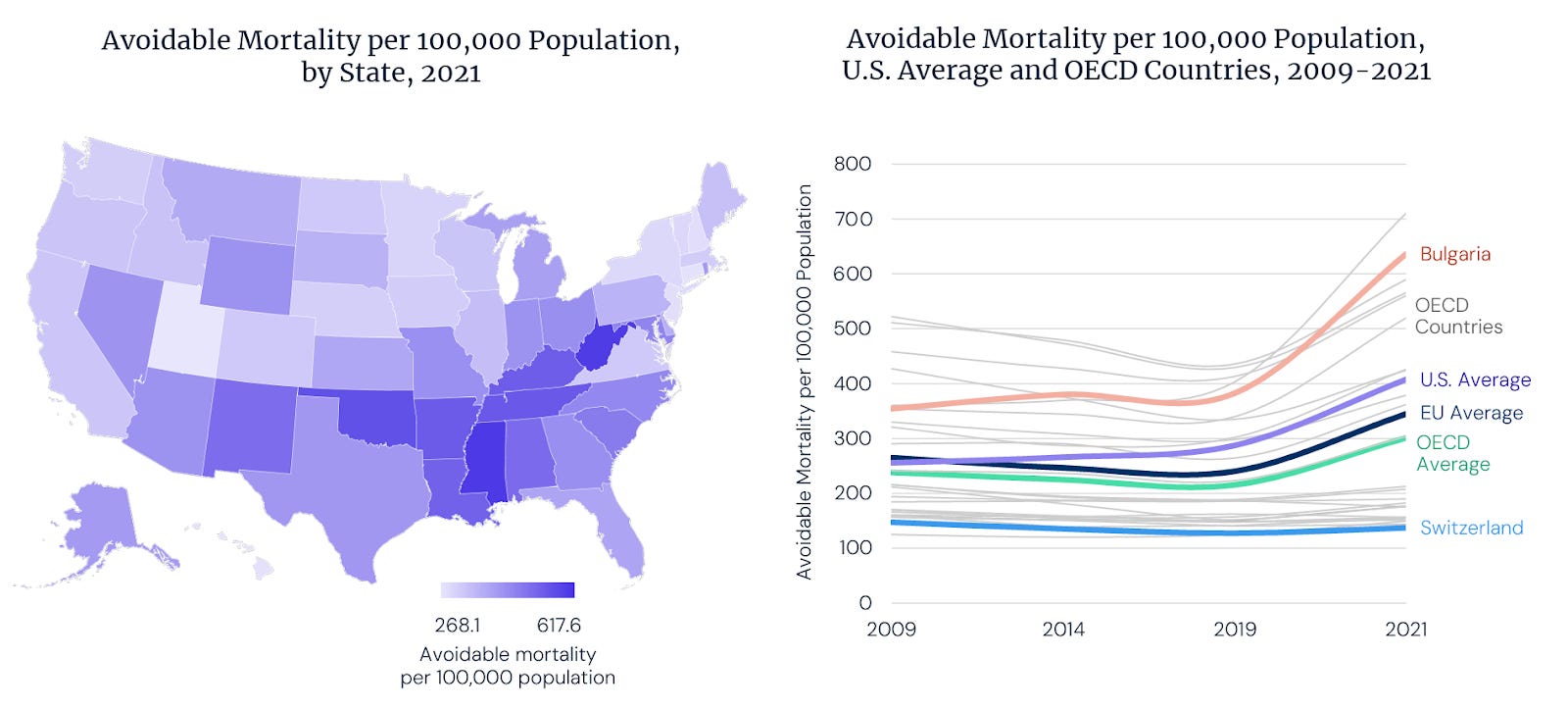
Outcomes: Despite record spending, Americans live shorter, sicker lives than peers in Europe, Canada, or Japan. Infant mortality, maternal mortality, and chronic disease rates all rank near the worst among high-income nations. A key reason is that we pour money into specialty medical services while underinvesting in prevention, such as primary care and social supports like housing and nutrition.
Access: Critics often argue that
...This excerpt is provided for preview purposes. Full article content is available on the original publication.