Growth is the answer
Deep Dives
Explore related topics with these Wikipedia articles, rewritten for enjoyable reading:
-
Urban sprawl
13 min read
The article argues that single-family sprawl places greater burden on city services than dense development. The Wikipedia article on urban sprawl covers the economic, environmental, and infrastructure costs that support this claim.
-
Stadium subsidy
9 min read
The article mentions that virtually every economist agrees sports stadium subsidies are bad policy. This Wikipedia article explains the economic research behind this consensus and why cities still pursue these deals despite evidence.
On the eve of Prop Q, an anonymous real estate account on Twitter offered a pretty good take on the road forward for the city of Austin:
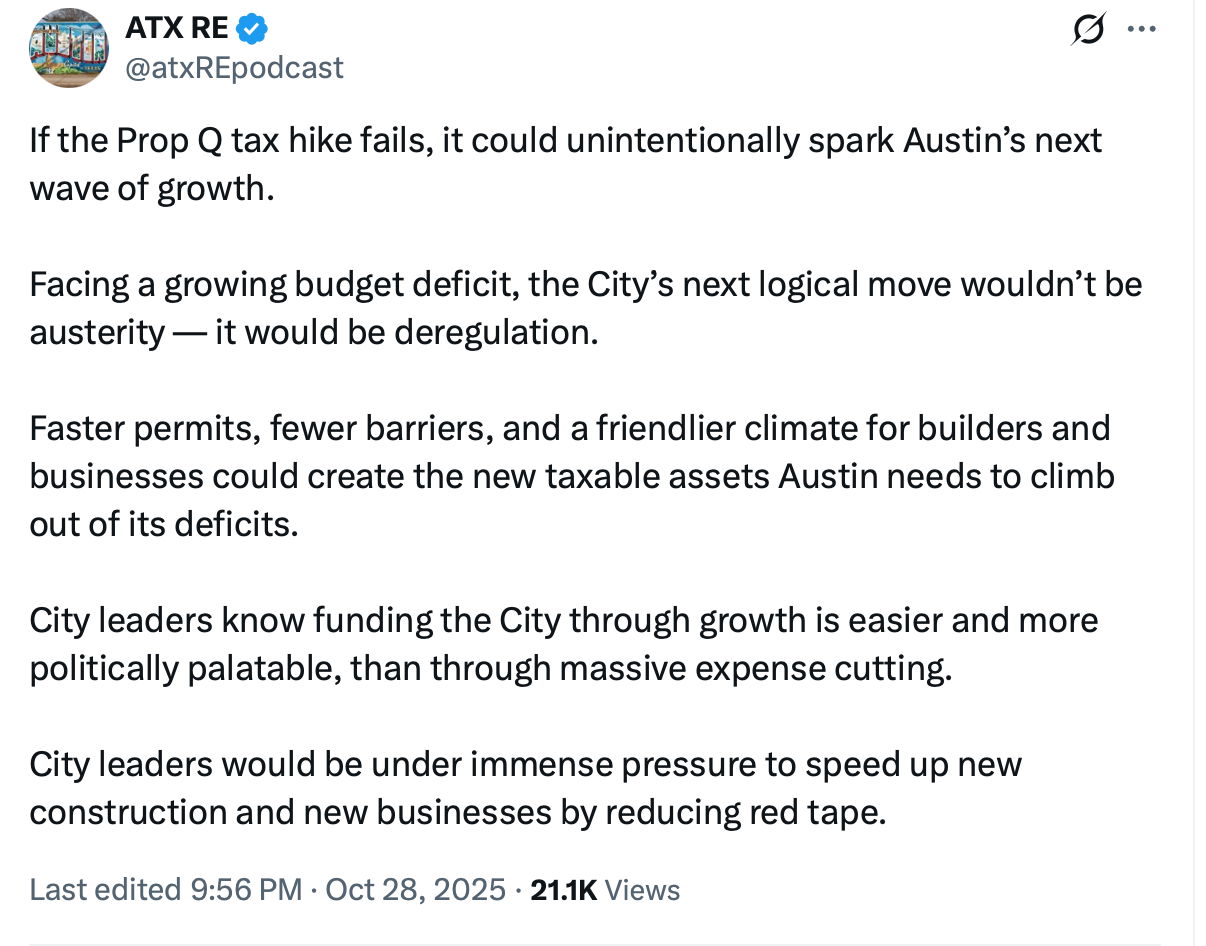
To be clear, city regulations are not the reason that development in Austin has slowed down in the last couple years. But in all likelihood, things will eventually heat up again in the Austin metro area. And when that happens, the city of Austin should try to get as big of a share of the regional growth as possible.
It's funny to think how rare it has been to hear elected officials articulate the truism that economic growth is a good thing. Whether you're a progressive who wants money for public services or a conservative who wants money for cops and low taxes, economic growth is obviously a part of the solution.
There are some people who actually oppose growth and have the balls to say so. That was essentially the gist of the 1970's environmental movement from which Save Our Springs sprung. They sincerely believed that economic growth and population growth were a threat to the environment, and if they couldn't stop it globally, the least they could do is stop it locally.
But most people aren't like that. Not if they're being honest with themselves. Workers want job opportunities and pay raises. Businesses want customers. Nonprofits want donors. Local governments want tax revenue.
To be clear, a pro-growth agenda does not need to entail corporate welfare. Indeed, I think it shouldn't! For instance, virtually every economist agrees that subsidies for sports stadiums are a bad idea. A pro-growth agenda in Austin need not involve Kirk Watson jetting around the globe offering handouts to Fortune 500 companies.
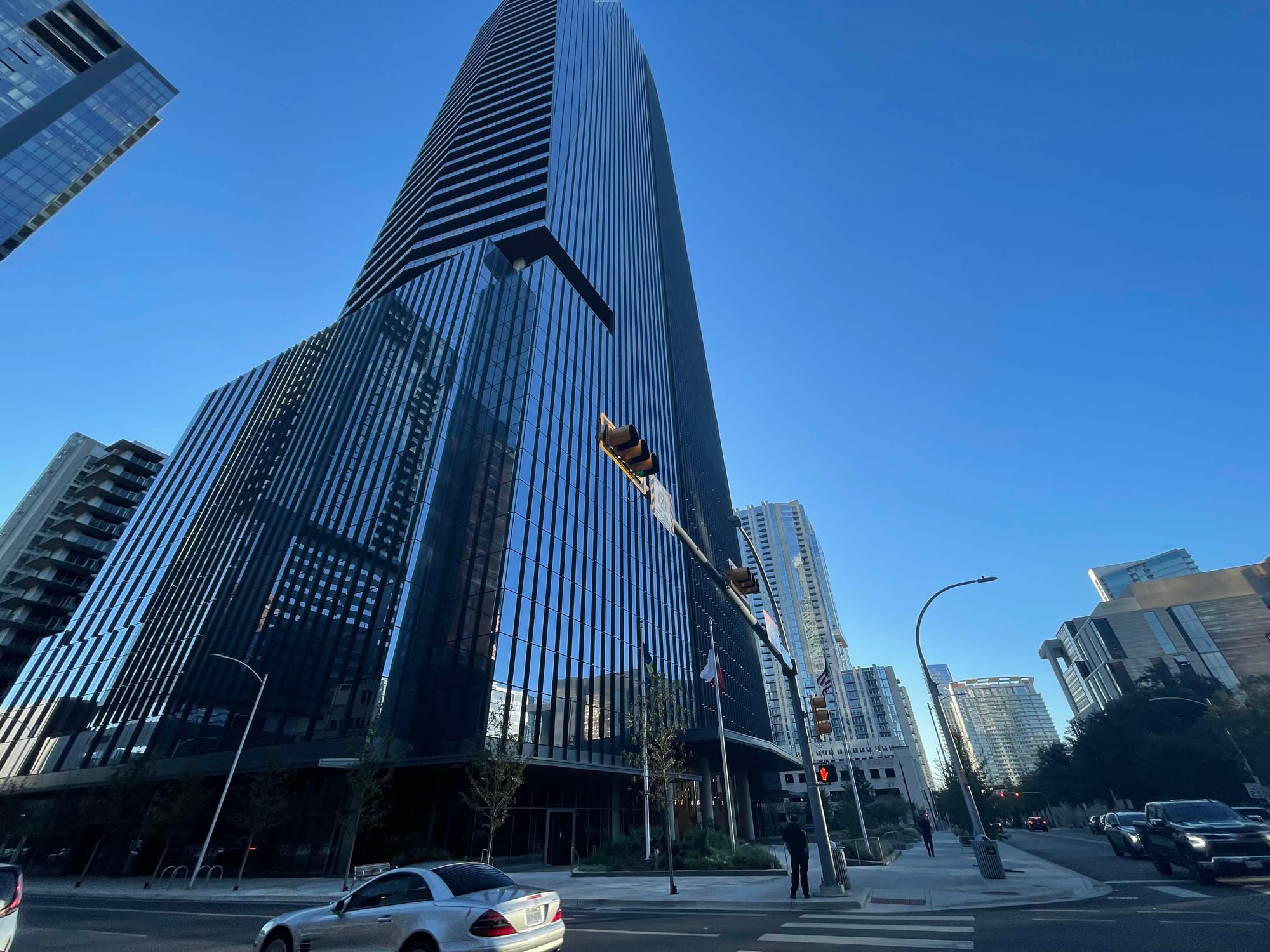
The first part of a sensible pro-growth agenda is to simply allow for the highest and best use of existing land. If there is a market for a high-rise on a piece of property in Central Austin, let the market build it!
The chorus of anti-growth activists would have you believe that dense development is a burden on city infrastructure, but the truth is the exact opposite. Single-family sprawl actually places the greatest burden on city services.
That is the contradiction at the heart of the West Austin conservative/NIMBY politics that are currently embodied by Council Member Marc Duchen. It wants lots of well-maintained and generously subsidized public spaces (Save Muny!!), lots of highly-paid ...
This excerpt is provided for preview purposes. Full article content is available on the original publication.