How Should We Live in These Wildly Uncertain Times?
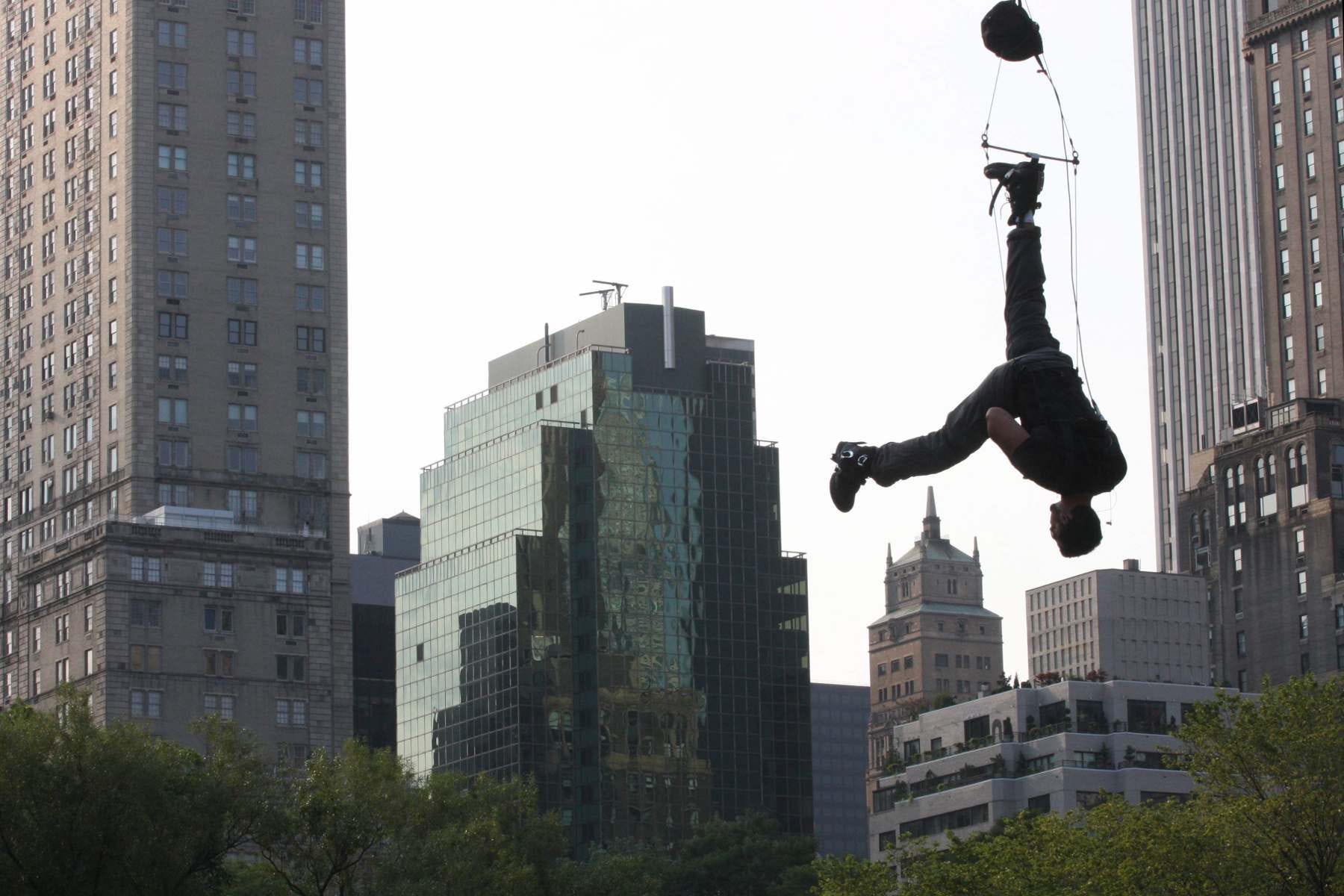
David Blaine hangs upside down in New York. (AP Photo/Tina Fineberg)
This story was originally published on thewalrus.ca
There is almost nothing as captivating as a good magic trick. Watching something that defies gravity, odds, and the basic principles of physics and mathematics happen before our very eyes gives us an infusion of awe that feels incredible. Even knowing that it is an illusion, a well-executed trick, can cause a rush of astonishment that titillates both mind and body; it is a flat-out betrayal of expectations that can raise our heart rate in anticipation and, perhaps, a little fear, yet it comes at no personal cost to our well-being.
And there is almost no one who captivates audiences with a good magic trick quite like David Blaine. Arguably the most renowned magician of his time, he can make his audience believe that it can’t be an illusion—his tricks appear as real as they are inconceivable. Blaine was four years old when he first felt the spark of awe for magic. Standing on a subway platform in Brooklyn with his mother, a nearby busker performing simple pocket magic piqued the young boy’s curiosity. A few decades later, his own spectacular skill at sleight of hand would make Blaine a household name. Card tricks performed on the street in front of a dozen or more witnesses tickled our wits, seeming to invert the rules of logic. An old-fashioned illusionist with a modern-day film crew to showcase his feats, Blaine quickly became the new face of magic.
In 1999, when he was buried alive for seven days in a plastic box, he took his game to another, Houdini-esque level: dramatic performance artist. Since that record-breaking feat, Blaine has orchestrated countless stunts, each more high risk and unimaginable than the one before it. He stood for thirty-five hours straight on a fifty-five-centimetre-wide pillar rising thirty metres in the air above Bryant Park in New York City. He spent forty-four days in self-imposed starvation inside a transparent Plexiglas case, measuring one metre by two metres by two metres, suspended nine metres in the air over the River Thames in London. He has swallowed (and regurgitated) fish, engagement rings, needles, swords, nails, and a frog. He has floated more than seven kilometres above sea level by holding fifty-two colourful helium balloons, like a live-action remake of the animated film Up.
Is it
...This excerpt is provided for preview purposes. Full article content is available on the original publication.