Six Analytical Threads in Search of Useful Empirical Traction: On Karl Marx's 1859 "Preface"
Deep Dives
Explore related topics with these Wikipedia articles, rewritten for enjoyable reading:
-
Creative destruction
14 min read
The article explicitly contrasts Schumpeterian creative destruction with Marxian base-superstructure theory. Understanding Schumpeter's concept of how capitalism destroys and creates economic structures through innovation provides essential context for evaluating DeLong's argument that history shows 'rotating, sectoral upheavals' rather than synchronized revolutions.
-
Base and superstructure
13 min read
This is the central Marxist concept the article analyzes - the claim that economic relations (base) determine legal, political, and ideological institutions (superstructure). Deep understanding of this concept is essential for following DeLong's six-threaded analysis of Marx's 1859 Preface.
-
Socialism: Utopian and Scientific
11 min read
DeLong specifically references Engels' 1880 pamphlet as providing the rational argument for millenarian claims that Marx himself never set out. This work by Engels distinguishes 'scientific socialism' from earlier utopian socialism and is key to understanding the theological/eschatological dimension DeLong critiques.
Josef Schumpeterian creative-destruction vs. Karl Marxian base-superstructure: What history actually looks like as Marx’s 1859 vision promised imminent revolution followed by utopia, sketching six bold claims about how technologies drive economies drive societies. The evidence since 1870 points to rotating, sectoral upheavals—not synchronized social revolutions: sectoral churn and institutional lag. Historical materialism, soft-true; stage theory and millenarianism, not so much. Even stripped of millenarian theology of utopia, the Marxist apparatus explains far less than it promises…
Columbia’s Adam Tooze says this AM that he is thinking a lot about the 1859 Preface to Karl Marx’s abysmal A Contribution to the Critique of Political Economy.
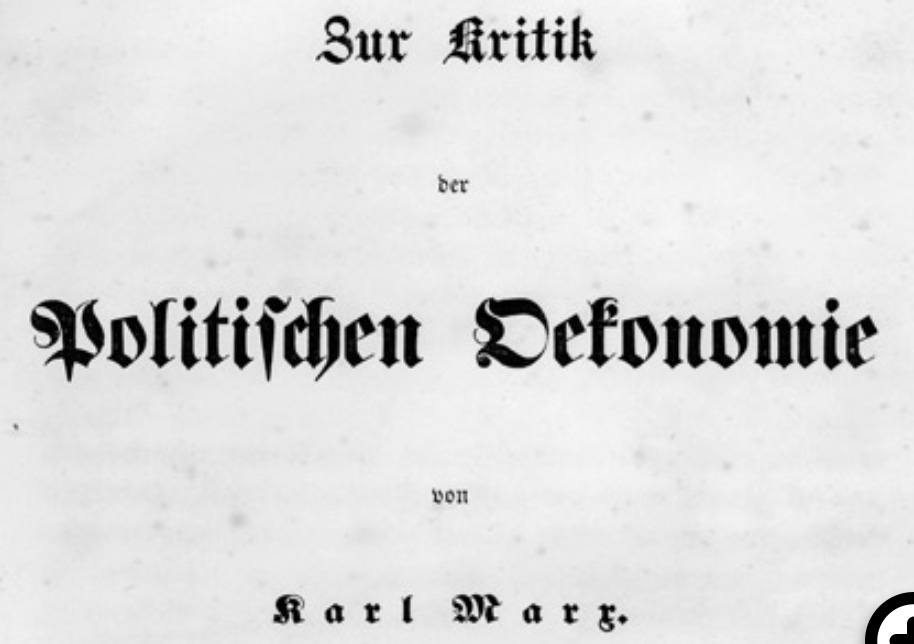
He does not say why:
...Adam Tooze: Top Links 976 <https://adamtooze.substack.com/p/top-links-976-ai-investment-surges>: ‘[I] keep thinking of this passage right now: Karl Marx 1859, Preface to A Contribution to the Critique of Political Economy: “In… existence, men… enter into definite relations… independent of their will… appropriate to… their material forces of production. The totality of these relations of production constitutes the economic structure of society… on which arises a legal and political superstructure and… forms of social consciousness.... It is not the consciousness of men that determines their existence, but their social existence that determines their consciousness.
At a certain stage of development, the material productive forces… come into conflict with… relations of production or… the property relations… framework…. From forms of development… these relations turn into their fetters. Then begins an era of social revolution. The changes in the economic foundation lead sooner or later to the transformation of the whole immense superstructure….
It is always necessary to distinguish between the material transformation of the economic conditions of production… and the legal, political, religious, artistic or philosophic—in short, ideological forms in which men become conscious of this conflict and fight it out…. This consciousness must be explained from the contradictions of material life….
No social order is ever destroyed before all the productive forces for which it is sufficient have been developed, and new superior relations of production never replace older ones before the material conditions for their existence have matured within the framework of the old society. Mankind thus inevitably sets itself only such tasks as it is able to solve, since closer examination will always show that the problem itself arises only when the material conditions for its solution are already present or at least in the course of formation.
This excerpt is provided for preview purposes. Full article content is available on the original publication.