Sam Altman Is the Christopher Columbus of Our Time
Deep Dives
Explore related topics with these Wikipedia articles, rewritten for enjoyable reading:
-
Voyages of Christopher Columbus
14 min read
The article draws extensive parallels between Columbus and Altman, but many readers may not know the specific details of Columbus's four voyages, including the Jamaica marooning incident and lunar eclipse manipulation mentioned in the article
-
Y Combinator
15 min read
Paul Graham's quote about Altman opens the article, and understanding Y Combinator's role in Silicon Valley and how Altman became its president provides essential context for his rise to power and influence
-
History of artificial intelligence
18 min read
The article references the AI landscape before ChatGPT, DeepMind's early work, and the pivot from research to consumer products - understanding this history illuminates why Altman's timing and strategy were significant
Hey guys, today we’re doing something special: I’m having a fellow Substack writer over at The Algorithmic Bridge. is the author of , a newsletter that explores the world via history, geography, astronomy, and mythology. Right now, he is in the middle of an ongoing series about Christopher Columbus.
He asked me to cross-post his essay on Columbus and Sam Altman—where he draws some uncanny parallels between the two—and I immediately said yes. You guys are going to love it. I won’t spoil the surprise, but I’ll say it’s a magnificent example of that aphorism commonly attributed to Mark Twain (possibly apocryphal): History doesn’t repeat itself but it often rhymes.
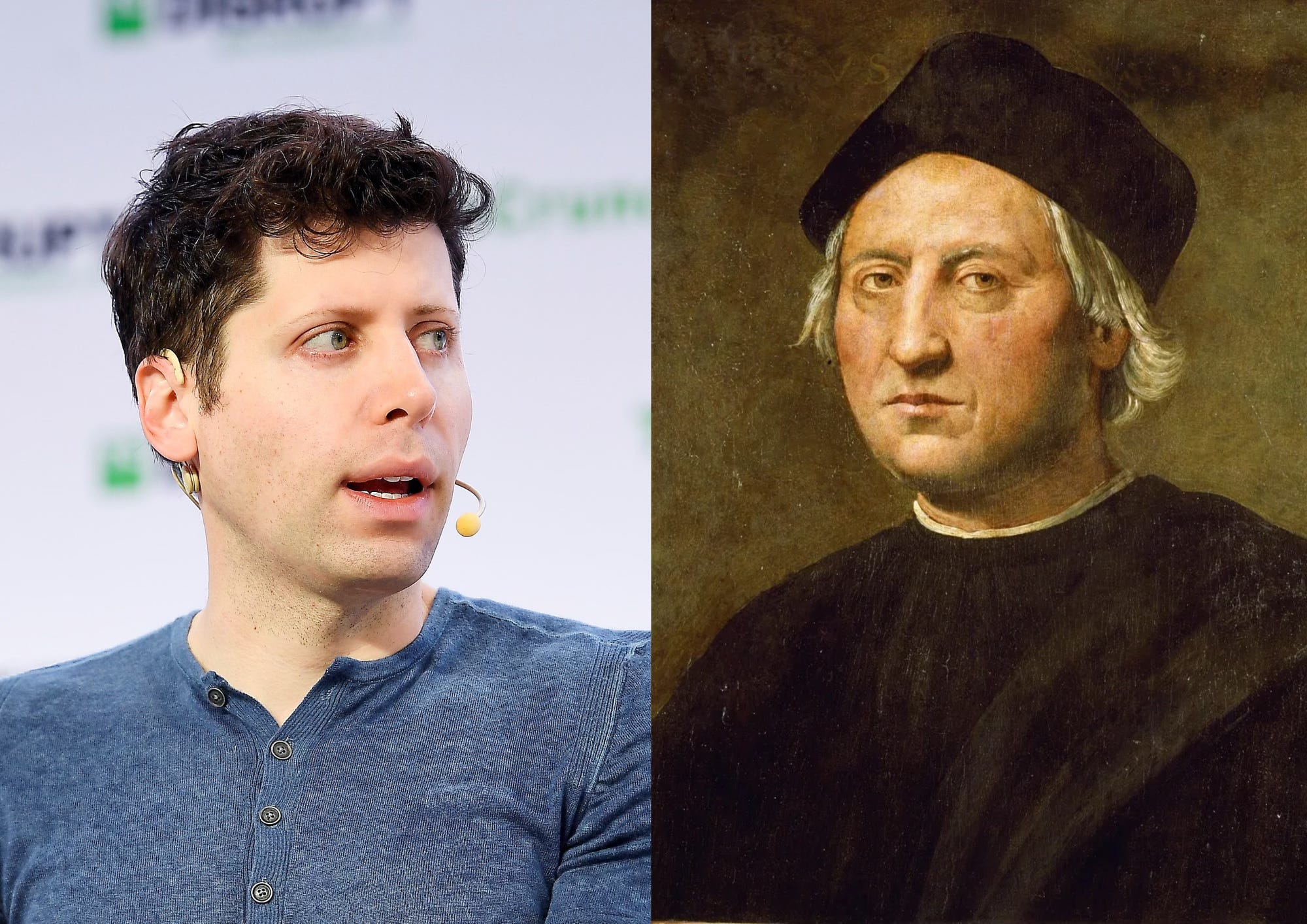
Paul Graham, legendary Silicon Valley investor and co-founder of Y Combinator, once said of Sam Altman, “You could parachute him into an island full of cannibals and come back in five years and he’d be king.” Such, according to Graham, was his “force of will”.
Graham’s description is reminiscent of another man with an iron resolution: the infamous Genoese explorer, Christopher Columbus, who in the early 16th century found himself in almost exactly this scenario. In 1503, on his fourth voyage to the Americas, Columbus became marooned on Jamaica after months of storms and woodworm had all but destroyed his ships. For an entire year, he survived that island, despite a mutinous crew and growing hostility from the native Taínos, who he claimed “ate men” (whether they were truly cannibals or not remains disputed). Such was Columbus’ unpopularity by this stage of his career that his fellow conquistadors on the nearby island of Hispaniola, upon hearing of the Genoese’s predicament, dallied for 12 months before sending a rescue party. Stricken with agonising gout and barely able to walk, Columbus survived two rebellions among his men and managed to thwart the Taíno attempt to starve him out. The locals did not make him king, but they came to believe him a servant of divine wrath after he used a lunar eclipse to terrify them into submission.
Since ChatGPT’s release in late 2022, and the ensuing explosion of interest and investment in artificial intelligence, much has been made of the man who has become the face of this emerging technology. But, as Alberto Romero has written, you cannot hope to understand Sam Altman, or any of the other AI builders, with an ordinary theory of mind. They are not ordinary people, motivated
...This excerpt is provided for preview purposes. Full article content is available on the original publication.