To Kheerganga and back
Deep Dives
Explore related topics with these Wikipedia articles, rewritten for enjoyable reading:
-
Hippie trail
15 min read
The article explicitly references the rise of the hippie trail as the transformative force that turned Kheerganga from a pilgrimage route into a tourist destination. Understanding this historical phenomenon of overland travel from Europe to South Asia provides crucial context for why Western backpackers and psytrance culture converged on the Parvati Valley.
-
Cedrus deodara
9 min read
The author describes deodar cedars fallen during monsoons as dramatic features of the trek, comparing them to 'ancient index fingers pointing out just how far there was to fall.' This species is the national tree of Pakistan and holds spiritual significance in Hinduism, adding depth to the forest landscape described.
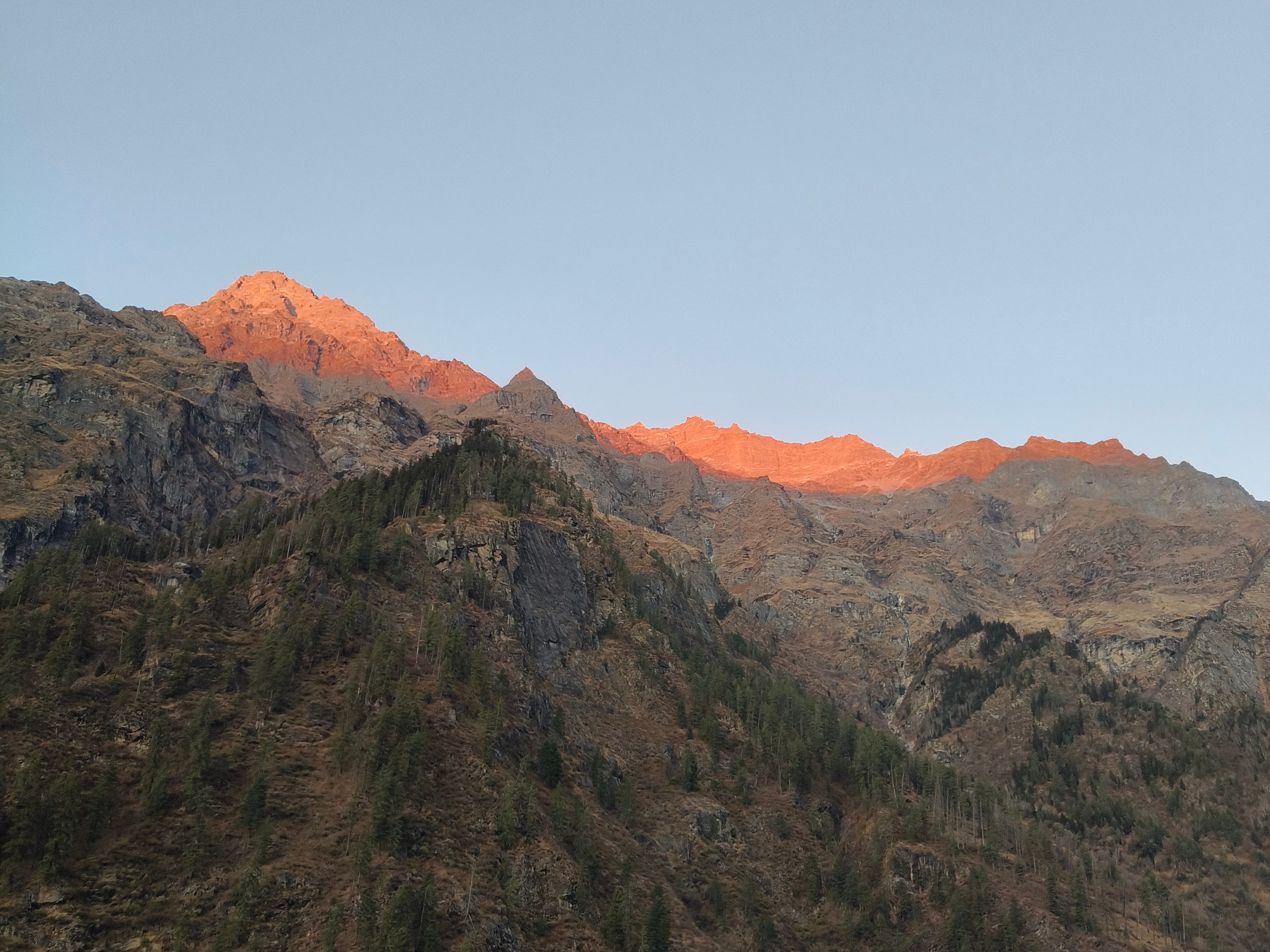
I am sitting in my hotel room in the Parvati Valley, a little down the road from the village of Pulga, watching the shadow of the mountains behind me inch down the side of those across the river. If you focus on a single point, such as a green-roofed house or a particularly notable tree, you can actually see the shadow moving, so rapid is the sunrise here. I am waiting for my next meeting to begin and am in the meantime working through my emails. I have just returned from a trek to Kheerganga and my legs, particularly my knees, are on fire. The things we do for our writing.
It has been slow going on the writing front since I arrived in India two weeks ago. I am still getting used to the pre-dawn starts, especially here in the chill of the mountains. While finishing work at lunchtime is a blessing, the impulse is to walk around and explore, not to hole up somewhere with a notebook, even when, as in these parts, there is almost nothing else to do. I am working on several long-form essays, but they are inching along like the shadow on the mountains, only not as quickly.
Part of the problem is that, whether because I’m tired by three or simply out of practice, my observational powers haven’t felt as acute or as fired up as they have been on previous visits. This is almost shameful in context, given the sheer richness and abundance of detail on offer. From the Hebrew-language stickers mourning fallen IDF soldiers, which festoon nearly every café in the valley, to the riot of hues that the mountains assume in the fading light of day, there is always something to notice and write about. The other problem is that the Parvati Valley section of my next novel is the least fleshed-out of the five. Although I have been taking a lot of notes, I hadn’t, until this past weekend, had any real idea where they fit, or how to start turning them into something useful.
Going to Kheerganga, then, proved necessary in more ways than one.
We started at Pulga Dam on Saturday morning. A milky turquoise lake of fabric softener, the reservoir is part of the Parbati-II Hydroelectric Project, which became fully operational in April this year. As I sat waiting for my guide to arrive, groups of
...This excerpt is provided for preview purposes. Full article content is available on the original publication.