Trump's Retreat Still Leaves Tariffs at 90-Year Highs
Thanks for reading! If you haven’t subscribed, please click the button below:
By subscribing, you’ll join over 65,000 people who read Apricitas weekly!
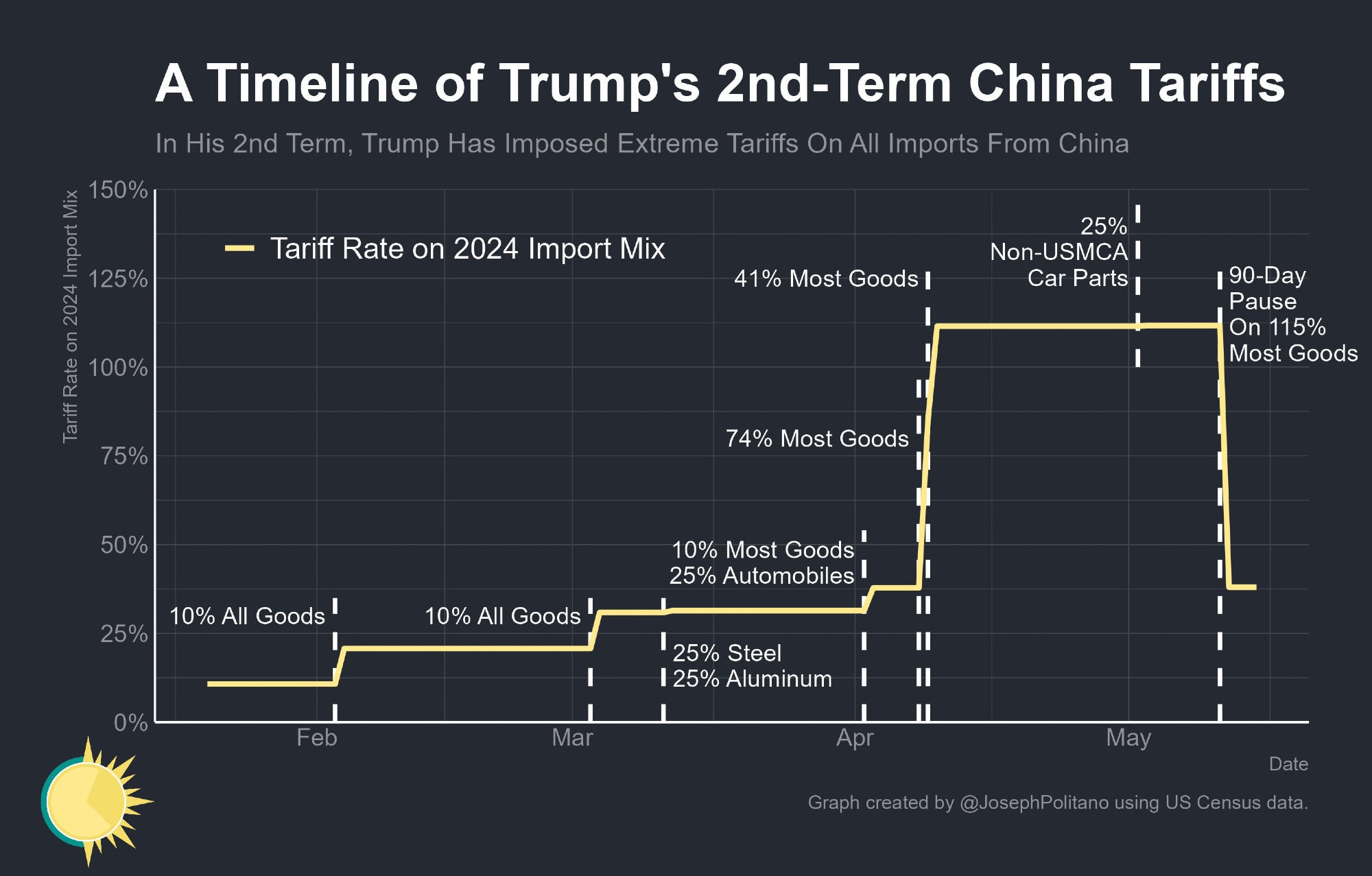
Last week, Donald Trump made the single-largest walkback of his trade war so far by agreeing to lower the tariffs on most Chinese goods by 115% as part of a 90-day “pause” for negotiations. Accounting for exceptions and sector-specific tariffs, the effective US tariff rate on China has dipped 74 percentage points, essentially bringing US policy back to the status quo of April 5th. Chinese imports now “only” face the 20% China-specific tariffs implemented in February/March, plus the 10% April 2nd tariffs imposed on nearly-all overseas imports, plus the Section 301 China tariffs that have persisted since Trump’s first term, plus sectoral tariffs on all imports of steel/aluminum/car parts/etc. In return, the US got no major concessions from the Chinese—their tariffs on US exports will come down, but remain 10% higher than pre-April, and Xi Jinping didn’t even have to symbolically lower tariffs on beef and ethanol like the UK did.
This is the largest easing of trade restrictions since Trump first began his China trade war more than seven years ago, bringing tariffs on the PRC down from “near-total embargo” levels to merely “extremely prohibitive” levels. Indeed, tariffs are now low enough to allow a significant amount of US-China trade to flow, especially given that companies will certainly take advantage of the pause by stocking up on necessary imports. Still, even after this announcement, Trump has imposed more tariffs on China than during his entire first term, which “only” saw an effective 16 percentage point increase in tariff rates compared to the 28 percentage points added through May.
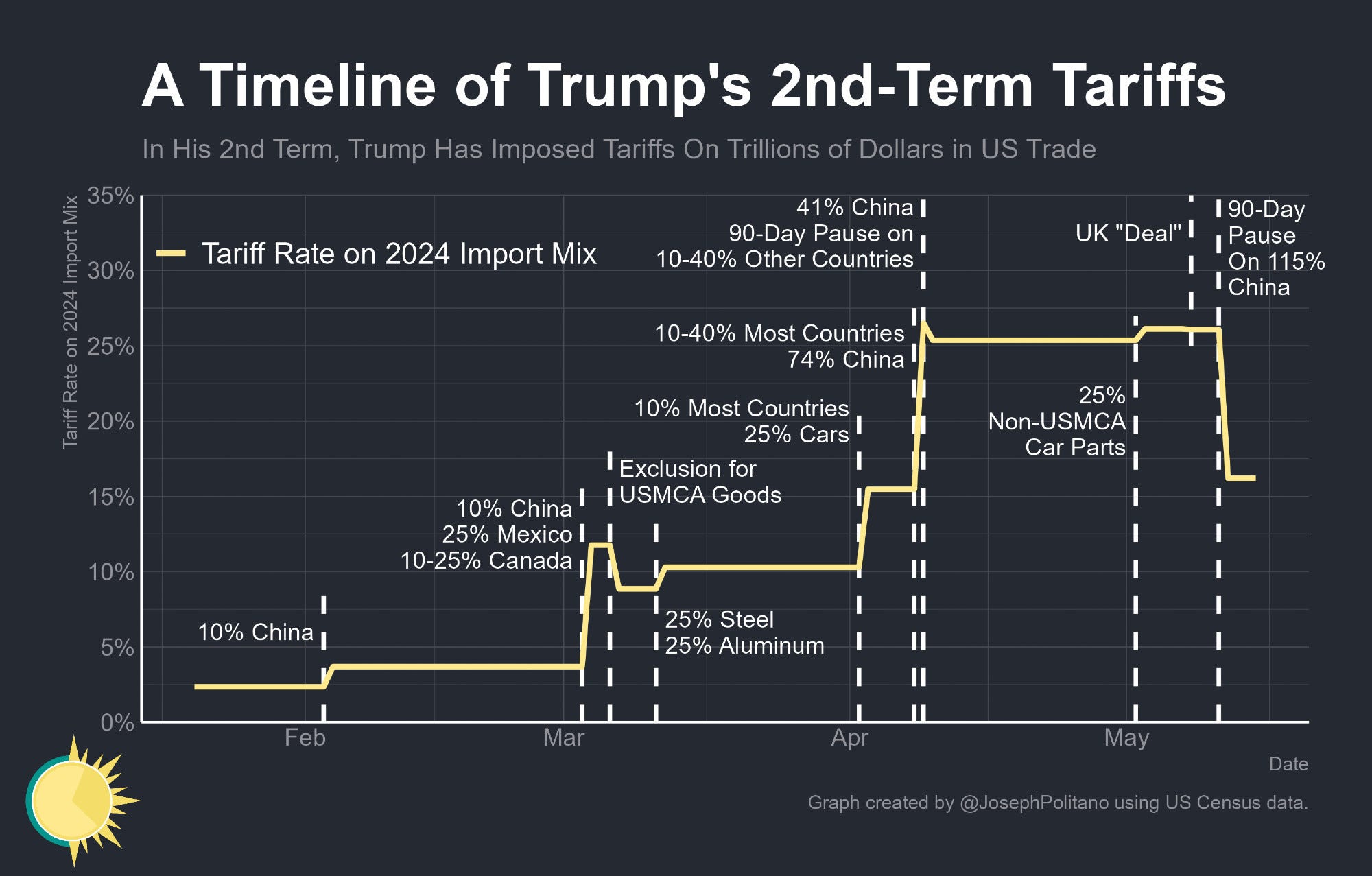
In total, this still leaves overall US tariff rates roughly 8 times higher than before his Presidency, and relative US protectionism has only declined to “highest since the Great Depression” territory. That’s before accounting for the bevy of sector-specific tariffs slated to come online over the next few months, any possible unpausing of the April 2nd country-level tariffs, and any further re-escalation with China. Indeed, Treasury Secretary Scott Bessent described current China tariffs as a “floor” and the 54% tariffs announced through April 2nd as a “ceiling,” implying that tariffs on China can also only go up from here. In other words, America continues to face its worst trade shock in a generation, even if
...This excerpt is provided for preview purposes. Full article content is available on the original publication.