Jia Qingguo: a rare opening for steadier China–U.S. relations in 2026
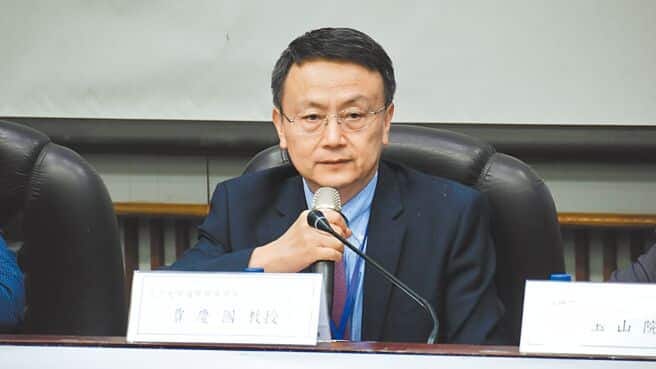
Tariffs have dominated Trump’s second-term China policy, but the bigger surprise, Jia Qingguo argues, is the administration’s effort to keep other flashpoints off the agenda and its stated willingness to cooperate with China, producing a “fragile stability” in bilateral ties, says Jia Qingguo, member of the Standing Committee of the National Committee of the Chinese People’s Political Consultative Conference (CPPCC), Professor and Director of the Institute for Global Cooperation and Understanding (IGCU), Peking University. In a recent article, Jia warns that this stability can be easily disrupted by Capitol Hill, U.S. bureaucrats, allies, or Taiwan, and sets out measures to keep tensions from spilling into crisis as the two heads of state prepare for renewed diplomacy in 2026.
The article was published on the afternoon of 4 February on IGCU’s official WeChat blog and reposted by the Centre on Contemporary China and the World (CCCW) at the University of Hong Kong. It appeared before Xi Jinping and Donald Trump’s latest phone call, held on the evening of 4 February 2026.
According to the IGCU post, the article likely first appeared in Global Economic Governance Observations 全球经济治理观察, a publication of the Global Economic Governance 50 Forum (GEG50), a think tank affiliated with Tsinghua University’s PBC School of Finance.
Jia reviewed and revised the following translation before publication.
贾庆国:脆弱的稳定——特朗普第二任期中美关系回顾与展望
Jia Qingguo: Fragile Stability—A Review and Outlook of China-U.S. Relations During Trump’s Second Term
One year into Trump’s second term, China–U.S. relations have been marked by turbulence, repeatedly nearing the brink of confrontation. Yet through sustained efforts on both sides, the two countries not only defused these flashpoints but also held a leaders’ summit. They agreed to suspend the implementation of proposed high tariffs on each other’s goods and reached an understanding on Trump’s planned visit to China in April 2026. How should the current state of China–U.S. relations be assessed? What are the prospects going forward? And what should both countries do to steer ties towards stable, healthy development? These are questions drawing widespread attention.
I. A close call: China–U.S. relations over the past year
Unlike Trump’s first term, his second has seen China–U.S. relations move from turbulence to stabilisation. Soon after taking office, the Trump administration launched an aggressive tariff war against China and other countries. China responded with resolute countermeasures, and the two sides traded blows until they announced tariffs as high as 145% (U.S.) and 125%
...This excerpt is provided for preview purposes. Full article content is available on the original publication.