#59: ‘Sans Soleil’: The Reveal discusses all 100 of Sight & Sound’s Greatest Films of All Time
On December 1st, 2022, Sight & Sound magazine published “The Greatest Films of All Time,” a poll that’s been updated every 10 years since Bicycle Thieves topped the list in 1952. It is the closest thing movies have to a canon, with each edition reflecting the evolving taste of critics and changes in the culture at large. It’s also a nice checklist of essential cinema. Over the course of many weeks, months, and (likely) years, we’re running through the ranked list in reverse order and digging into the films as deep as we can. We hope you will take this journey with us.
Sans Soleil (1982)
Dir. Chris Marker
Ranking: #59
Previous ranking: #69 (2012)
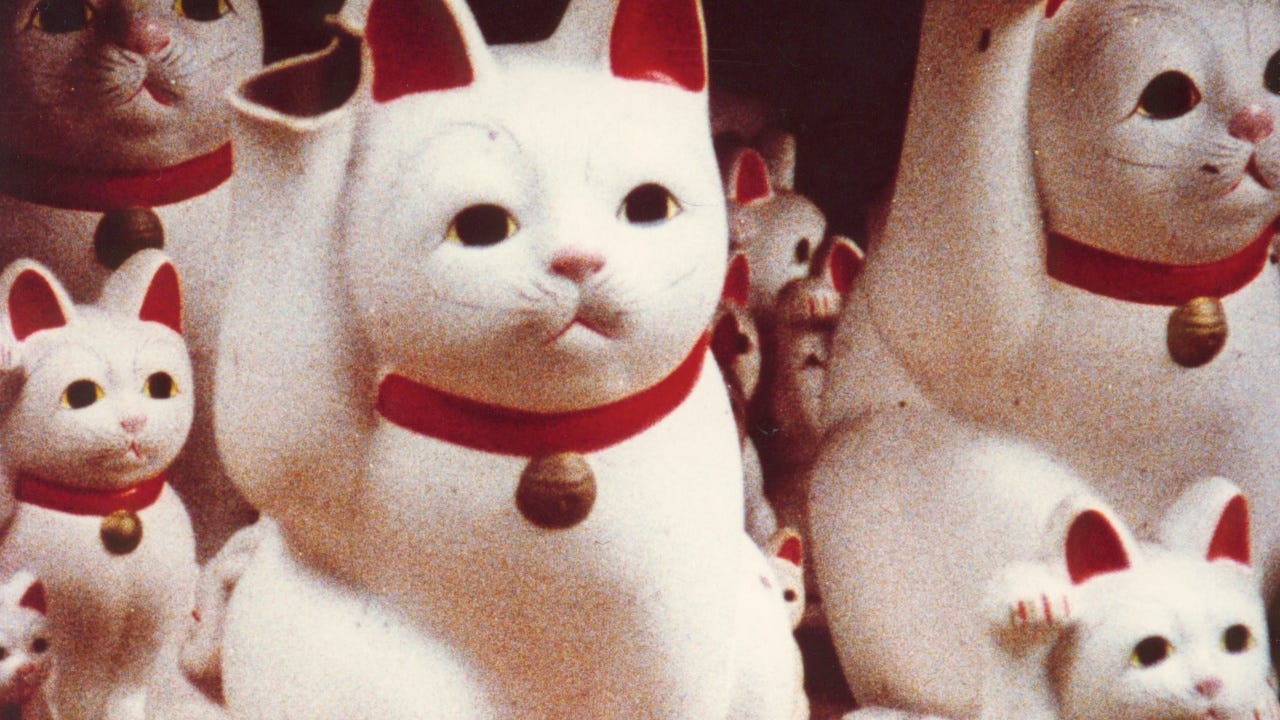
Premise: Part documentary, part meditation on time and memory, and part sketchbook for a film that will never be made, Chris Marker’s 1982 film features footage shot in Japan, Iceland, San Francisco, Guinea-Bissau, Cape Verde, and elsewhere, all of it framed as recollections sent to the film’s narrator (Alexandra Stewart, in the film’s English-language version) by a filmmaker named Sandor Krasna. Krasna’s letters offer his observations on everything from the revolution that ended Portuguese rule in Guinea-Bissau to Japanese horror movies to the significance of a pair of dogs frolicking on the beach. Other topics include Alfred Hitchcock’s Vertigo, a science fiction film about a time traveler from the year 4001, and Krasna’s favorite animals: owls and cats, a fondness he shares with Marker.
Keith: Where to start with Sans Soleil? It’s tempting to call it an overwhelming experience. Marker throws out one challenging idea after another amidst a steady procession of arresting images, often accompanied by memorable quotes. (No stranger to the world of political activism, Marker has a gift for aphorisms. A favorite: “Who remembers all that? History throws its empty bottles out the window.” Another: “Video games are the first stage in the plan for machines to help the human race. The only plan that offers a future for intelligence.”) But Sans Soleil is anything but intimidating. It’s a film of serious ideas that features a handful of horrifying images, but there’s also a sense of lightness, sometimes playfulness, to it. In one scene, for instance, Marker cuts footage of dozing passengers on a Japanese train with images of horror movies. It beautifully captures the idea of movies being the visual realization of a culture’s collective unconscious in a way
...This excerpt is provided for preview purposes. Full article content is available on the original publication.