A Fossil Fuel Phase-Out for Colombia: Tread with Caution
Colombia has recently made news as one of the fossil fuel-dependent countries that are committed to a fossil fuel phase-out.
This is a monumental task. In 2023, about 50% of Colombia’s export revenue came from fossil fuels, notably oil and coal. Despite this, the government under President Gustavo Petro has announced a range of initiatives to reduce its production and consumption of fossil fuels.
Upon taking office in August, President Petro declared that Colombia would cease signing new oil and gas exploration contracts. Though this initiative takes the risk in sacrificing the already declining oil revenues in the country, it aims to encourage investments in cleaner energy sources.
In December 2023, Colombia became the first major fossil-producing nation to join the Fossil Fuel Non-Proliferation Treaty Initiative. Colombia’s decision was delivered at COP 28 in Dubai, where Petro and other world leaders uniformly joined together to spearhead a global transition away from coal, oil and gas.
Additionally, the Petro administration has unveiled a comprehensive $40 billion plan to facilitate Colombia’s energy transition. This strategy includes investments in renewable energy, sustainable tourism, and nature restoration, aiming to diversify the economy and reduce the country’s overall reliance on its fossil fuel reserves. This transition plan mobilizes investments from both the public and private sectors, with the United Nations (UN) and the Inter-American Development Bank being key actors in financing this initiative.
In what follows, I use Colombia as a case study for what a fossil fuel phase-out could look like for a middle-income country with fossil fuel resources. I show that Colombia has many opportunities to reduce its fossil fuel use in the short and long run, but diversifying away from dependence on fossil fuel exports is a much more difficult task.
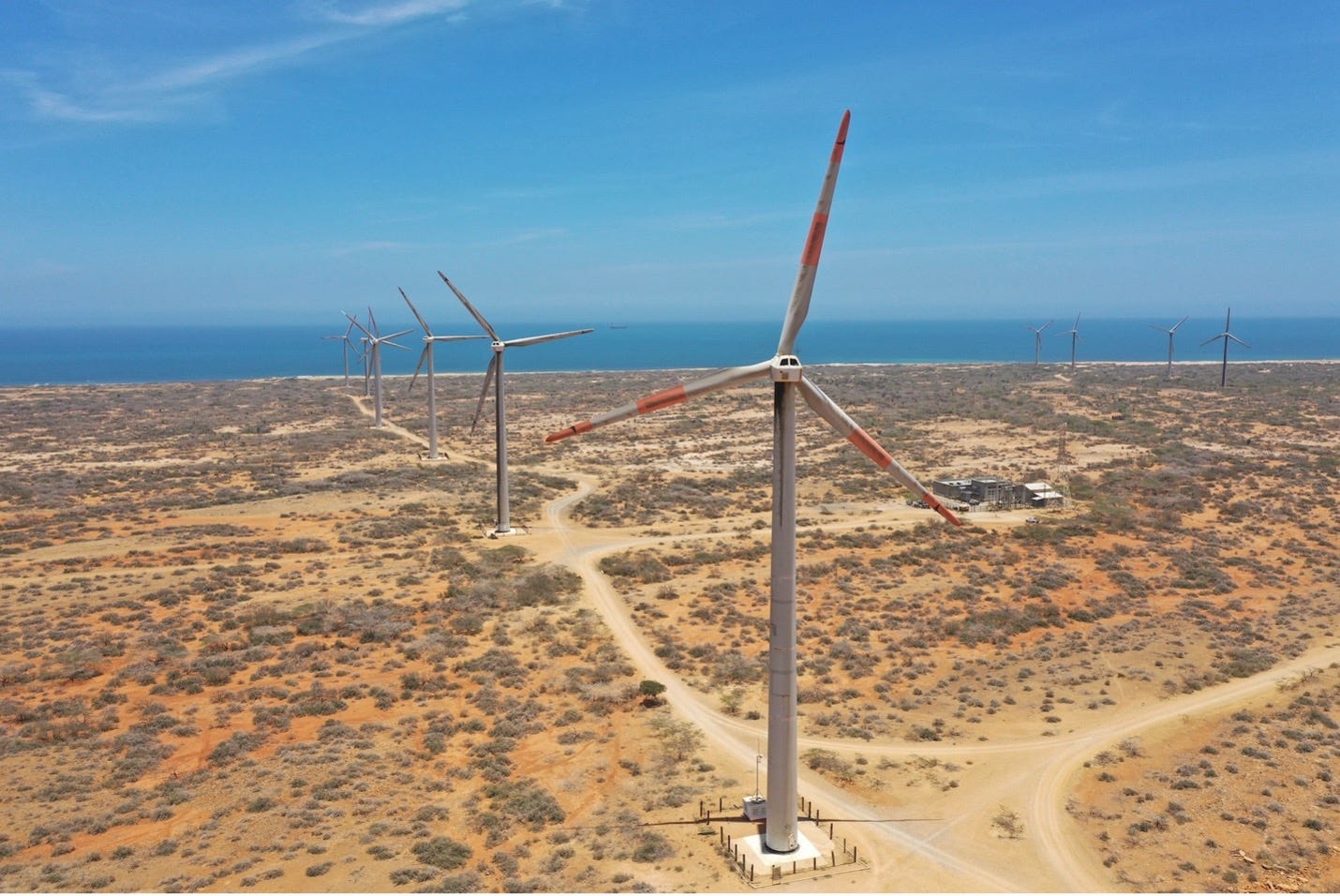
The Jepírachi wind farm on the Guajira Peninsula, Colombia. Manuel Salinas Bustamante, Archivo Indepaz.
1. The basics: Colombia’s energy profile
Colombia’s domestic energy mix consists of the usual suspects: coal (11%), oil (41%), natural gas (23%), hydro (12%), and others. Colombia produces almost all its energy and exports substantial amounts of coal and oil.
The country’s energy use consists mostly of transportation (43%), industry (22%), and residential (26%) sectors. Oil and natural gas dominate the energy mix because transportation and residential use are so important. In contrast, Colombia’s industry is relatively light and consumes only one-fifth of all energy.
2. Beyond petroleum: Colombia’s transportation sector
Transportation is the primary use of
...This excerpt is provided for preview purposes. Full article content is available on the original publication.