What Happened to Ukraine's Ballistic Missile Defense?
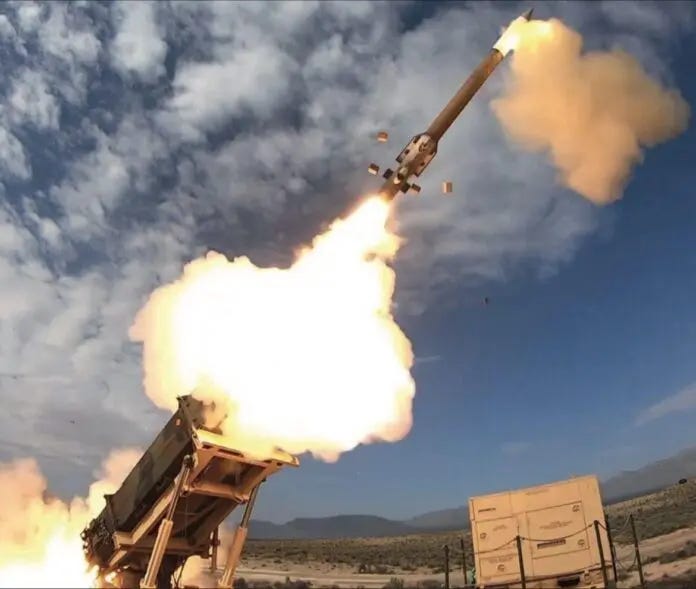
Picture: U.S. Army
A few days ago, the Financial Times reported that Ukraine’s ballistic missile defense intercept rates had dropped from around 37 percent in August to just six percent in October, despite a lower number of ballistic missile launches.
This coincides with Russia achieving several significant strikes against Ukraine’s defense industry, including four plants producing drones and drone components, as well as politically sensitive targets such as the EU’s representation in Kyiv and the Cabinet of Ministers building, where Russian ballistic missiles managed to evade Ukrainian defenses.
This post offers some insights into the most plausible explanations for the declining performance of Ukraine’s ballistic missile defenses and explores possible measures to address the problem.
The Russian ballistic missile threat
Two types of Russian conventional ballistic missiles are frequently employed against Ukrainian targets: the ground-launched 9M723 short-range ballistic missile and the air-launched Kh-47M2 Kinzhal medium-range ballistic missile.
The 9M723 entered into service in 2006 and has an official range of 500 kilometers. The Kh-47M2, which is essentially an adapted and slightly modified version of the 9M723 for air-launched use, entered into service in 2017 and has a range of around 1,500 to 2,000 kilometers.
Both ballistic missiles are more accurately described as unitary “aeroballistic” or “quasi-ballistic” systems. While their trajectories resemble a ballistic arc, they are not perfectly ballistic, and both missiles are capable of executing aggressive terminal maneuvers, particularly along the lateral axis of flight (i.e., sideways movement relative to the ground).
These maneuvers are intended to complicate and, ideally, defeat enemy interception. The more unpredictable the flight path, the more kinetic energy interceptors must expend to stay on course, and the harder it becomes to apply predictive guidance. This stresses guidance algorithms, reduces reaction times, and ultimately increases the likelihood of a miss.
The ability of Russian ballistic missiles to perform terminal maneuvers is neither new nor surprising. The American MGM-140 ATACMS, which entered service roughly 15 years before the 9M723, is equally capable of such maneuvers. In addition, Western ballistic missile defense interceptors — including the PAC-2 GEM-T, PAC-3 MSE, and Aster-30B1/0B1NG — were specifically designed with this threat profile in mind.
Nevertheless, according to reporting by the Financial Times, Russia has succeeded in adapting the trajectories of its ballistic missiles in ways that further complicate interception and defeat.
Trajectory adaptations
One reason for the increased success in penetrating Ukraine’s ballistic missile defenses, according to Financial Times
...This excerpt is provided for preview purposes. Full article content is available on the original publication.