RKUL: Time Well Spent, 12/13/2025

Your time is finite. Your phone and the internet stand ready to help you squander it. Here are my latest picks for spending it well instead. Add more in the comments.
Books, what else?
Given my lifelong appetites for densely delivered facts and overarching trends, I have, in my reading, tended to give biography a wide berth. Today I’m reflecting on some historical biographies that convinced even me to consider the specifics of a particular human life as more than secondary. Suetonius’ Lives of the Twelve Caesars brings back a lost world in a way that compendiums from archaeology can never hope to; the Bronze Age Greeks had writing, so we have copious records of their Linear B tablets. But bureaucratic records of trade and taxation don’t really bring a time alive. We know the mechanics of their state, but not the tenor of their citizens’ daily lives. To truly understand who the lords of Mycenae, Sparta and Pylos might have been, we require recourse to narrative texts like The Iliad, which render characters in the full flower of their passions. Though Homer’s epic dates to many centuries later, it preserves customs and names already visible on Bronze Age tablets, attesting to its historical fidelity. Those names come to evoke figures with agency and human interests we ourselves share. Vivid Agamemon, Alexandros and Hector, rather than simply entries in a ledger-book. To delve into a period, the surest route is often riding along with a single figure who lived it.
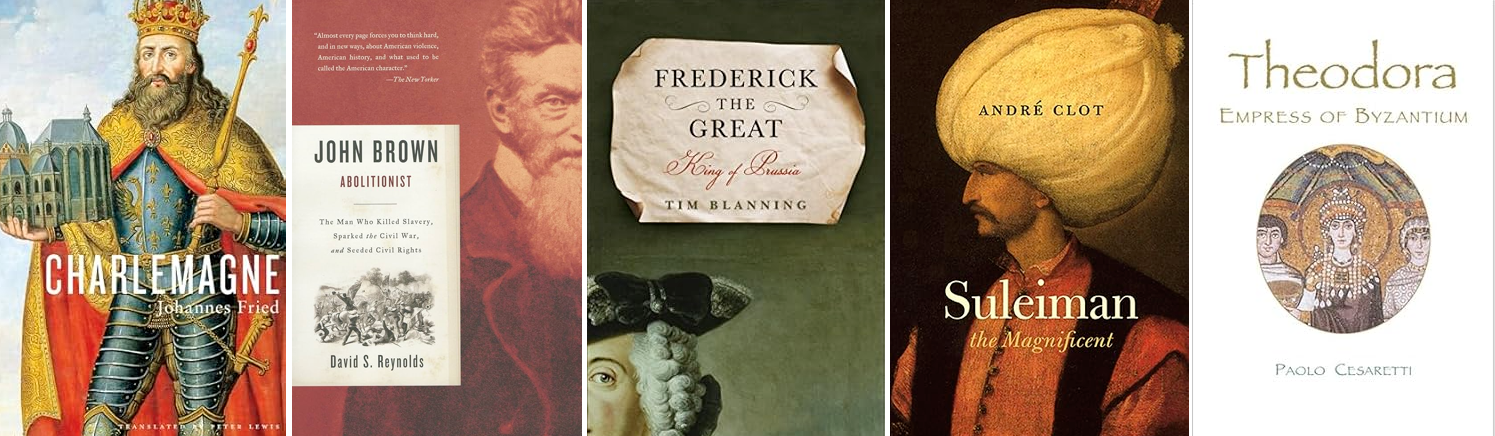
Even though this edition of Johannes Fried’s Charlemagne is a translation from the German, the magisterial work retains a conversational style that cuts through some of the potential turgidity of the underlying material (the only distracting choice is to render pagan Norse as “Normans,” which we conventionally reserve for the Christianized Danes who ruled Normandy). Fried admits candidly in the book’s preface that aspects of the narrative make recourse to imagination; Charlemagne was no Marcus Aurelius and we do not have access to the diaries of the king of the Franks. Instead, the author creates a composite character out of the extant historical materials available. Charlemagne was a man of his time, a Germanic warlord whose behavior and comportment would serve as the template for future Christian rulers, but nevertheless also a man of deep faith whose religion was sometimes at sharp variance with
...This excerpt is provided for preview purposes. Full article content is available on the original publication.