It's Time for Primary Prevention in Medicine
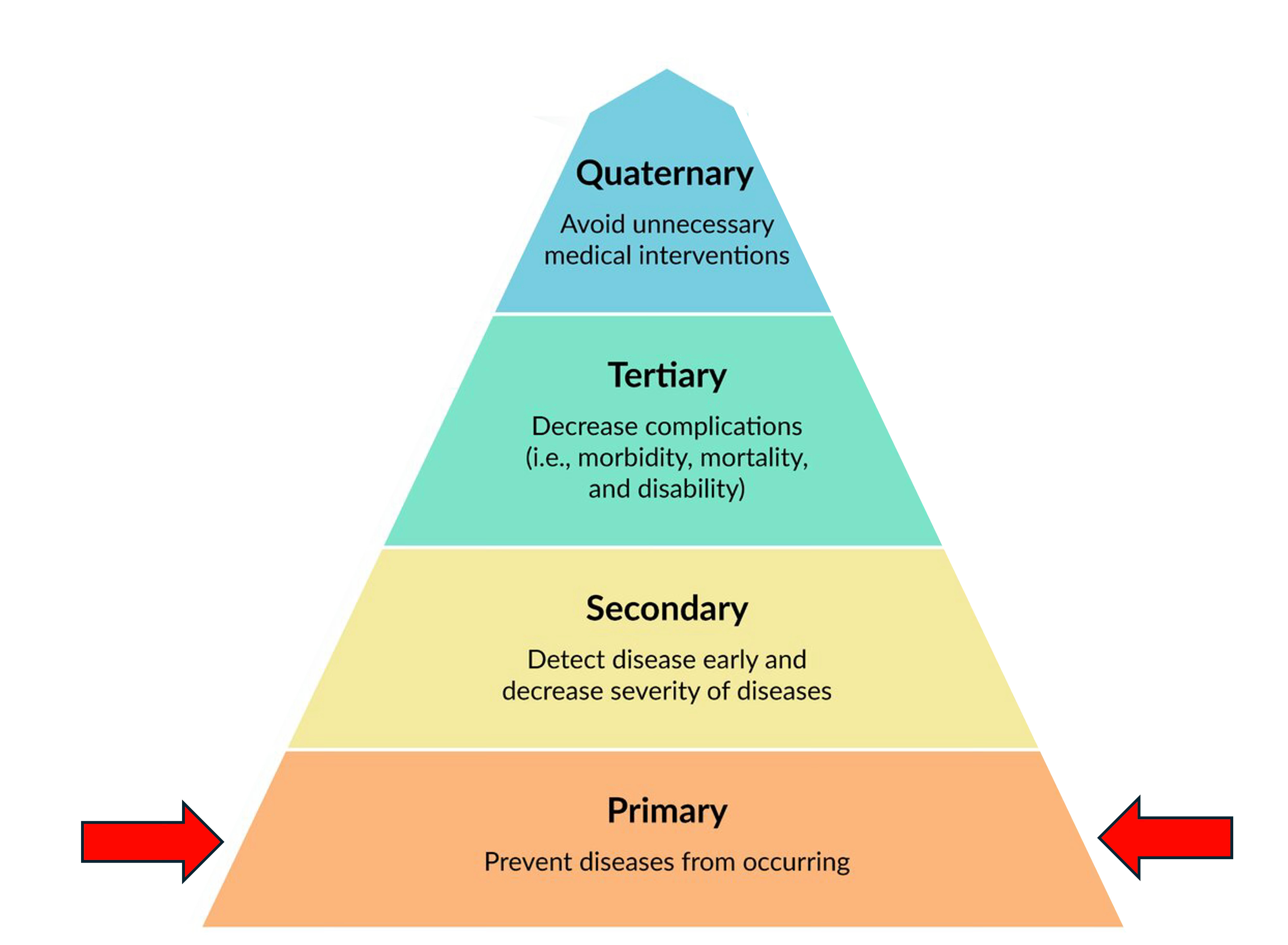
Primary Prevention means a disease or condition is averted. The term was coined and introduced by Leavell and Clark in the late 1940s. Now, about 75 years later, we’ve yet to achieve any substantive primary prevention with the notable exception of vaccinations that prevent infectious diseases. Of the 3 major age-related diseases that I focused on in SUPER AGERS—cardiovascular, cancer, and neurodegenerative—we have not prevented the latter two. Remember screening for cancer (such as mammography, colonoscopy, PSA, or total body MRI as some have advocated without adequate data) is a secondary prevention, with the objective of finding cancer at an early stage. Nothing meaningful has yet been shown to prevent neurodegenerative diseases. While there has been some preemption of cardiovascular disease with the use of lipid panels and cholesterol lowering drugs, heart attacks (and heart disease) and strokes remain the number 1 and 3 medical causes of death in the United States, respectively. And heart disease deaths are ticking up, adjusted for age.
Instead our healthcare now is centered on treating these diseases, which has limited success for many cancers and even less, thus far no disease-modifying impact, for neurodegenerative diseases (Alzheimer’s and Parkinson’s). No less, there’s the profound economic benefit of primary prevention for reducing the cost of such treatments, such as tailored oncology drugs or support of people with dementia in long-term care facilities. I hope this brief review will convince you that primary prevention is a great and largely unfulfilled need, that in light of recent advances it should be given the highest priority. The key problem is that we haven’t had the ability to do it. Until now.
This Ground Truths post is about the new and exciting opportunity for achieving primary prevention. We’ll start with a groundbreaking study just published in Nature by Moritz Gerstung and his colleagues.
A Large Language of Health Model Predicting Individualized Risk for >1,000 Diseases — in Multiples and When
What if an individual’s arc of health events was like a sentence, a sequence whereby you could predict the next condition like you would with a transformer architecture A.I. autocompletion of words (hopefully a helluva lot better that we have now on our phones!)? That is the essence of generative A.I.’s power for text, using tokens of words (and word fragments) with extraordinary contextualization, giving it the ability
...This excerpt is provided for preview purposes. Full article content is available on the original publication.