The world's biggest hydropower project breaks ground in Tibet
This is The China Week, a succinct roundup and analysis of what happened in the People’s Republic in the last seven days. Please take out a paying subscription for full newsletters, access to the archive, and to receive special content, such as our brief guide to the best specialized sources of China news.
This week’s nothingburger: A European Union-China Summit will take place in Beijing on July 24, marking the 50th anniversary of EU-China diplomatic relations, against a backdrop of tensions including over China’s support for Russia’s war machine in Ukraine, European tariffs on electric cars, and Beijing’s rare earth export controls. Although the summit will include a meeting between Xi Jinping and European Commission President Ursula von der Leyen, the “two sides are at odds on a range of issues from trade to human rights, and expectations are low for a breakthrough,” as the Atlantic Council put it.
—Jeremy Goldkorn
Dam renewables
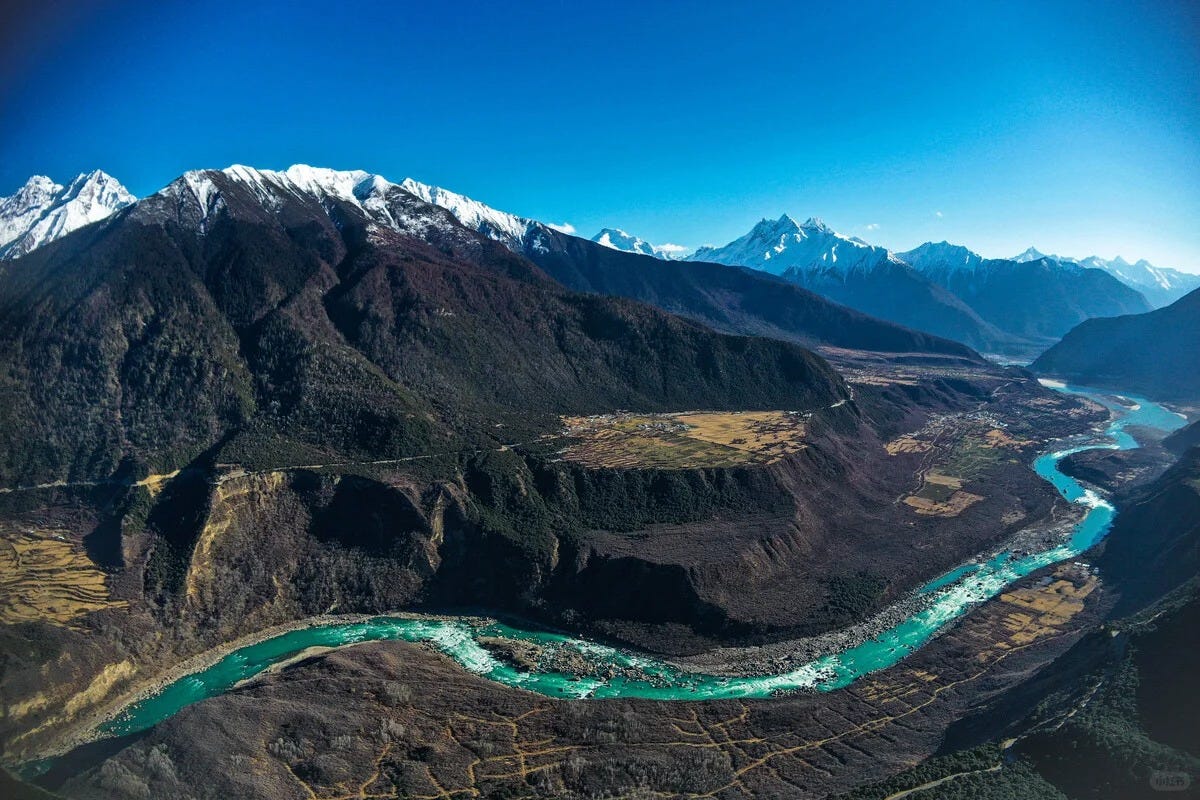
The worlds biggest hydropower project
On Saturday, Premier Li Qiang 李强 visited Nyingchi, in southeastern Tibet near the border with India, to attend a groundbreaking ceremony for the Lower Yarlung Tsangpo Hydropower Project.
It will cost about $170 billion to build, and will generate around 300 billion kilowatt-hours of electricity annually from the waters of the Yarlung Tsangpo River, which flows into India and Bangladesh where it is called the Brahmaputra.
Aside from environmental concerns, the project is causing discomfort in India and Bangladesh because of fears that China could weaponize its control of the river, but it will boost China’s already massive renewable energy generation capacity.
NVIDIA
Jensen Huang is a rock star in China
Jensen Huang 黃仁勳, the CEO of chipmaker NVIDIA, made his third visit to China this year, generating rock star-level attention as fans took selfies and sought autographs on Beijing streets. The visit came after the Trump administration allowed Nvidia to resume selling H20 chips in China following a previous U.S. ban. The H20 is used in AI but is not NVIDIA’s most powerful chip. The reversal has sparked talk of a “grand bargain” between Beijing and Washington.
“Huang was effusive in his praise for Chinese tech giants' capabilities in bringing technology into applications,” reported Reuters, which also cited Huang as calling Huawei “a formidable company.” The Economist called Huang “America Inc’s new China envoy,”
...This excerpt is provided for preview purposes. Full article content is available on the original publication.