Have You Heard the One about Kevin O’Leary, Wayne Gretzky, and Danielle Smith Walking into Mar-a-Lago?
Deep Dives
Explore related topics with these Wikipedia articles, rewritten for enjoyable reading:
-
Foreign electoral intervention
9 min read
The article extensively discusses the Hogue inquiry into foreign interference in Canadian elections by China, Russia, and India. This Wikipedia topic provides deep historical and comparative context on how nations attempt to influence each other's democratic processes.
-
51st state
10 min read
Trump's annexation threats and the '51st state' rhetoric are central to this article. The Wikipedia article covers the long history of this concept, including previous proposals involving Canada, Puerto Rico, and other territories.
-
Canada–United States relations
11 min read
The article's core tension is the breakdown of the US-Canada relationship under Trump. This comprehensive Wikipedia article covers the historical context of this relationship, trade disputes, and diplomatic tensions that inform the current situation.
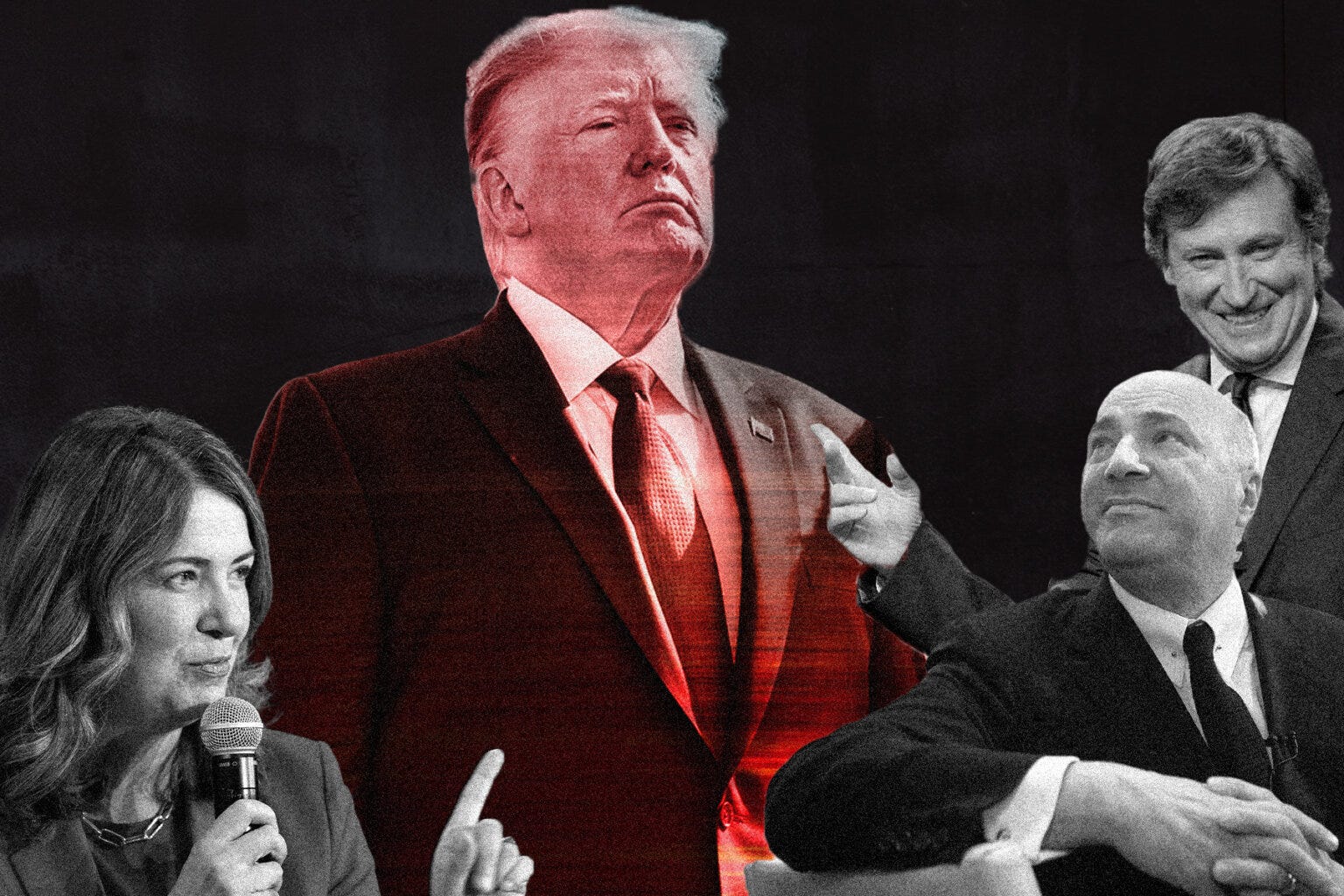
Christinne Muschi, Chris Young (Canadian Press) / Chuck Burton, AP Photo / Wikimedia Commons / Ana Luisa O. J.
This story was originally published on thewalrus.ca
By Mark Critch
In December 2024, when United States president-elect Donald Trump started making implicit threats of annexation, Canadians became suspicious of the outside world. It’s not just America that put us on edge. We used to be friends with everyone. Who didn’t like Canada? We were peaceful, funny, and everyone’s pal. Everyone wanted to sit with us at the United Nations cafeteria. But then it started to feel like people were using us. Maybe because we were pals with the popular kid, America. But then he turned on us, and we couldn’t tell who our real friends were anymore.
In January, Justice Marie-Josée Hogue delivered a report on foreign interference in Canada’s electoral process. The public inquiry was called in 2023 to investigate allegations of meddling by China, Russia, India, and other so-called foreign actors. The witch hunt began when a parliamentary intelligence report flagged that some members of Parliament were “witting or semi-witting” participants in foreign meddling. I’d never heard the phrase “semi-witting” before, but it did seem apt. After all, I know a couple of MPs that I’d consider halfwits. At the time, many MPs called on the government to release the names of these traitors. But were they pointing the finger to stop interference or pointing the finger to avoid being fingered themselves? Paranoia ran wild, even for a country that had legalized weed.
However, the inquiry found no evidence of traitors in Canada’s Parliament plotting with foreign governments to interfere with elections. Hogue did express “legitimate concerns about parliamentarians potentially having problematic relationships with foreign officials, exercising poor judgment, behaving naively and perhaps displaying questionable ethics.” Tell us something we don’t know! Hogue found it wasn’t spies that were the problem. In her report, she said that “information manipulation” posed the biggest single threat to our democracy. In other words, fake news. Maybe Trump had a point after all.
There were some things to be worried about, however. She found that China “clandestinely leveraged” Canadian officials to help its “favoured” candidates win office in 2019. India, she learned, was the “second-most active country engaging in electoral foreign interference in Canada.” But, in my opinion, the people that Canadians should be most worried about meddling in our affairs are Canadians.
...This excerpt is provided for preview purposes. Full article content is available on the original publication.