Cards that may get you in trouble
Deep Dives
Explore related topics with these Wikipedia articles, rewritten for enjoyable reading:
-
Tarot
14 min read
The article centers on tarot reading but only briefly explains the card structure. Wikipedia's comprehensive article covers the rich 15th-century Italian origins, the evolution from playing cards to divination tools, the symbolism of the Major and Minor Arcana, and the various schools of interpretation—providing deep historical and cultural context.
-
Russo-Ukrainian war (2022–present)
15 min read
The article references the 2022 war, the Kharkiv offensive, and Pokrovsk without detailed explanation. The Wikipedia article provides essential military, political, and humanitarian context that explains why Ukrainian families are desperately seeking information about missing soldiers.
-
Cold reading
14 min read
The article mentions scammers exploiting grieving families through tarot readings. Cold reading explains the psychological techniques fortune-tellers use to appear accurate, helping readers understand how vulnerable people can be deceived—directly relevant to the article's warning about fraudulent readers.
Featured Subscriber’s Comment:
“Your courage, resilience, and love for Ukrainians inspire me daily!”
By: Oryna Hrushetska
Tarot cards often make people anxious.
The popular card game, used for fortune-telling and self-reflection, evokes emotions and hints at futures that are frightening to consider.
There are different ways to do a reading, but I do it as follows: I shuffle all the cards and draw three random ones that come into my hands. The first corresponds to the past, the second to the present, and the third to the future.
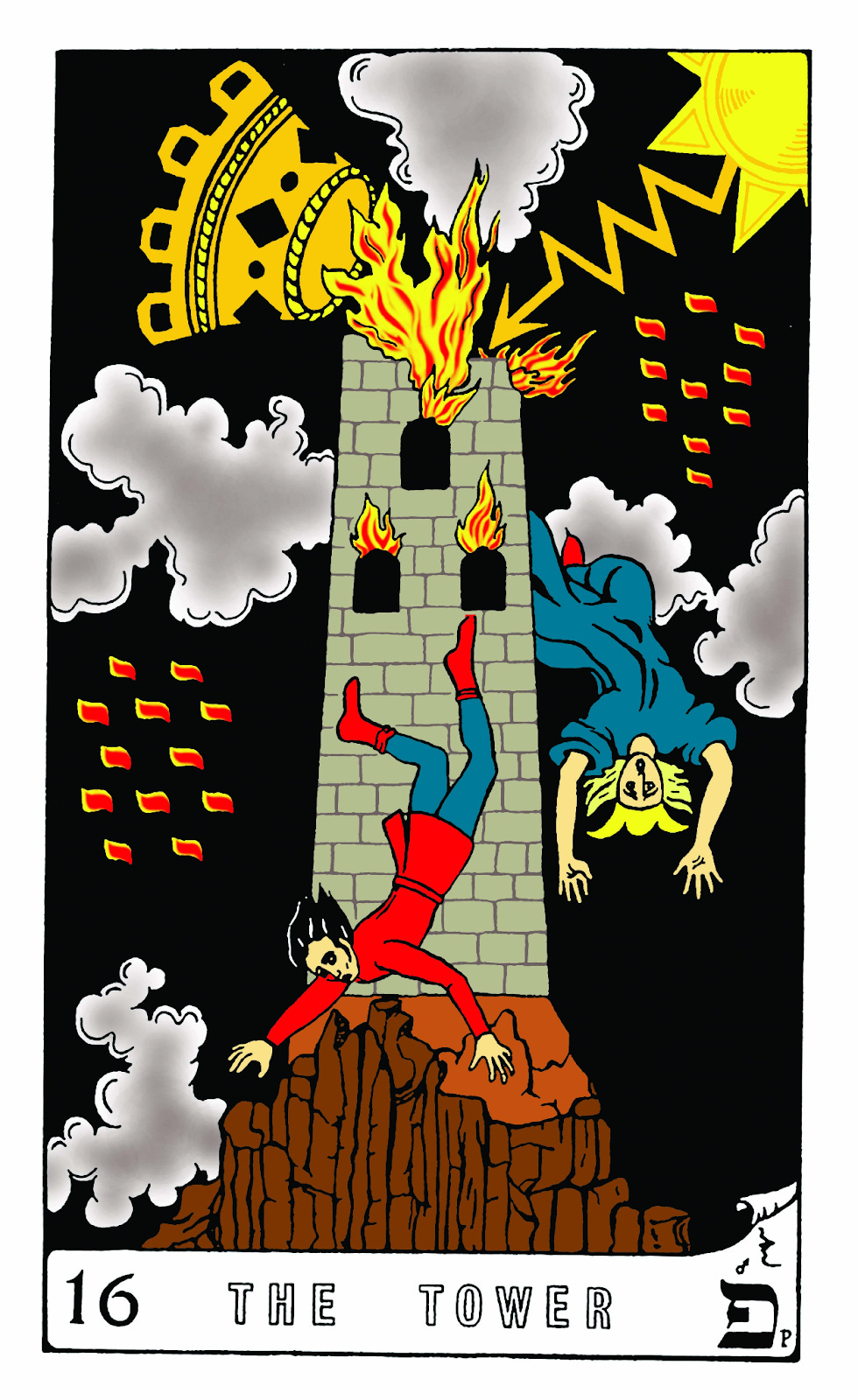
When I pulled out my first card, I got a lump in my throat. A dark, tragic picture of a tower couldn’t mean anything good.
I rushed to look up the exact meaning – thankfully, it meant a chance for a new beginning.
I first became interested in tarot reading to understand my feelings better and test my intuition. But since the war began, it has become, for many Ukrainians, a last straw of hope.
A tarot deck consists of 78 cards — 22 Major Arcana, which convey the main life stages of each person, and the rest are Minor Arcana — which provide more detailed explanations of everyday emotions and events. The Minor Arcana is divided into four groups — Wands (energy and creativity), Swords (thoughts, logic), Cups (emotions and intuition), and Pentacles (material predictions).
In 2022, tarot readers’ popularity soared in Ukraine. The war had just begun and people needed answers about their fate. Some fortune-tellers predicted the end of the war, while others looked directly at people’s lives, telling whether a missing soldier might be alive or dead.
TikTok users have flocked to these readers with hundreds of videos and thousands of comments: “Please, check if my father/brother/son is alive.”
Video of tarot prediction on Tiktok telling people that their soldier will return home and to write in DMs for personal reading.
Over the last week, more uncertainty about the future course of the war has delivered renewed importance to tarot readers. Russia broke through the front in the Kharkiv region, and reached Kupiansk.
Also recently, Russian troops entered Pokrovsk — another Ukrainian stronghold. Ukrainian families, facing more stories of missing loved ones, will continue to turn to tarot readers for solace. Regrettably, some will continue to find scammers instead.
After the paywall:
The story of
This excerpt is provided for preview purposes. Full article content is available on the original publication.