The Moment Before the Click
Deep Dives
Explore related topics with these Wikipedia articles, rewritten for enjoyable reading:
-
Susan Sontag
16 min read
The article directly quotes Sontag's work on photography as 'a social rite, a defense against anxiety, and a tool of power.' Understanding Sontag's broader philosophy on images, illness, and cultural criticism would deepen the reader's appreciation of the essay's meditation on self-image and the camera's power dynamics.
-
Farrah Fawcett
14 min read
The article references Fawcett's iconic 'winged hair' as the beauty standard that dominated 1970s hallways. Understanding Fawcett's cultural impact—her famous poster was the best-selling of all time—contextualizes the specific era of beauty expectations the author struggled against.
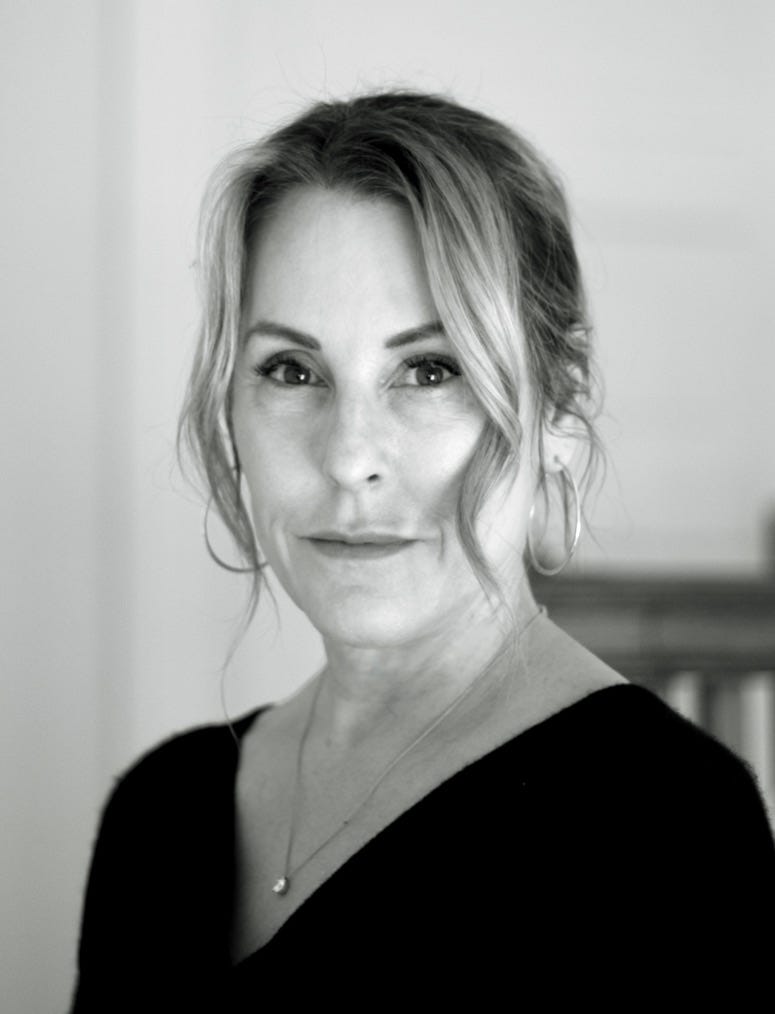
So, over the weekend, my agent asked for a new author photo. The one we used in the proposal was really just a selfie, nothing I’d want to use in a more public facing situation, and, not high-res enough, anyway. Another one I have, from CAMP this summer—a rare candid that I love, and taken by the extremely talented , so, a professional shot, definitely high-res enough—is very casual and full torso, so, not quite right for the context. (No, its not a book jacket photo! Not quite yet.) The only other professional headshot I have that I like is also full torso, and quite beautifully edited. So beautifully edited that I look not quite like myself, so, also not quite right.
This is how a reasonable request, simple enough on the surface, immediately brought up a shadow of not enough. So I closed the email and sat still, feeling an old heat rise, and, at the same time, wondering, Why does this still matter? Why do I still care? And yet: I did.

Before school picture day, before yearbooks, before boys with passing comments that swung like blades—I already understood that a photograph was more than a picture—it was a freeze-frame of how others would see me.
I was a shy child with short, uneven, slightly boyish haircuts, perpetually growing out and never quite arriving. In photos from those years, I often look a little startled.
Then adolescence sharpened everything.
Farrah Fawcett winged hair ruled the hallways—soft, feathered, shining like something from another planet. I tried. I curled and brushed and sprayed. I coaxed and willed. But my very fine hair remained what we called, back then, “flat.”
That same era brought braces—not once, but twice. The orthodontist removed two teeth on the right side and none on the left, and my smile has lived slightly off-kilter ever since. Just uneven enough that I learned to edit my own expression—to smile with come combination of choreography and caution.
Around that time—when I was fourteen and hovering just above the cliff-edge where childhood collapses into something harder—a boy I knew, a boy who was a real friend, told me, almost gently: It’s good you have such a great laugh, since you’re not very pretty.
It wasn’t meant to be mocking or cruel. Simply observational, like noting the weather.
Another time, years later, when I was twenty-one
...This excerpt is provided for preview purposes. Full article content is available on the original publication.