Legacy of a Libertarian Leader
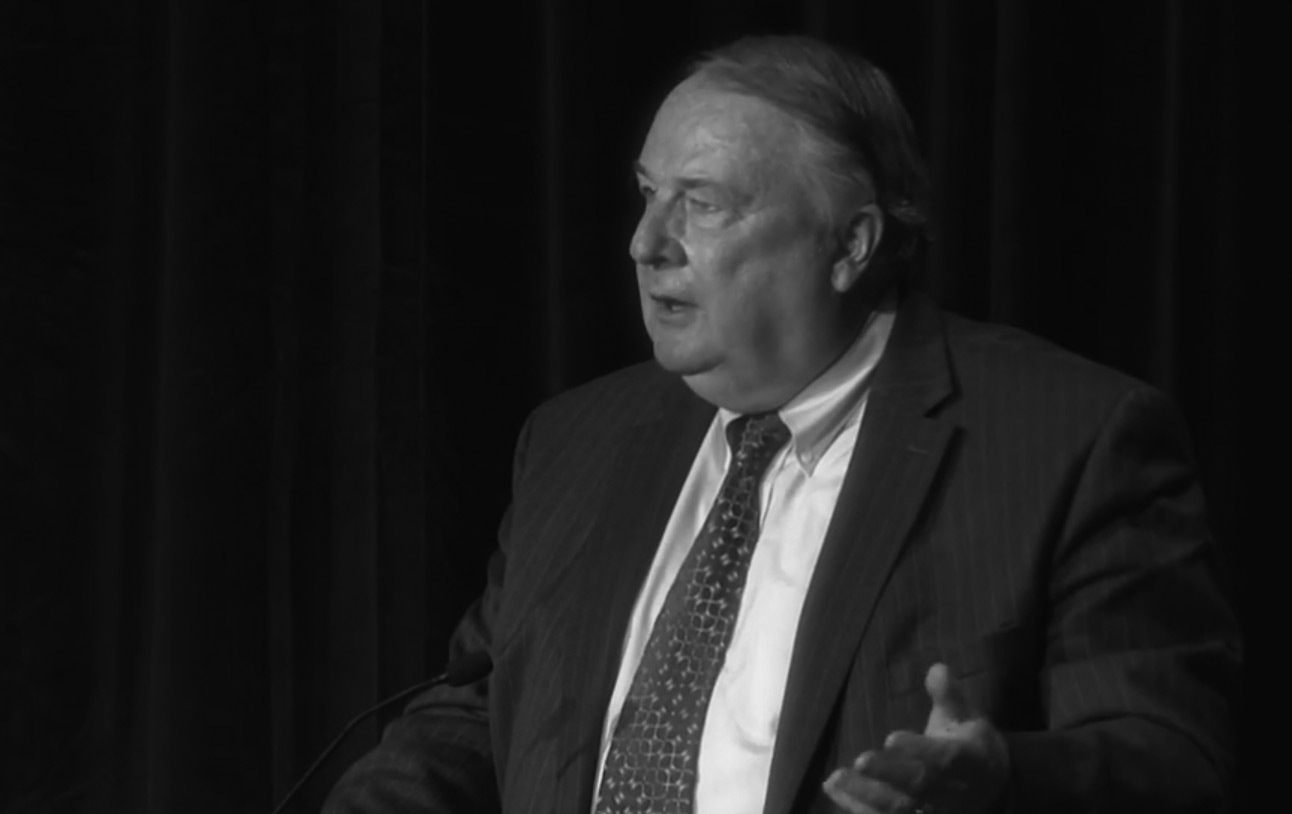
ED CRANE USED TO SAY, as one of his longtime colleagues recollected a couple of years ago, “that the thing he did for libertarianism was put libertarians in suits and ties.”
The burly institution builder was not a household name, but he made the modern libertarian movement into what it is today, dragging weirdos and dreamers to the halls of power. A driven activist and domineering organizer once described by P.J. O’Rourke as having a “sequoia spine,” he built both the modern Libertarian Party and the preeminent libertarian think tank in the United States, the Cato Institute. Crane left Cato in 2012 after a contentious struggle with his erstwhile money men, Charles and David Koch. MeToo allegations after Crane’s exit from Cato further sidelined him. His passing—Crane died at the age of 81 on February 10 at his home in a suburb of Washington, D.C.—is an opportunity to consider where libertarianism fits on the American right and how libertarians should act in a right-wing authoritarian moment.
Born in California in the summer of 1944, Crane studied business at UC Berkeley in the heady 1960s. Captain of two precincts in the Goldwater campaign, he knew every voter for his candidate in both of them—all thirteen people. Campaigning for Goldwater led Crane to libertarian texts, including Ayn Rand’s Atlas Shrugged. All the reading radicalized the twentysomething financial analyst; he wanted to do more. Through the libertarian underground he learned of a 1972 party meeting in Colorado and went along.
He found there an extremely variegated movement. According to Whitney McIntosh, a historian and scholar of libertarianism at Worcester Polytechnic Institute, “At the dawn of the 1970s, libertarians forged an ecumenical coalition of Objectivists, anarcho-capitalists, limited government libertarians, libertarian feminists, hard-money advocates, science fiction fans, survivalists, and defectors from the New Left and New Right.”
In 1972, Crane became the Libertarian Party’s nominal campaign manager and built the party in California. With the help of Roger MacBride, a former member of the Vermont House of Representatives who had been a faithless elector in the 1972 presidential election, Crane took over the national party, becoming its chair in 1974. This apparently involved an 80 percent pay cut from the work in finance he was leaving behind—a considerable sacrifice to pursue his principles. Exasperated by the party’s state-level laxity, he whipped
...This excerpt is provided for preview purposes. Full article content is available on the original publication.