Making Sense of the Information Ecosystem
Deep Dives
Explore related topics with these Wikipedia articles, rewritten for enjoyable reading:
-
Harold Lasswell
13 min read
Pioneer of political communication theory whose 1948 framework is central to the article. His work on propaganda and the 'Who says what to whom' model directly structures the author's analysis of the information ecosystem.
-
Walter Lippmann
14 min read
His 1922 book 'Public Opinion' is extensively quoted and forms the theoretical foundation for the article's discussion of 'pictures in our heads' vs. external reality. Understanding his influence on 20th century political thought enriches the article's arguments.
-
Propaganda
12 min read
The article reframes propaganda from its pejorative meaning to Lasswell's technical definition as 'management of collective attitudes by manipulation of significant symbols.' The Wikipedia article provides historical context and techniques that deepen understanding of this central concept.
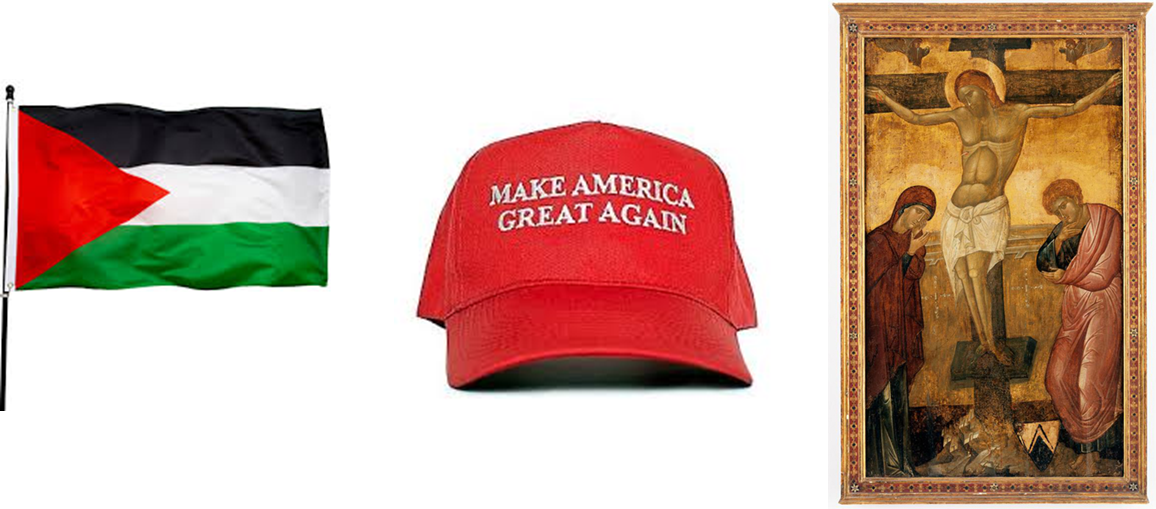
One of the most common questions I get is, “How do I know what is true and what is not?”. In 2026, it is a question that all of us struggle with — Even experts are ignorant about most things.
I respond to this question by saying that I don’t have a simple answer or formula, but that there are better and worse ways to arrive at beliefs more likely to be accurate. In my courses, I explain to students that a very good starting point is to understand the roles of information in democratic politics, and in particular, why “facts” are inevitably contested and how “truths” are emergent and manufactured.
Today’s post kicks off a new THB series that I expect to run well into 2026 — Making Sense of the Information Ecosystem — as I begin pulling together a sequel to The Honest Broker: Making Sense of Science in Policy and Politics, my 2007 book that gives THB its name.1
I start the series by introducing some concepts that will help us to together make sense of the information ecosystem which we can characterize using a well-known framework introduced by political scientist Harold Lasswell in 1948:2
Who gets to speak credibly;
What messages survive amplification;
Which channels dominate attention;
To whom the messages are targeted;
What effects result.
More generally, an information ecosystem is the interconnected system of actors, institutions, technologies, norms, and incentives through which information is produced, selected, transmitted, amplified, interpreted, and acted upon within society.
As Walter Lippmann observed in his classic book, Public Opinion, in 1922, the goal of democracy is not to get everyone to think alike, it is to get people who think differently to act alike.
In his 1992 introduction to Lippmann’s Public Opinion, Michael Curtis explained the significance of Lippmann’s distinction between “the world outside” and the “pictures in our heads”:3
...The real external environment is too big, too complex and too fleeting for direct acquaintance by citizens. The public can never fully understand political reality, “the buzzing, blooming confusion” of the world, partly because individuals could only devote a short amount of time to public affairs and partly because events have to be compressed into very short messages. In a letter dated May 18, 1922, Lippmann wrote that
This excerpt is provided for preview purposes. Full article content is available on the original publication.