Six Slides From the American Gas Association Winter Heating Outlook
In September of 2025, the American Gas Association published its 2025-2026 Winter Heating Outlook. Here are six slides from their analysis that we thought offered some of the most interesting insights.

Consumption and Production
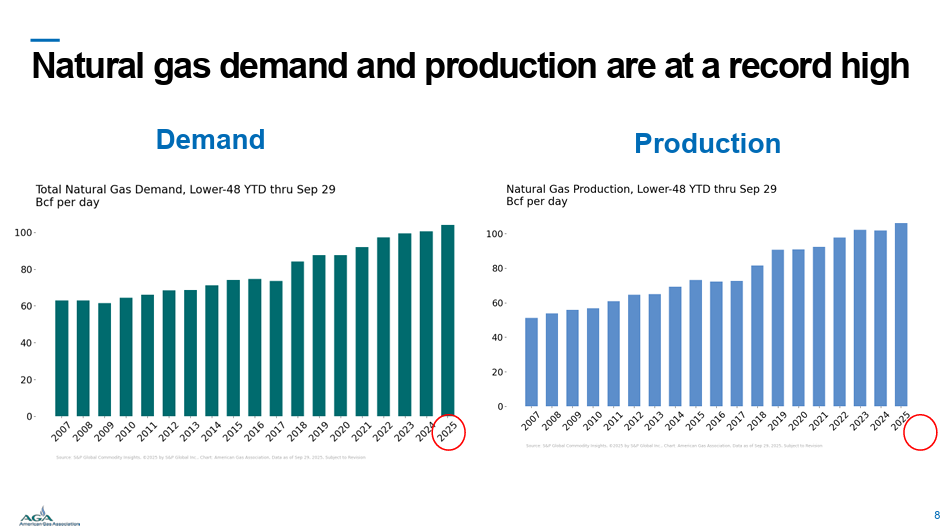
Natural gas demand and production continue to surge. According to AGA’s figures, the demand for natural gas has increased by approximately 66 percent since 2007, and production has essentially doubled in the same time frame.
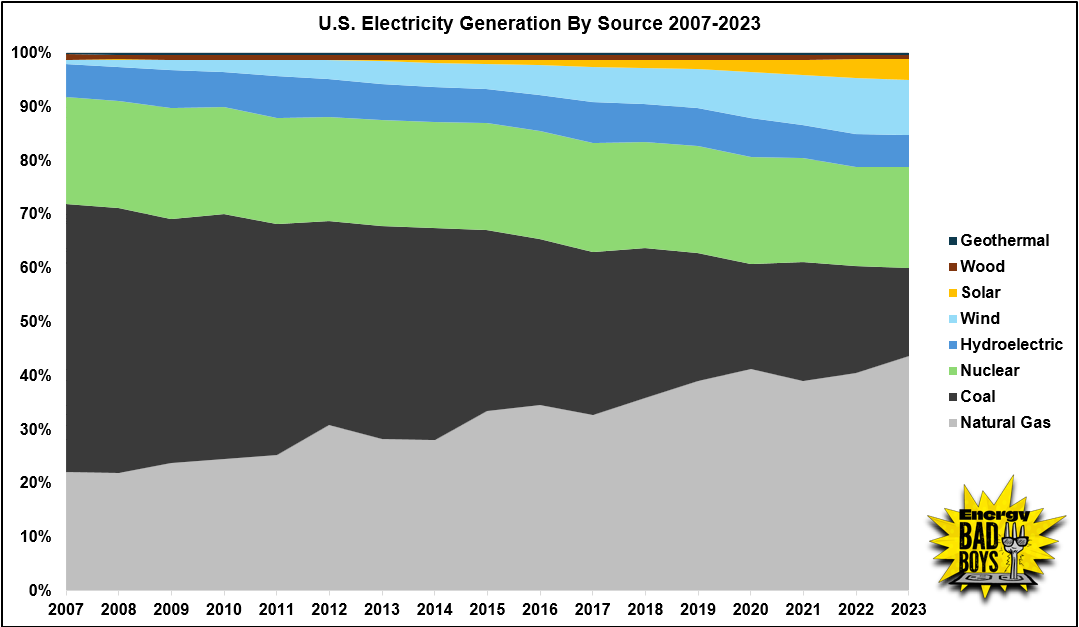
Much of that demand growth stems from the fact that electricity generation from natural gas power plants has grown from 21 percent of generation in 2007 to 43 percent of generation in 2023, according to U.S. Energy Information Administration (EIA) data.
Pipeline Additions
Rising natural gas production will necessitate more takeaway capacity. AGA’s slides indicate that new pipeline capacity is expected to be largely intrastate, or pipelines built within a state without crossing borders, in order to avoid onerous federal permitting challenges.
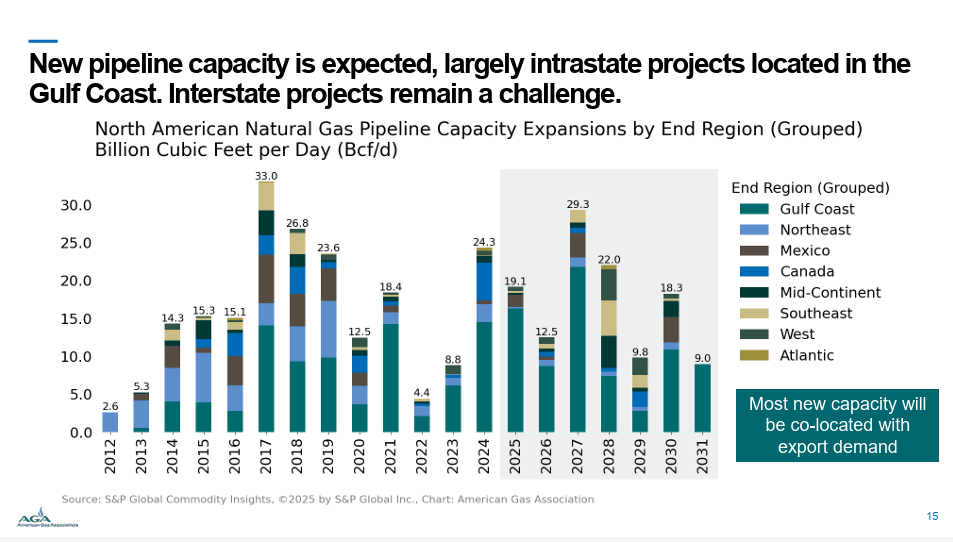
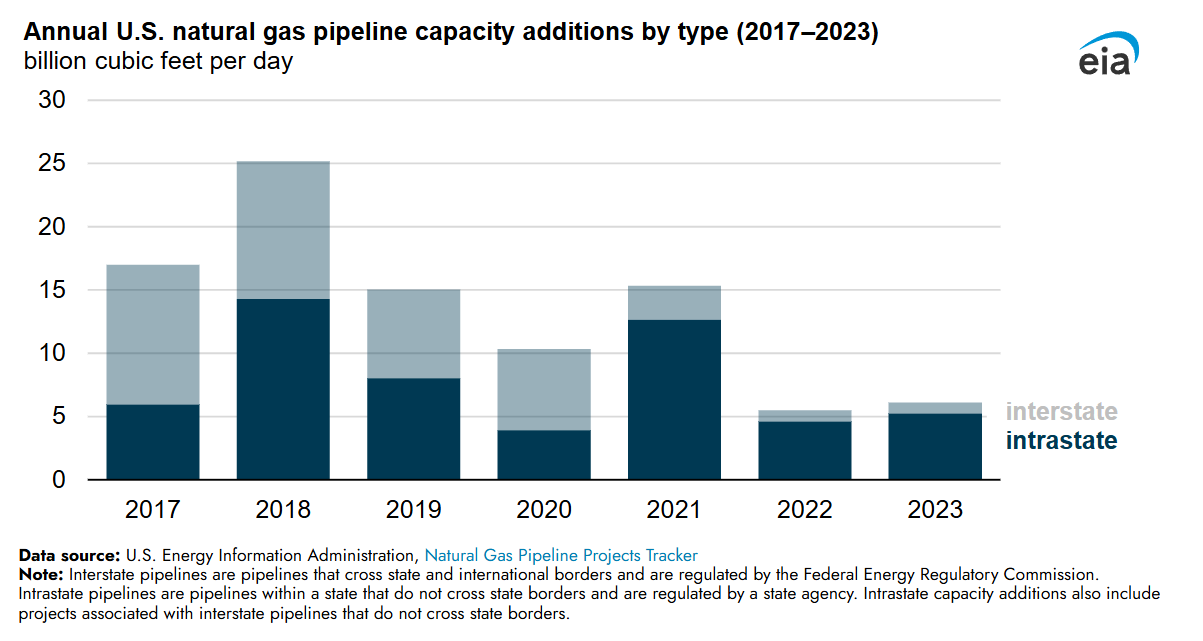
As a result, the majority of new pipelines will be built in the Gulf Coast states of Texas and Louisiana to serve domestic demand and Liquefied Natural Gas (LNG) export facilities. This continues a trend where intrastate pipeline capacity additions and expansions have far outpaced interstate additions.
Peak Demand
Unreliable energy advocates who want to “electrify everything,” including home heating, need to take a good look at the graph below. It shows that the peak energy delivered by natural gas is nearly four times higher than the peak energy delivered by electricity.
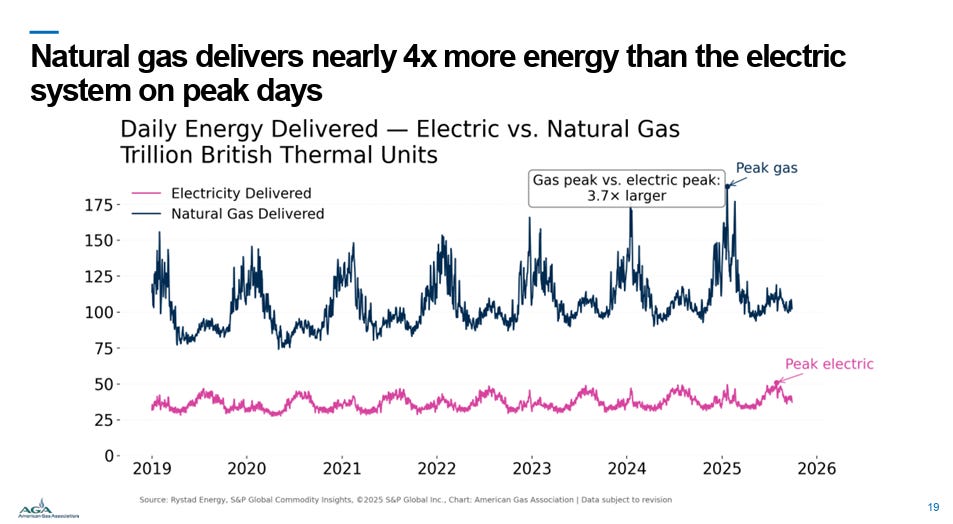
There are many problems with the notion that we can easily electrify home heating.
Electrification advocates will argue that the challenge is much more manageable than the graph would suggest because heat pumps can transfer heat at 3x the efficiency of electric resistance heaters and gas furnaces. As a result, they would argue, the peak isn’t really nearly 4x higher than peak electric load, but substantially lower.
This argument doesn’t stand up to scrutiny, though. Heat pump technology is improving, but one of the most common cold-weather models, the Mitsubishi Hyper Heat, shuts off entirely at -22 F to keep the machine from breaking. This means an electrified heating system would switch over to electric resistance heat, which is far less efficient than heat pumps. Most of the country doesn’t hit -22 F very often, but it is a very real concern in the coldest areas of the country, where the peak natural gas demand is
...This excerpt is provided for preview purposes. Full article content is available on the original publication.