Sam Altman on OpenAI’s Plan to Win, AI Personalization, Infrastructure Math, and The Inevitable IPO
Deep Dives
Explore related topics with these Wikipedia articles, rewritten for enjoyable reading:
-
Network effect
13 min read
Fundamental economic concept underlying Altman's discussion of platform stickiness, personalization moats, and why users stay with ChatGPT - explains the competitive dynamics he describes
-
Vertical integration
15 min read
OpenAI's strategy of controlling models, products, infrastructure, and potentially devices represents classic vertical integration - understanding this business strategy illuminates their competitive positioning against Google
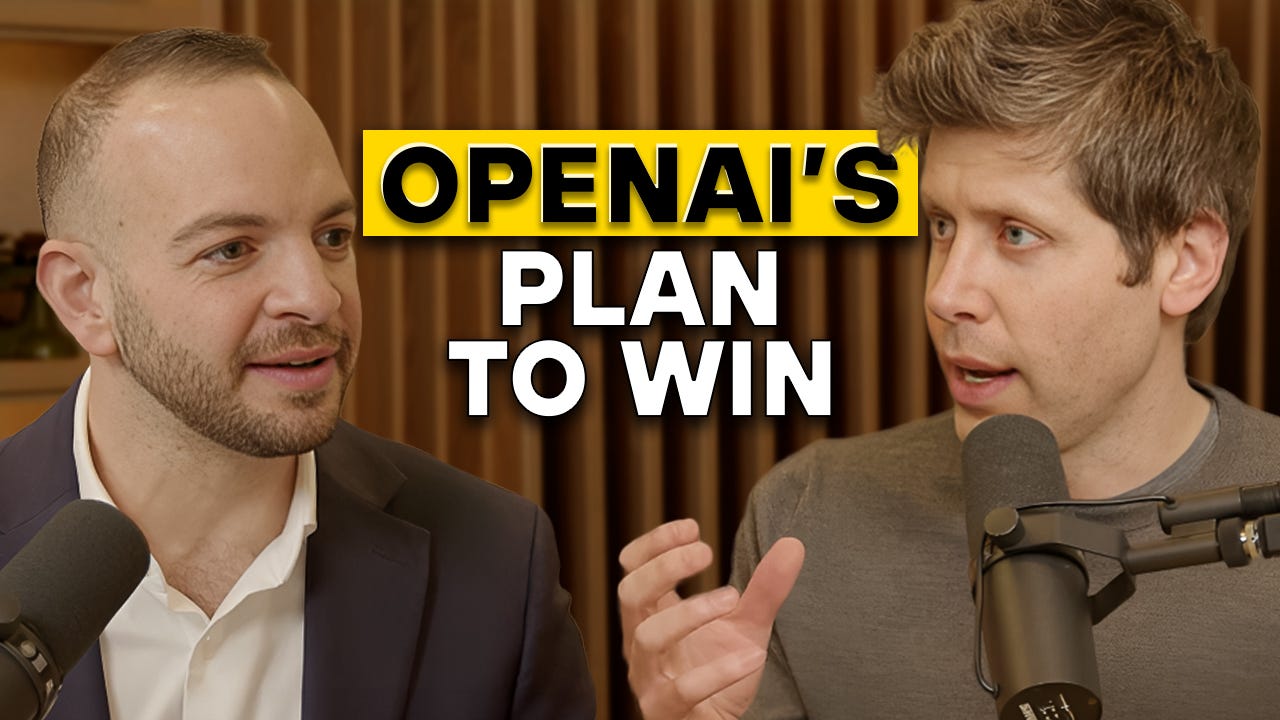
When Sam Altman walks into the studio at OpenAI’s San Francisco headquarters on Tuesday, the building is in a heightened state of alert. Google’s impressive Gemini 3 model has sent OpenAI into a ‘Code Red’ and concerns about the increasingly turbulent AI infrastructure buildout are mounting.
Amid it all, Altman comes in ready to address OpenAI’s strategy to win, where he expects his product lineup to go in the coming year, how his company’s $1 trillion+ in AI infrastructure commitments make sense, and his future plans for AI devices and AI cloud.
Altman — in a conversation we’re airing on Big Technology Podcast and publishing in full here — outlined a clear strategy to keep OpenAI ahead: Get people to use its products, keep them there with the best models, and serve the use cases they want with reliable compute. Then, expand into areas like enterprise and hardware.
Here’s our full conversation, edited lightly for length and clarity. You can also listen/watch, on Apple Podcasts, Spotify, or YouTube.
Alex Kantrowitz: OpenAI is 10 years old and ChatGPT is three, but the competition is intensifying. OpenAI headquarters is in a Code Red after Gemini 3’s release. And for the first time I can remember, it doesn’t seem like this company has a clear lead. How will OpenAI emerge from this moment, and when?
Sam Altman: First of all, on the code red point—we view those as relatively low stakes, somewhat frequent things to do. I think that it’s good to be paranoid and act quickly when a potential competitive threat emerges. This happened to us in the past. That happened earlier this year with DeepSeek. And there was a code red back then too.
There’s a saying about pandemics, which is something like when a pandemic starts, every bit of action you take at the beginning is worth much more than action you take later, and most people don’t do enough early on and then panic later—and we certainly saw that during the COVID pandemic. But I sort of think of that philosophy as how we respond to competitive threats.
Gemini 3 has not, or at least has not so far, had the impact we were worried it might. But it did, in the same way that DeepSeek did, identify some weaknesses in our product offering strategy, and we’re addressing those very quickly. I don’t think we’ll be in
...This excerpt is provided for preview purposes. Full article content is available on the original publication.