Basilica occupation reignites Syro-Malabar liturgy dispute
Deep Dives
Explore related topics with these Wikipedia articles, rewritten for enjoyable reading:
-
Syro-Malabar Church
1 min read
The entire dispute centers on this Eastern Catholic Church. Understanding its unique history as one of the oldest Christian communities tracing to the Apostle Thomas, its relationship with Rome, and its distinctive liturgical traditions is essential context for why this liturgy dispute is so contentious.
-
Ad orientem
18 min read
The core of this dispute is whether priests should face the altar (ad orientem) or the congregation (versus populum). This article explains the theological significance and historical practice of liturgical orientation, which is central to understanding why this seemingly technical issue provokes such intense conflict.
-
Saint Thomas Christians
14 min read
The Syro-Malabar Church is part of the broader Saint Thomas Christian community in India, which claims apostolic origin from Thomas the Apostle. Understanding this ancient Christian tradition in Kerala provides crucial historical context for why local Catholics feel so strongly about preserving their liturgical customs.
The Syro-Malabar Church’s liturgy dispute flared again Wednesday when protesters occupied a basilica at the heart of the long-running controversy — this time from those favoring, rather than opposing, the Eastern Church’s reformed liturgy.
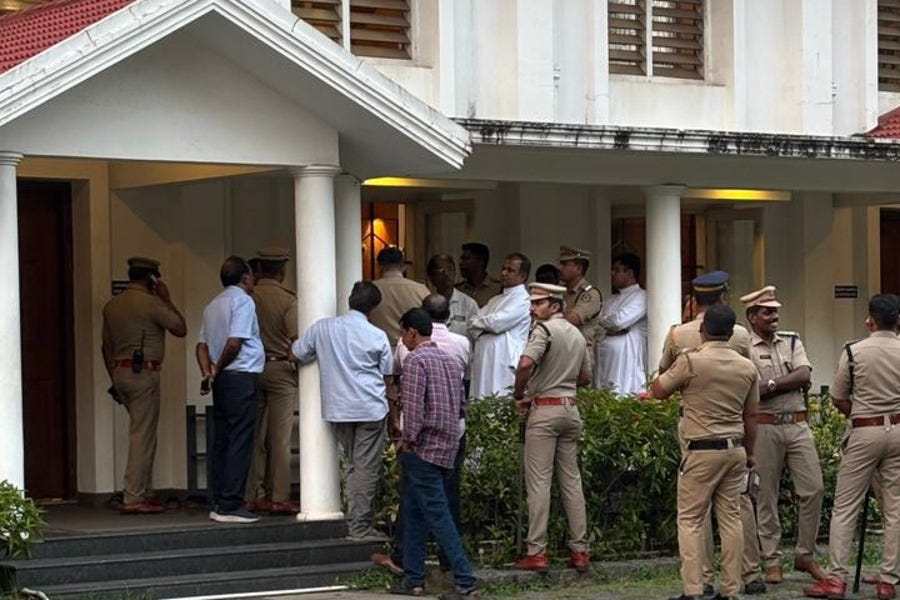
Dozens of protesters from the “One Church One Qurbana” movement, who support a new uniform Eucharistic liturgy, entered St. Mary’s Cathedral Basilica in Ernakulam, southern India, Dec. 10.
They reportedly locked the basilica from the inside, preventing worshipers from attending the 6 p.m. Eucharistic liturgy. The liturgy was due to be celebrated in an older style favored by the majority in the local Archeparchy of Ernakulam-Angamaly, in which the priest faces the people throughout (versus populum).
The protesters argue that the celebration of the versus populum Eucharistic liturgy breaches a 2021 decision by the Synod of Bishops — the Syro-Malabar Church’s supreme authority — that all eparchies (dioceses) should exclusively celebrate the uniform liturgy.
Video footage showed local police standing outside the basilica, talking through a grille to protesters inside the church. The police appeared to be monitoring the situation and there were no reports of arrests.
Public celebrations of the Eucharistic liturgy, known as Holy Qurbana, only recently resumed at the basilica after a three-year hiatus following physical clashes between supporters and opponents of the new liturgy inside the cathedral.
The Dec. 1 resumption of Eucharistic liturgies appeared to mark the end of a painful chapter in the decades-long liturgical dispute. But the occupation could imperil a fragile liturgical peace in the archeparchy.
The protestors’ move came amid rumors that Syro-Malabar leader Archbishop Raphael Thattil and Archbishop Joseph Pamplany, the archiepiscopal vicar of Ernakulam-Angamaly, were scheduled to meet before Christmas with Pope Leo XIV and officials at the Vatican’s Dicastery for the Eastern Churches.
The rumors suggested the archbishops were due to update Rome on developments since an agreement was reached in June 2025 permitting the Ernakulam-Angamaly archeparchy’s priests to continue celebrating the Holy Qurbana versus populum, provided that at least one uniform liturgy is offered in each parish on Sundays and feast days.
Opponents of the new liturgy in the Ernakulam-Angamaly archeparchy argue that the occupation was intended to disrupt the agreement ahead of the rumored Rome meeting.
But members of the “One Church One Qurbana” movement said they occupied the basilica
...This excerpt is provided for preview purposes. Full article content is available on the original publication.