Ancient Israel’s Women of Faith
Deep Dives
Explore related topics with these Wikipedia articles, rewritten for enjoyable reading:
-
Deborah
11 min read
Deborah is mentioned multiple times as a key woman prophet and leader in ancient Israel. Understanding her full story as judge, prophet, and military leader provides essential context for the article's discussion of overlooked biblical heroines.
-
Huldah
13 min read
Listed among the women prophets in the article, Huldah was the prophet who authenticated the Book of the Law during King Josiah's reign—a pivotal moment in biblical history that most readers have never encountered despite its significance.
-
Jael
13 min read
Mentioned as a Non-Israelite woman of distinction, Jael's story of killing the Canaanite general Sisera is one of the most dramatic and morally complex narratives about women in the Hebrew Bible, yet remains largely unknown to general audiences.
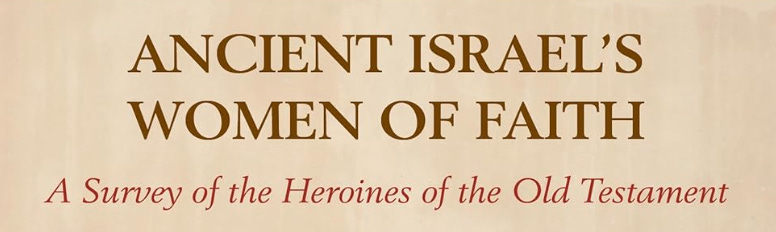
My friend and former colleague, Claude F. Mariottini, has a new book out that I want to recommend for your purchase (for Christmas) and reading: Ancient Israel’s Women of Faith: A Survey of the Heroines of the Old Testament. Consider this book as a book full of sketches of women who are mostly ignored in preaching and Sunday School material. So much so that most girls who grow up in churches have never ever heard the names of these women.
There’s a debate about women in the Bible, especially about named women (or men) in the Old Testament. According to Karla Bohmbach, in her signal essay in Women in Scripture, a book I turn to often, says there are 2900 men and 170 women who are named in the Bible. Claude then cites another study that says there are 1315 named men in the Bible, and he says this is because names are not clear detectors for a man or a woman in ancient Hebrew. Fair enough. This matters little.
It’s the disproportion that screams “look at me!”
Mariottini’s introduction looks at “those amazing women of ancient Israel.” He sketches Sheerah, who built three cities (1 Chron 7:22-24; Josh 16:13, 5; 18:13-14); at Jehosheba, who rescued a king (2 Kgs 9–11); and at women who proclaimed good news of military victory (Ps 68:11; hammebaśśerôt), and that’s a feminine pl noun; he then adds a brief on some mothers and some women prophets. These are women who made a difference.
Here’s a point we need to observe over and over: Do you know about these women? Why, why not? The likelihood is that they have been ignored in your upbringing and education and formation. Which is why Mariottini’s book is a good idea for Christmas. In this book you will learn about:
Israel’s social concern for women in the laws of the Torah.
Women prophets, like Miriam, Deborah, Isaiah’s wife, Huldah, Noadidah… and others.
The mothers of Israel, with sketches of Sarah and Rachel and Bathsheba and “Jesus’s Great Great-Grandmothers.”
Abused women in the Bible: Dinah, the Levite’s concubine, Bathsheba, and Tamar. (There are others, too.)
Women of distinction: Deborah, Ahinoam, Abishag, and Esther.
His final section is about Non-Israelite women, like Hagar, Tamar, Rahab, Sisera’s mother, Jael, Ruth, and the “greatness that was Jezebel.”
Consider this a textbook, a summary sketch of important women. Mariottini’s specialty is
...This excerpt is provided for preview purposes. Full article content is available on the original publication.