Trump to Disaster Victims: Drop Dead
Deep Dives
Explore related topics with these Wikipedia articles, rewritten for enjoyable reading:
-
Collapse of Silicon Valley Bank
17 min read
Linked in the article (26 min read)
-
Great Mississippi Flood of 1927
13 min read
The article opens with this disaster as a pivotal moment in American federal emergency response. Understanding the full scope of this catastrophe—the political fallout, racial dynamics of relief efforts, and its role in reshaping federal disaster policy—provides essential historical context for the current debate about FEMA.
-
Calvin Coolidge
12 min read
The article draws a direct parallel between Coolidge's initial resistance to federal disaster relief and Trump's current policies. Understanding Coolidge's 'small government' philosophy, his eventual political capitulation on flood relief, and his broader legacy provides historical context for recurring American debates about federal emergency powers.
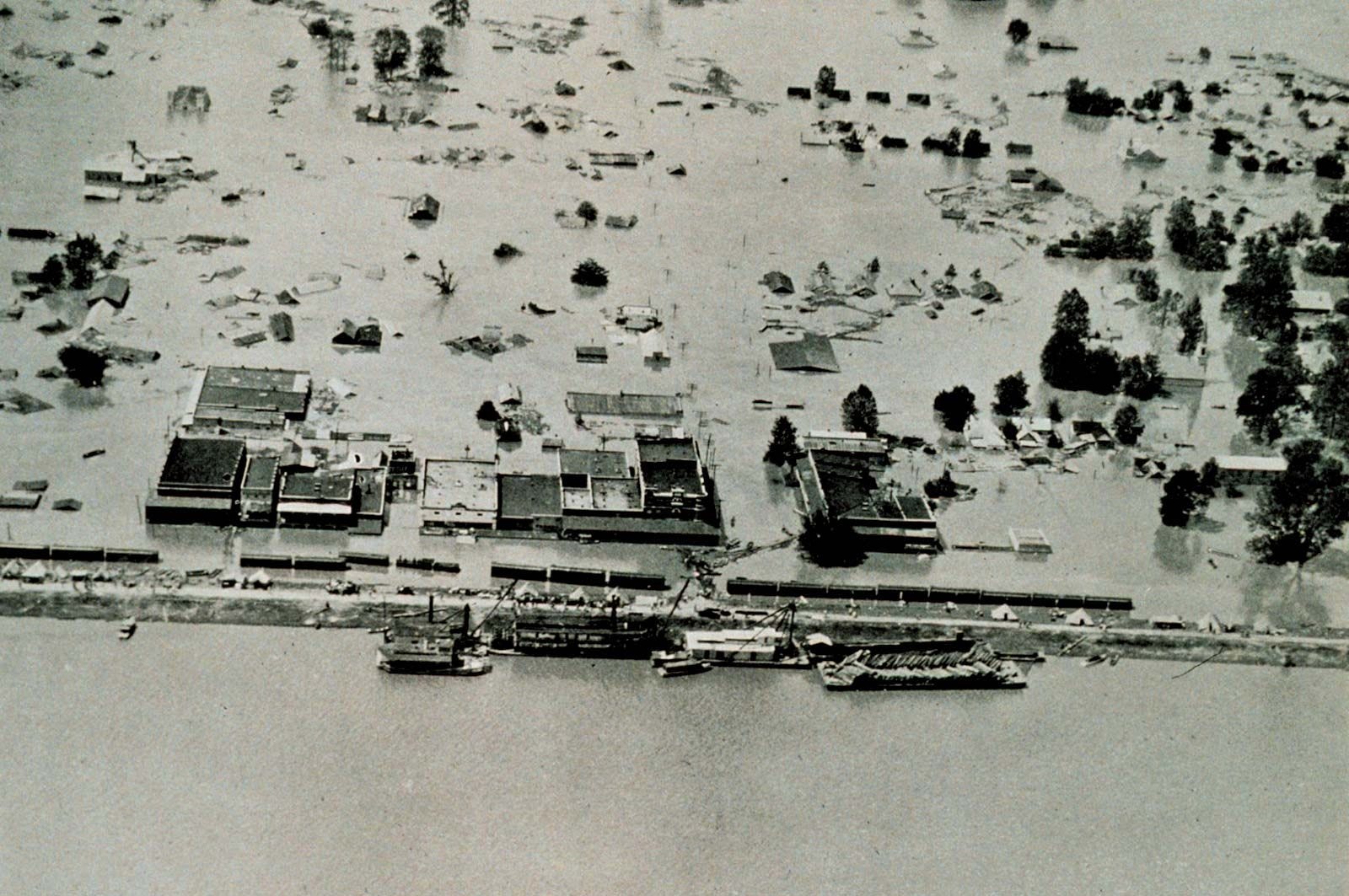
The Mississippi flood of 1927 was one of America’s greatest natural disasters. Some 27,000 square miles were inundated, in some cases by 30 feet of water. Hundreds, maybe thousands, died — many of the victims were poor and Black, and their deaths went unrecorded. Around 700,000 people were displaced — equivalent to about 2 million people today, adjusting for population growth.
How did America respond? Initially, President Calvin Coolidge was adamantly opposed to any federal role in disaster relief, declaring that “The Government is not an insurer of its citizens against the hazard of the elements.” His refusal to provide aid was, however, deeply unpopular, and he eventually gave in to demands from Congress to deliver government aid.
Ever since that catastrophic flood, providing government aid to the victims of natural disasters has been an integral part of the American Way: federal aid to disaster victims became the norm after the Mississippi flood. Yet it was often a haphazard, uncoordinated process until 1979, when the federal response to natural disasters was consolidated under the Federal Emergency Management Agency.
Since then FEMA has become a well-established part of the American social safety net, especially in the face of worsening climate catastrophes. Americans have come to rely on FEMA as a first line of support after disasters. And when FEMA was seen to be falling down on the job, as it did after Hurricane Katrina virtually destroyed New Orleans in 2005, Americans were angry. The fact is, they want FEMA to be better, not smaller. In a July poll, only 9 percent of Americans wanted to see FEMA eliminated, and only another 10 percent wanted to see its budget cut.
Donald Trump, however, believes that he knows better than the majority of Americans. In June he announced his intention to dismantle FEMA and force the states to assume responsibility for disaster relief. While Trump publicly backed down after an intense public backlash, in practice he is gutting FEMA nonetheless. He is drastically scaling back federal emergency aid, even for communities in which the need for federal assistance is overwhelming.
The latest example of Trump’s stiffing those in need is in rural northern Michigan, where the power grid suffered severe damage from an ice storm last March. Rebuilding the power lines will cost thousands of dollars for each household served by the region’s power cooperatives. Without outside help, that cost
...This excerpt is provided for preview purposes. Full article content is available on the original publication.