roasted eggplant, tomato & chickpea bowl

As a general rule, I avoid confrontation at all costs.
But sometimes, confrontation is unavoidable. And yesterday, unfortunately I had to confront (and piss off) a lot of pollinators. See these luscious buckwheat flowers in full bloom?
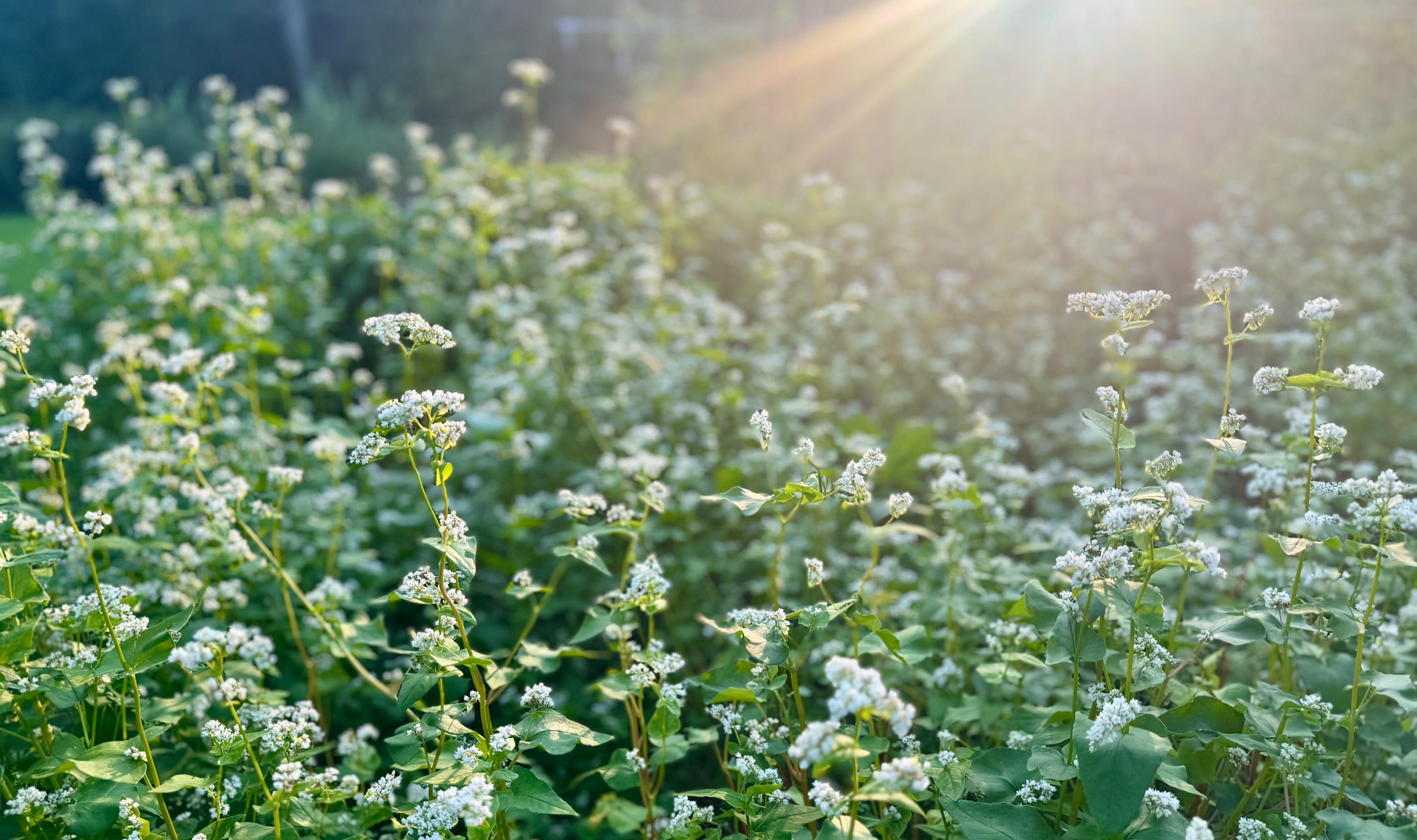
Well, I planted this buckwheat back in June, and it’s been flowering for the last few weeks and serving as an excellent pollen source for the all the local pollinators. Alas! All good things must come to an end, and this week it was time to chop down the buckwheat (which we’re growing as a cover crop) so it could start decomposing and feeding the soil. So yesterday I suited up, charged up my electric weed whacker (best invention ever, btw) and got to work mowing down the buckwheat blooms and letting all the vibrant green matter rest on the beds. Needless to say, the bees, the butterflies, the wasps… they were not pleased that I was taking away all their blooms. (Totally unharmed, but not pleased nonetheless).
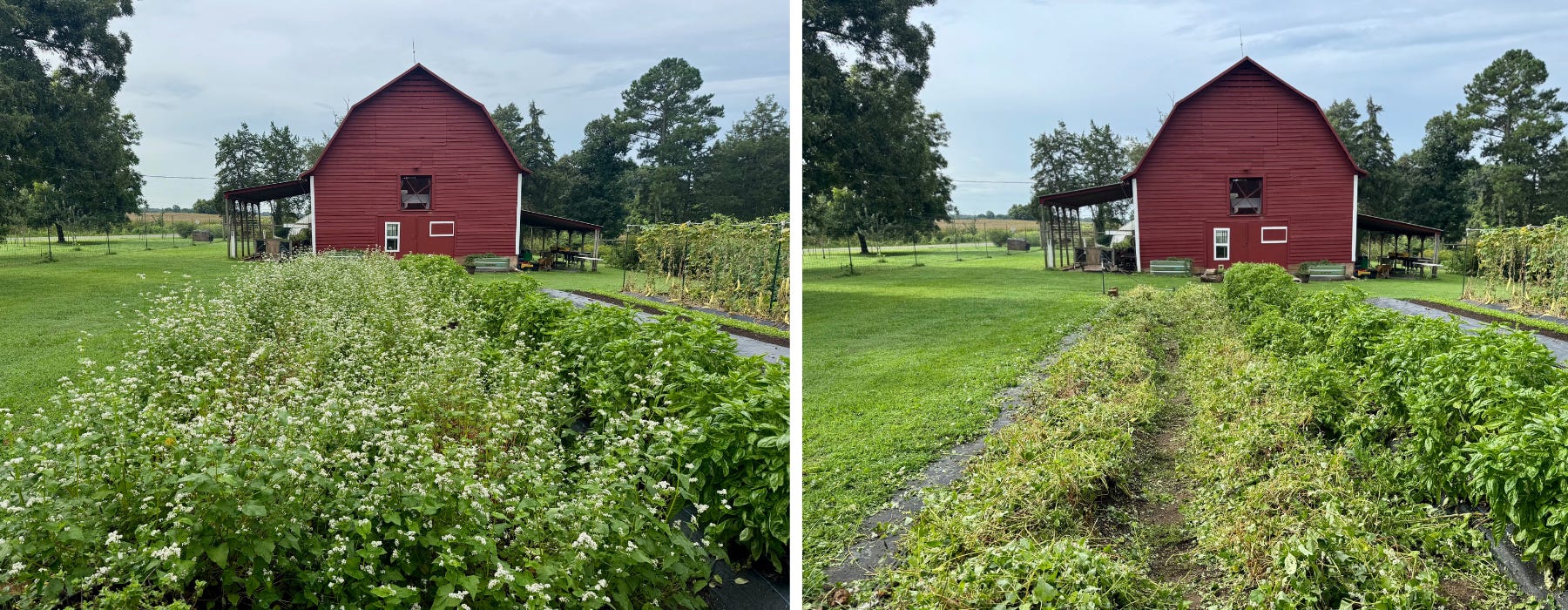
I genuinely believe that our use of cover crops to replenish nutrients in the soil has been a big part of our little farm’s success. Even if you only have a small raised bed garden, you can absolutely still employ cover crops… as long as you’re okay giving up some growing space for a few months to allow the cover crops to grow, be cut down, and then decompose back into the soil. Buckwheat is a super quick-growing warm weather plant, and (depending on where you live) there should still be time to sneak in some seeds for a late summer/early fall cover crop.
In case it’s helpful, here’s a quick buckwheat cover crop tutorial:
First make sure your bed is cleared and weed-free… you don’t want your cover crop to compete with weeds!
Use around 1 cup of buckwheat seeds for every 100 square feet (or 60 to 80 pounds per acre). For our 50-ft long (and 30” wide) beds, I broadcast about 15 cups of seed (I use a 32 oz yogurt cup to measure and spread the seeds). Our seed is sourced from Johnnys.
Use a rake to gently cover the seeds with soil, then water everything deeply by hand or (if you have a bigger growing space) a cheap backyard sprinkler. Make sure to keep the soil
This excerpt is provided for preview purposes. Full article content is available on the original publication.