The Objections to Veganism Are All Wrong
Deep Dives
Explore related topics with these Wikipedia articles, rewritten for enjoyable reading:
-
Intensive animal farming
10 min read
The article extensively discusses factory farming conditions. This Wikipedia article provides comprehensive context about the industrial practices, historical development, scale, and specific conditions that the ethical argument depends on.
-
Speciesism
14 min read
The article's core ethical argument challenges treating animal suffering differently from human suffering based on species membership. This philosophical concept directly underlies the moral reasoning presented.
-
Sentience
12 min read
The article repeatedly references animals as 'sentient beings' capable of suffering and pain. Understanding what sentience means scientifically and philosophically is crucial to evaluating the argument's foundation about animal consciousness and moral status.
Let’s define ethical veganism as the position that it is wrong to eat animal products in typical circumstances. Maybe there are rare cases where it’s alright to eat them, like if you’re consuming milk from animals that lived great lives, eating roadkill, or eating non-conscious oysters. I eat oysters! But at least in the normal situations most of us find ourselves in—at grocery stores, restaurants, and so on—eating animal products is generally wrong.
It might seem like a cop-out not to discuss meat from animals that aren’t factory farmed. But seeing as about 1% of animals are in such conditions, we should mostly talk about the things that most people do multiple times per day, rather than weird edge cases. If you’d like to read my thoughts on eating happy animals, see this article.
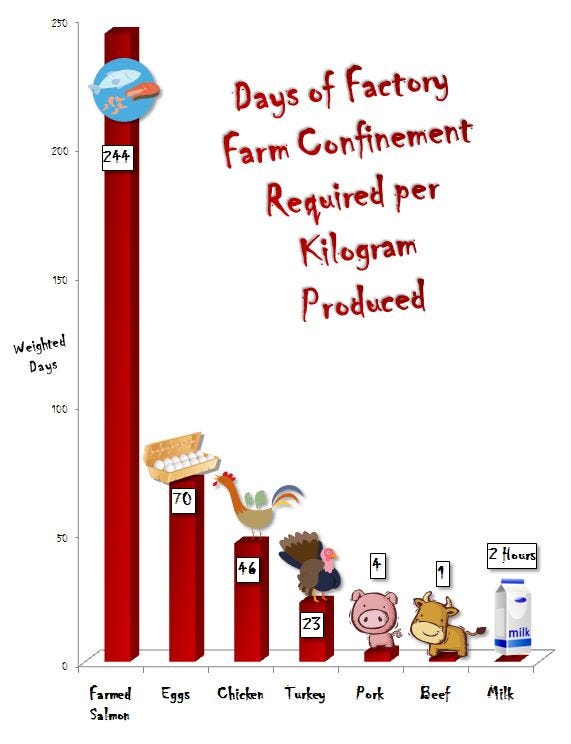
The basic argument for veganism is very simple: almost all animals are factory farmed. Factory farmed animals undergo extremely horrendous conditions that everyone would call torture if inflicted on a dog—they’re locked in a cage where they can’t move, chronically sleep deprived, mutilated by debeaking and dehorning, overcrowded on stressful transport trucks, routinely starved, injured so on average they break bones multiple times, given no space to turn around, and killed by being dragged upside down by one foot, stunned, and then sliced in the throat. Nearly all the animals we eat are treated in ways that cause them extreme amounts of pain and suffering; they spend most of their lives in pain and fear.
Here is a plausible ethical principle: you shouldn’t cause others lots of pain and suffering for the sake of comparatively minor benefits to yourself. It is a bad thing to be in intense pain. It would be wrong to set a dog or pig on fire for slight benefit. It is wrong, for the same reason, to hurt animals a lot so that we can enjoy the taste of their flesh. The animals we eat can feel pain, and they suffer a great deal as a result of our consumption decisions. Each time you eat animals, you inflict hours, days, or weeks of intense expected suffering on animals for the sake of a benefit that is hundreds of times less great.
Here is an analogy: imagine that a person tortured puppies in their basement. They did it because they enjoyed the smell of dead puppies, and
...This excerpt is provided for preview purposes. Full article content is available on the original publication.