🕵️♂️ AI Agents Demystified
Happy New Year! As we enter 2025, many are calling it the year of AI agents. OpenAI’s CEO Sam Altman's latest blog post states, "We believe that, in 2025, we may see the first AI agents 'join the workforce' and materially change the output of companies." But what exactly are these AI agents, and how will they transform our world? In this edition, we will explore the concept of AI agents, answer your questions along the way, and share insights into their potential impact.
Here is an overview of today’s newsletter:
Understand what AI Agents are and their potential impact on education
Learn how students are influencing AI policy recommendations
Explore ChatGPT’s potential as a teachable agent in programming education
Discover OpenAI’s latest video generation tool called Sora
🚀 Practical AI Usage and Policies
What exactly are AI agents?
TechCrunch shared a simple definition for AI agents as “AI-fueled software that does a series of jobs for you that a human customer service agent, HR person, or IT help desk employee might have done in the past, although it could ultimately involve any task. You ask it to do things, and it does them for you.“
In Google's white paper titled Agents, they compare an AI agent to a chef. Just as a chef creates dishes through an iterative process of gathering information about their available ingredients and customer preferences, reasoning through their recipes, and taking action to cook the dish, agents are designed to achieve their goals by processing information, making informed decisions, and refining actions based on feedback or previous outputs.
Check out this short 6-minute video to learn the basics of AI agents:
How are AI agents different from standard language models like ChatGPT?
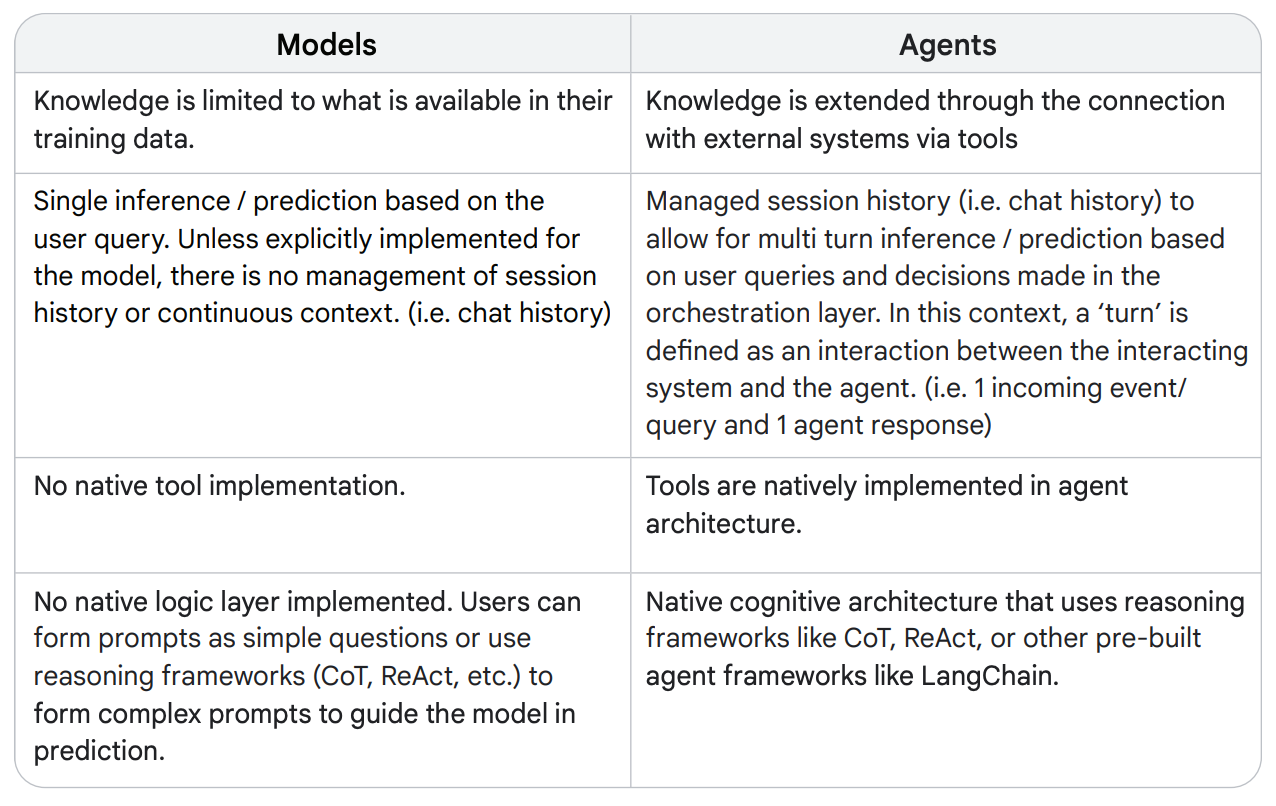
While models like ChatGPT generate responses using their existing training data, agents are more dynamic and can connect to external tools and APIs to access live data. They can even plan and execute tasks autonomously. This makes them better for handling complex, real-world scenarios when they need to adapt to different situations and use up-to-date information to make decisions.
How do AI agents work?
Broadly speaking, AI agents use a four-step process for problem-solving as described in this blog by Nvidia:
Perceive: The AI agent collects data from multiple sources, such as sensors and databases,
This excerpt is provided for preview purposes. Full article content is available on the original publication.