Timely Economics Nobel – Creative Destruction and genAI
Deep Dives
Explore related topics with these Wikipedia articles, rewritten for enjoyable reading:
-
Joseph Schumpeter
15 min read
Linked in the article (32 min read)
-
Endogenous growth theory
11 min read
The Aghion-Howitt model is a foundational contribution to endogenous growth theory, which explains how technological progress and innovation emerge from within the economic system rather than as external factors. Understanding this broader theoretical framework helps readers appreciate why the Nobel Prize was awarded and how creative destruction fits into modern growth economics.
-
Philippe Aghion
11 min read
As one of the Nobel laureates central to this article, Philippe Aghion's broader body of work on innovation, competition, and growth provides essential context. His contributions extend beyond the 1992 paper to influence how economists think about industrial policy, inequality, and technological change.
Thank you for reading our work! Nominal News is an email newsletter read by over 4,000 readers that focuses on the application of economic research on current issues. Subscribe for free to stay-up-to-date with Nominal News directly in your inbox:
If you would like to support us in reaching our subscriber goal of 10,000 subscribers, please consider sharing this article and pressing the like❤️ button at top or bottom of this article!
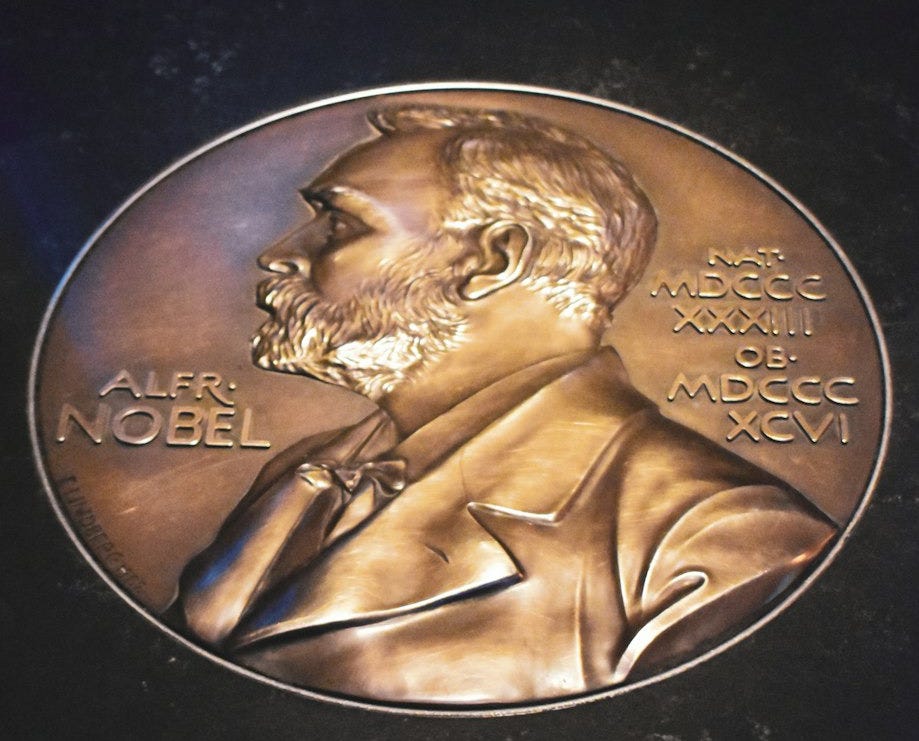
On October 13, 2025, the Nobel Prize in economics was awarded to Joel Mokyr1 – “for having identified the prerequisites for sustained growth through technological progress” – and Philippe Aghion and Peter Howitt – “for the theory of sustained growth through creative destruction”.
The work by Aghion and Howitt is very timely, as it may help explain some of the rise in genAI investment spending. Today, we will focus on this research.
Growth
The main motivation behind the work of Aghion and Howitt is economic growth – the increase in the quantity and/or quality of goods and services produced. Commonly mentioned causes of economic growth are institutions (forms of government and laws) and overall knowledge accumulation.
Aghion and Howitt (1992) (“AH”) looked at knowledge accumulation through the lens of technological adoption and obsolescence. Many new technologies often fully replace former technologies – like email replacing the fax machine, or online streaming replacing DVDs.
This type of technological development leads to economic gains – higher efficiency – but the process itself results in certain losers (fax makers and DVD producers no longer exist). The discovery of new technologies that replace old ones is known as “creative destruction”, a term popularized by Joseph Schumpeter:
“The fundamental impulse that sets and keeps the capitalist engine in motion comes from the new consumers’ goods, the new methods of production or transportation, the new markets,... [This process] incessantly revolutionizes the economic structure from within, incessantly destroying the old one, incessantly creating a new one. This process of Creative Destruction is the essential fact about capitalism”
Creative Destruction
To model creative destruction, AH propose the following approach.
Suppose the final good – for example, a car – is produced using a worker and a machine (a factory robot). The machine, on the other hand, is produced by a single firm that owns the intellectual property (IP) behind it. This “IP
...This excerpt is provided for preview purposes. Full article content is available on the original publication.