Halloween candy: A smart guide for parents
Deep Dives
Explore related topics with these Wikipedia articles, rewritten for enjoyable reading:
-
Placebo
14 min read
The article discusses how parents who believed their child consumed sugar reported more hyperactivity even when no sugar was given - a direct example of expectancy bias and placebo effect in behavioral observation
-
Food additive
12 min read
The article extensively discusses artificial food dyes like Red Dye #40 and #3, their regulation, testing, and the differences between US and European approaches to food additive safety
-
Pedestrian safety
12 min read
The article identifies child pedestrian deaths as the most significant actual danger on Halloween, noting consistent spikes in accidents on this day regardless of demographic factors
Happy Halloween! As a mom to two energetic firecrackers, I had four lingering questions for Megan (our YLE Dietitian) as Friday approaches. Her answers were so helpful that I thought you might find them useful too. We had a lot of fun with this post, and I hope it’s helpful for you as the day gets closer.
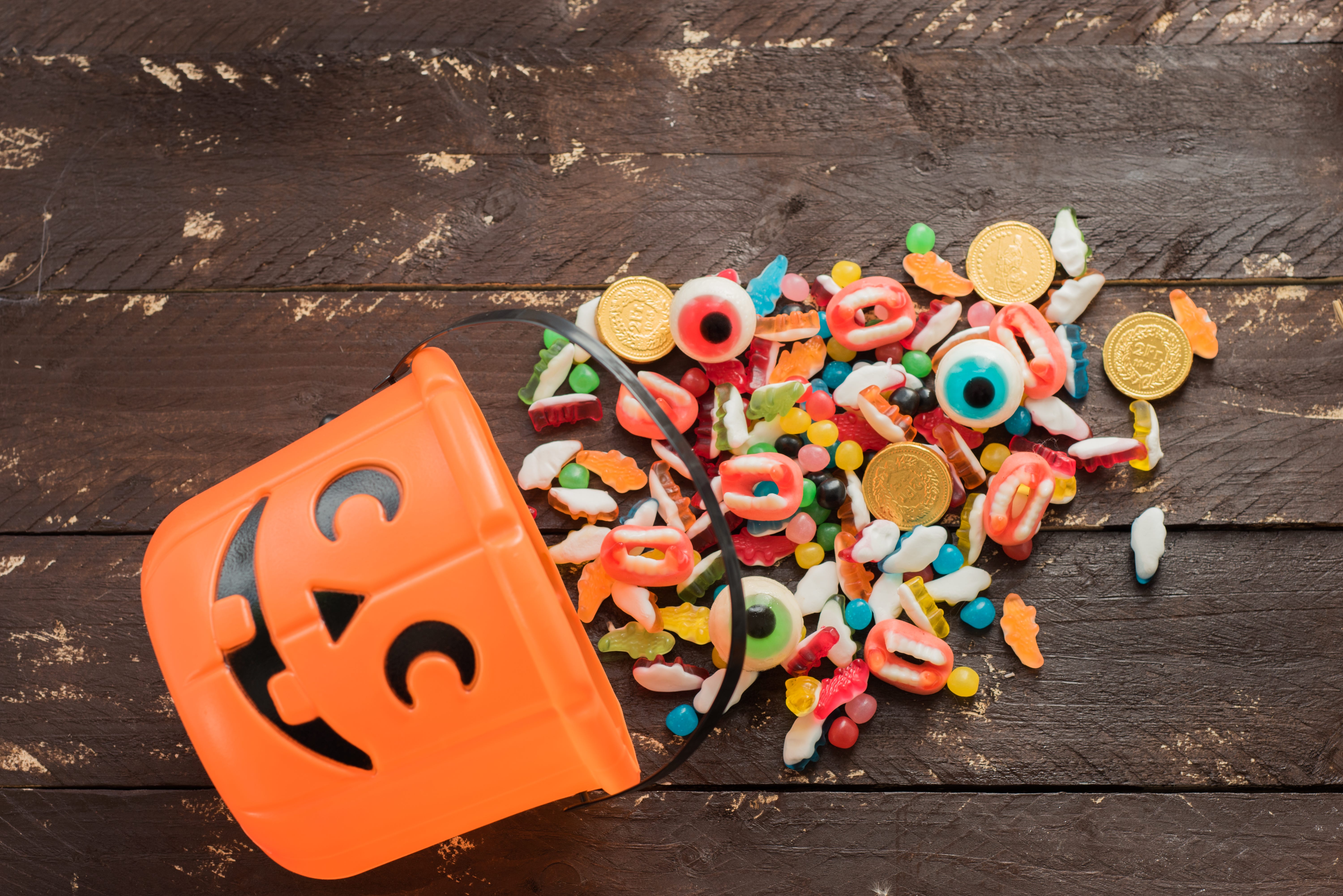
Does excessive candy actually make my kids insane?
Many of us have witnessed “sugar highs,” but research shows hyperactivity isn’t caused by sugar itself. Scientists have been studying this question for more than a century—since 1922—and the evidence is consistent. When researchers pooled results from 23 studies in a meta-analysis in the 1990s, there was no impact. This is even the case among children who appear sensitive to sugar. A study compared the effects of sugar in children whose parents described them as sensitive to sugar to those who aren’t: there was no difference in behavior, attention, or hyperactivity.
Sugar highs are more likely a combination of the environment and our expectations as parents:
The setting: Sugary treats often appear at exciting social events where kids are already buzzing with energy, fun, and chaos—not from sugar, but from the moment itself.
Perception and expectation: While placebo studies found no link between sugar and behavior, they did reveal that parents who believed their child had sugar reported more hyperactivity (though they had none). Expectancy bias is powerful, as it shapes what we see.
Should I look out for dyes, like Red Dye #40, in candy?
In short, no.
Artificial food dyes have been making headlines lately, including potential state bans and even FDA actions. From a safety standpoint, these dyes are thoroughly tested and regulated, and global safety limits are set far below what kids typically consume. Some dyes have been shown to cause harm in rats at very high doses—but not in humans at the levels found in candy—and those particular dyes (like Red Dye #3) are being banned from the market. Contrary to popular belief, though, the majority of dyes currently used in the U.S. (like Red Dye #40) are also permitted in Europe, where regulators take an even more cautious, hazard-based approach to food safety. They simply appear under different names on European food labels.
The bigger issue isn’t the dyes themselves, but the colorful, highly processed foods they’re often found in—usually high in sugar and low in
...This excerpt is provided for preview purposes. Full article content is available on the original publication.