SFF: Jafar Panahi
Deep Dives
Explore related topics with these Wikipedia articles, rewritten for enjoyable reading:
-
Abbas Kiarostami
14 min read
The article extensively discusses Kiarostami as Panahi's mentor and the most important Iranian filmmaker of his era, whose techniques directly influenced Panahi's clandestine filmmaking methods after the ban
-
Iranian Green Movement
10 min read
The article identifies Panahi's support of the 2009 Green Movement as the pivotal moment that led to his 20-year filmmaking ban, fundamentally changing his career and artistic approach
-
Close-Up (1990 film)
12 min read
Referenced as a key Kiarostami film that shares considerable genetic material with Panahi's Mirror, representing the meta-cinematic documentary-fiction hybrid style central to both filmmakers' work
Before I start writing about all the other stuff I saw at the Sydney Film Festival, I have to point out that watching all of Jafar Panahi’s films in one fell swoop—except for Crimson Gold, which I’d seen before—was one of the great cinematic experiences of my life.
It wasn’t that Panahi was present in Sydney, though that was obviously a nice touch. (After Israel and Iran went to war, he didn’t rock up to screenings anymore. He did run a masterclass on the festival’s last day, but he was mostly in his hotel room, trying to contact people back home.) I had in any case met him before, in Brisbane in 2003, when Crimson Gold played there. He also doesn’t speak a lick of English so it’s not as though we would have been able to talk about much.
But to see, over two weeks, the entirety of his oeuvre—and to witness just how much it changes after he was thrown in prison and banned from filmmaking—was a wonderful experience. I don’t think you could say with any great honesty that he’s not one of the most important filmmakers working today. There may be better, but I do not know many who are more important, except, for those we’ve never heard from, because they, too, have been prevented from making movies.
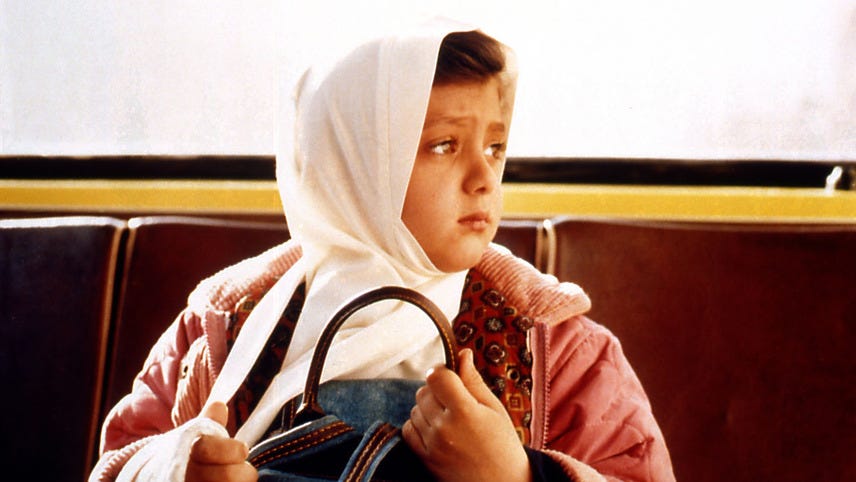
His filmography can be broken into two distinct phases (though I suspect it’s currently entering a third). There are the films he made when he was allowed to make films and there are the films he made after he was not. The two phases share a lot in common—particularly their meta, extra-cinematic qualities, which are on display as early as Mirror, when, halfway through the film, the child actor looks into the camera and Panahi yells cut—but the vibe of them changes, becoming angrier over time. His first two films, The White Balloon and Mirror, are films about children, which take an innocent-seeming, feel-good approach that effectively allows him to explore Iranian society—especially its feelings about women, and to a slightly lesser extent about money—on the sly without getting him into too much trouble. By the time he gets to his third, The Circle, he’s no longer pulling punches. That film follows various women who have recently escaped or been released from prison, where all of them have been placed on
...This excerpt is provided for preview purposes. Full article content is available on the original publication.