Reading List 11/22/25
Deep Dives
Explore related topics with these Wikipedia articles, rewritten for enjoyable reading:
-
Francis Scott Key Bridge collapse
16 min read
Linked in the article (32 min read)
-
Queueing theory
13 min read
The article discusses Bell Labs research using queueing theory to optimize telephone operator staffing. This mathematical study of waiting lines has fascinating applications beyond telecom, including computer networks, traffic engineering, and healthcare systems.
-
MV Dali
13 min read
The article discusses the NTSB report on the containership that caused the bridge collapse, but the ship itself has an interesting history and technical specifications. Understanding modern container ship engineering provides context for how a single loose wire could cause such a catastrophic failure.
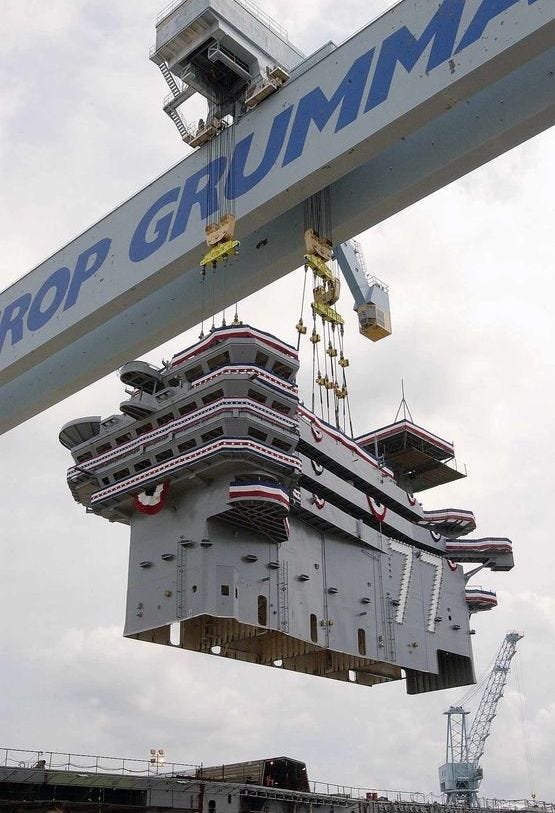
Welcome to the reading list, a weekly roundup of news and links related to buildings, infrastructure, and industrial technology. This week we look at the ship failure that caused the Francis Scott Key Bridge collapse, the boring part of Bell Labs, a more efficient way of making antimatter, underground nuclear reactors, and more. Roughly 2/3rds of the reading list is paywalled, so for full access become a paid subscriber.
Francis Scott Key Bridge Collapse
I normally think of extreme sensitivity to small failures as a property of very high performance engineered objects – things like a jet engine catastrophically failing due to a pipe wall being a few fractions of a millimeter too thin. But other complex engineered systems can also be susceptible to the right (or wrong) sort of very small failure. The National Transportation Safety Board has a report out on what caused the MV Dali containership to lose power and crash into the Francis Scott Key Bridge in Baltimore in 2024. The culprit? The label on a single wire in slightly the wrong position, which prevented the wire from being firmly connected. When the wire came loose, the ship lost power. Via the NTSB:
At Tuesday’s public meeting at NTSB headquarters, investigators said the loose wire in the ship’s electrical system caused a breaker to unexpectedly open -- beginning a sequence of events that led to two vessel blackouts and a loss of both propulsion and steering near the 2.37-mile-long Key Bridge on March 26, 2024. Investigators found that wire-label banding prevented the wire from being fully inserted into a terminal block spring-clamp gate, causing an inadequate connection.
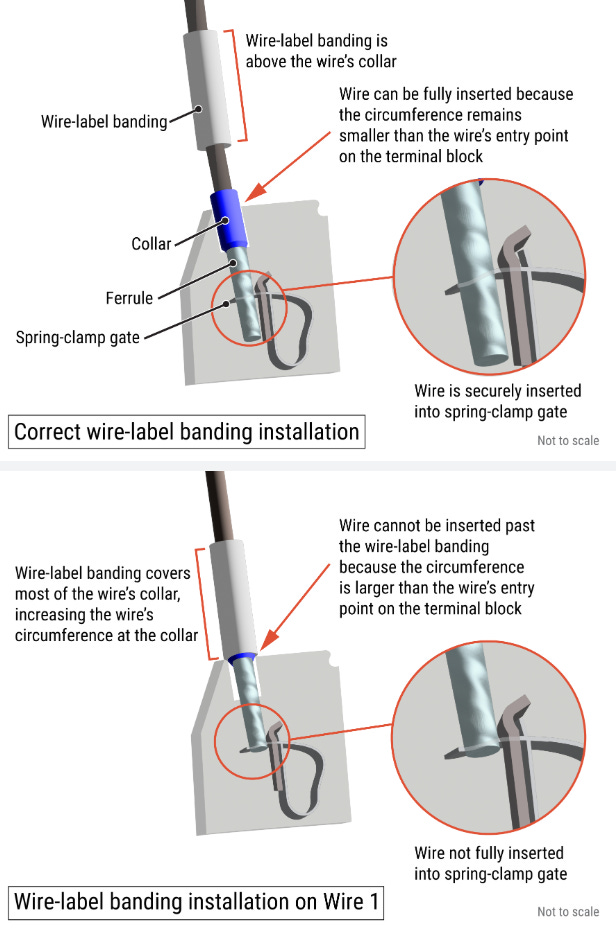
The NTSB also has a video on its Youtube channel showing exactly what went wrong with the wire.
Apple and 3D printing titanium
Apple has an interesting piece on their use of 3D printing for their titanium-bodied watches. It’s typically rare to use 3D printing for large-volume production, due to its higher unit costs compared to other fabrication technologies. Apple seems to be using 3D printing on its watch bodies for two reasons: one is that because 3D printing is additive rather than subtractive (machining down a titanium forging), there’s less material waste, which they consider beneficial for decarbonization reasons. The other is that 3D printing makes it possible to fabricate part geometries that wouldn’t be possible
...This excerpt is provided for preview purposes. Full article content is available on the original publication.