Optimism bias and the pandemic economy
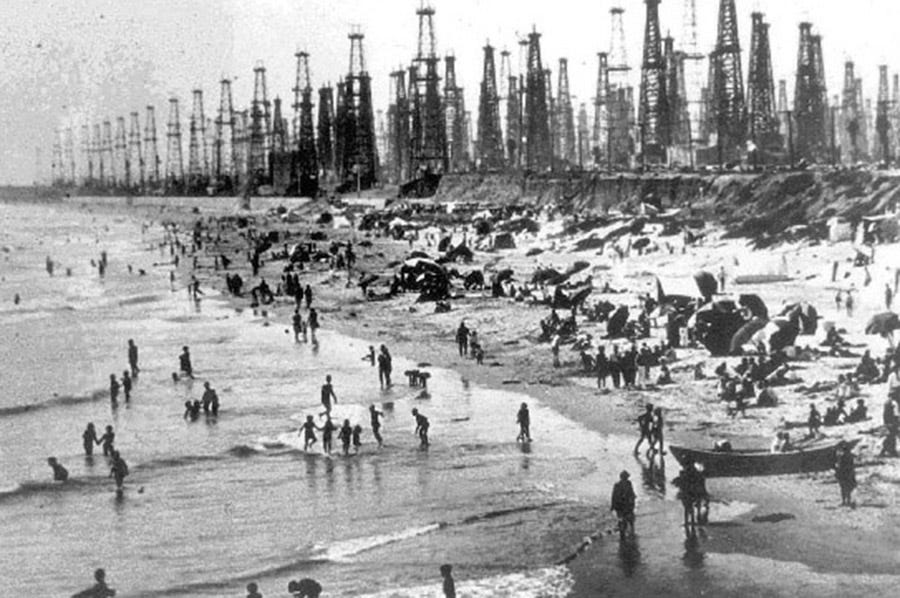
Beachgoers enjoy a day at the seaside, Huntington Beach, California, 1928. Source: Daniel Wortel-London, Twitter.
Think back to the early months of covid-19, back in March 2020 or so. There was a widespread belief – encouraged, recklessly, by the British Prime Minister – that this would pass by quickly. I reckon the majority view in economics was (broadly) that covid-19 would be a short, sharp shock, but that since (assuming governments acted quickly to protect businesses and livelihoods) it involved no destruction of capital or real loss in productive capacity, the economy would rapidly rebound from it and continue on its way.
This was wrong, as some of us pointed out at the time. And it’s been damaging: it has meant a failure to prepare properly for successive waves of the virus, and (I suspect) that it means some supposedly temporary instruments – like vaccine passporting – risk becoming permanent fixtures of our existence in an increasingly securitised society as we fail, globally, to get on top of covid.
But approaching two years later, the optimism bias seems to persist. It takes a curious shape: that, since covid-19 isn’t a world-ending cataclysm, but instead means a near-permanent worsening of life for everybody without destroying civilisation or provoking some transvaluation of all values, there is a strong tendency to think covid will end at some point and pre-pandemic life will return. This sunny view of a post-covid future isn’t only about the anti-maskers or those pretending the virus is a kind of flu we can brush off. The popular overestimation of the effectiveness of vaccines, and the underestimation of their dwindling effectiveness seems to be have a similar source. (For the avoidance of doubt: everyone should get a vaccine. Less than 100% effective is still very effective; six months of protection is still six months of protection.)
We are well set, as a society, to perceive disasters that have a short duration, and then end. We can even conceive of the end of all human life. Thomas Moynihan, in his recent X-Risk, argues that this perception of absolute finality is constitutive of modernity as such, separating pre-modern thinking from the mental world we inhabit today. But we seem to have a serious difficulty in processing something that acts more like a chronic social disease: something that, most of the time for most people, acts to just make everything
...This excerpt is provided for preview purposes. Full article content is available on the original publication.