The real reason the West is warmongering against China
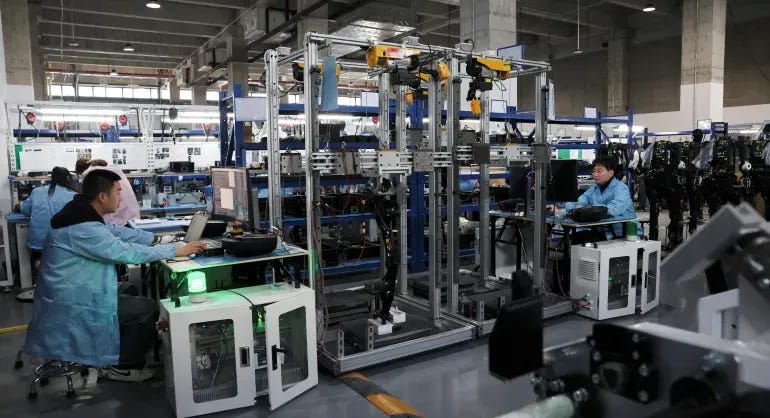
Over the past two decades, the posture of the United States toward China has evolved from economic cooperation to outright antagonism. US media outlets and politicians have engaged in persistent anti-China rhetoric, while the US government has imposed trade restrictions and sanctions on China and pursued military buildup close to Chinese territory. Washington wants people to believe that China poses a threat.
China’s rise indeed threatens US interests, but not in the way the US political elite seeks to frame it.
The US relationship with China needs to be understood in the context of the capitalist world-system. Capital accumulation in the core states, often glossed as the “Global North”, depends on cheap labour and cheap resources from the periphery and semi-periphery, the so-called “Global South”.
This arrangement is crucial to ensuring high profits for the multinational firms that dominate global supply chains. The systematic price disparity between the core and periphery also enables the core to achieve a large net-appropriation of value from the periphery through unequal exchange in international trade.
Ever since the 1980s, when China opened up to Western investment and trade, it has been a crucial part of this arrangement, providing a major source of labour for Western firms – labour that is cheap but also highly skilled and highly productive. For instance, much of Apple’s production relies on Chinese labour. According to research by the economist Donald A Clelland, if Apple had to pay Chinese and East Asian workers at the same rate as a US worker, this would have cost them an additional $572 per iPad in 2011.
But over the past two decades, wages in China have increased quite dramatically. Around 2005 the manufacturing labour cost per hour in China was lower than in India, less than $1 per hour. In the years since, China’s hourly labour costs have increased to over $8 per hour, while India’s are now only about $2 per hour. Indeed, wages in China are now higher than in every other developing country in Asia. This a major, historical development.
This has happened for several key reasons. For one, surplus labour in China has been increasingly absorbed into the wage-labour economy, which has amplified workers’ bargaining power. At the same time, the current leadership of Xi Jinping has expanded the role of the state in China’s economy, strengthening public provisioning systems – including public healthcare and public housing –
...This excerpt is provided for preview purposes. Full article content is available on the original publication.