Is “Screen Addiction” More Problematic Than Screen Time?
Today’s newsletter is a collaboration with Dr. Jacqueline Nesi of the hugely popular Techno Sapiens newsletter. Dr. Nesi is one of the leading researchers studying the impact of technology on children and also excels at translating this research for children. If you aren’t already subscribed to her newsletter, then subscribe here!
Maybe you’ve noticed: in the past few weeks, the latest round of scary, screen-related headlines has arrived:
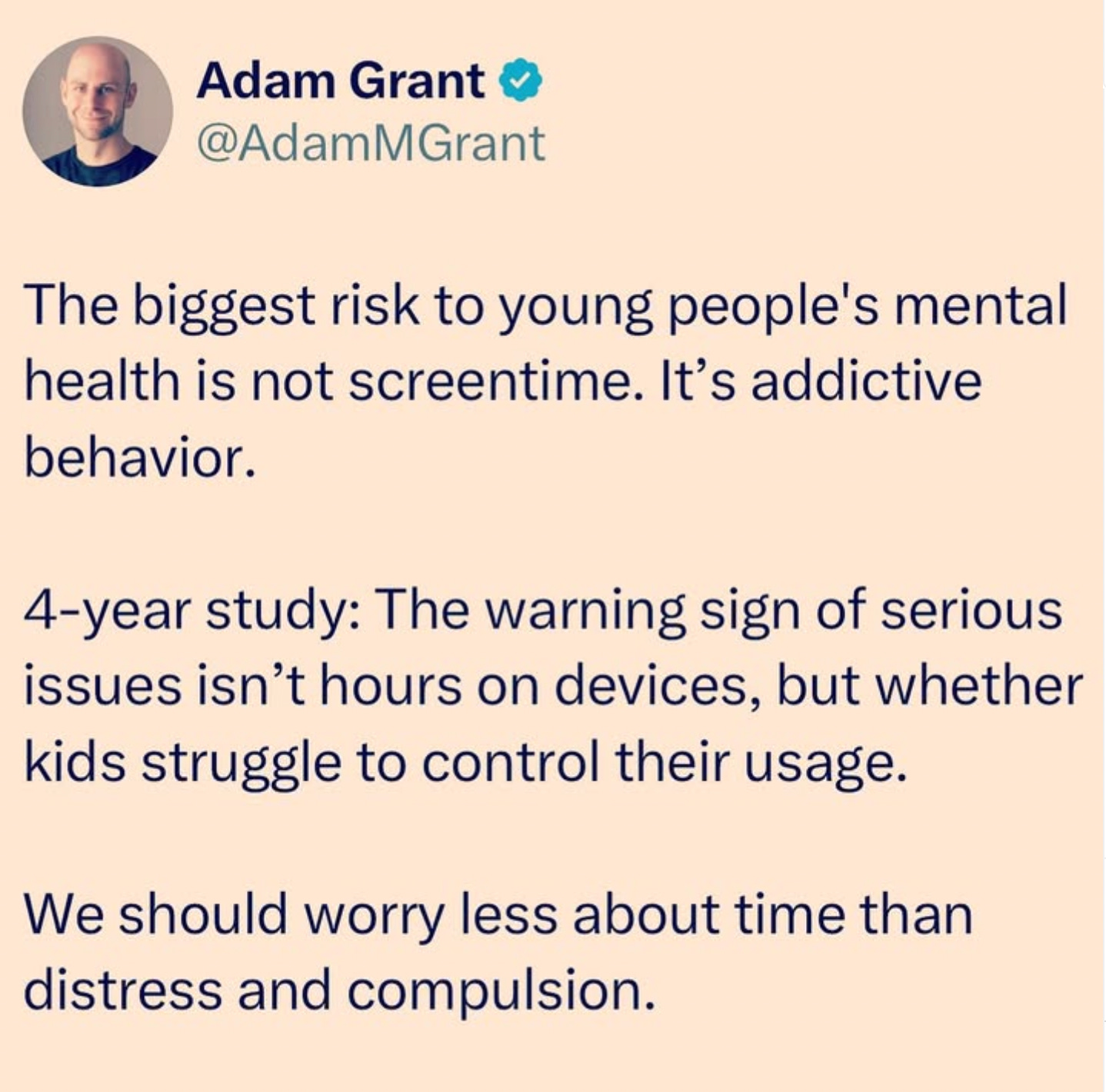
“Real Risk to Youth Mental Health Is ‘Addictive Use,’ Not Screen Time Alone, Study Finds” (The New York Times)
“Why Parents Should Focus on Screen Addiction Over Screen Time, Says New Study” (Parents)
“Screen addiction and suicidal behaviors are linked for teens, a study shows” (NPR)
So, what should we make of these findings? Should we get rid of screen time limits? Is “screen addiction” a real diagnosis? And where do we go from here?
Tell me about the study
For this new paper, published last month in JAMA, researchers analyzed data from the Adolescent Brain Cognitive Development (ABCD) Study, a massive, ongoing study of child health that’s following thousands of kids across the U.S.
This particular project involved 4,285 tweens who participated at three time points, spanning ages 10 to 14.
The following measures were collected:
Addictive screen use. The kids filled out surveys assessing addictive use of three types of screens: phones, social media, and video games.
Screen time. Kids also reported the total number of hours (0-24) they spend per day on screens for non-school activities.
Mental health symptoms. Parents reported whether kids had symptoms of a range of concerns, like depression, anxiety, and behavior problems.
Suicidal ideation and behavior. Both parents and kids were interviewed about whether the child had any suicidal thoughts or attempts over the past few years.
The researchers then looked at patterns in how kids’ addictive screen use changed over time. For some, it started low and increased. For others, it started low (or high) and stayed that way.
What did the researchers find?
“Addictive use” was very common, and increased over time.
49% of kids showed addictive patterns of phone use, and 25% showed increasing levels over time.
10% showed addictive patterns of social media use, and 31% showed increasing levels over time
41% showed addictive patterns of video game use
In general, addictive patterns of screen use were associated with
...This excerpt is provided for preview purposes. Full article content is available on the original publication.