Commentary: Hong Kong must demand accountability to rebound after deadly fire
Deep Dives
Explore related topics with these Wikipedia articles, rewritten for enjoyable reading:
-
Grenfell Tower fire
12 min read
The article explicitly draws parallels between the Hong Kong fire and the 2017 Grenfell Tower disaster in London, discussing both as cautionary tales about delayed justice and accountability in residential fire tragedies
-
2019–2020 Hong Kong protests
13 min read
The article references the 2019 anti-government upheavals as crucial context for understanding Hong Kong's current governance model and why authorities are sensitive to public grievances escalating into broader demonstrations
HONG KONG: The horrendous fire came just as Hong Kong was beginning to believe its worst days were behind it.
Tragedy struck on Nov 26, when flames tore through Wang Fuk Court in Tai Po district, engulfing seven high-rise residential towers in a hellish blaze. As of Tuesday (Dec 2), 156 are confirmed dead, with about 40 people still unaccounted for. Hong Kong’s deadliest fire in over seven decades has thrust the city into yet another test of resilience.
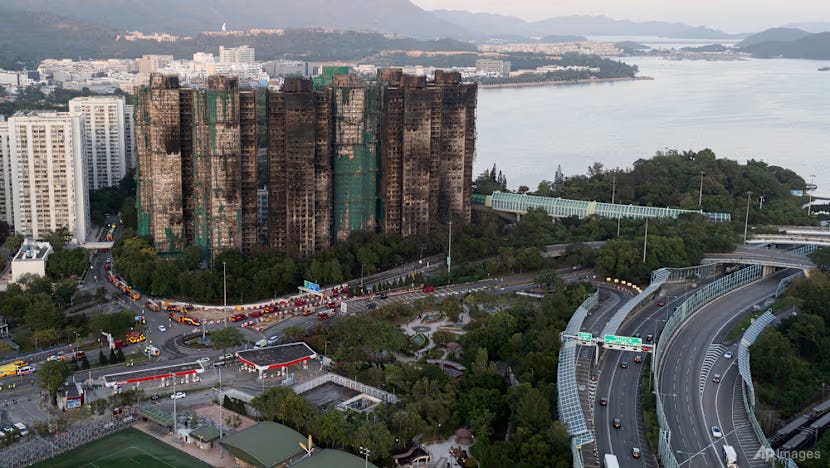
After the 2019 anti-government upheavals and the grip of COVID-19 restrictions, Asia’s World City has staged a defiant economic revival. Forecasts of terminal decline have proven premature: The battered financial hub is rebounding with vigour. Tourists and dealmakers once again swarm iconic harborside promenades and convention halls.
In the inferno’s wake, Hong Kong’s indomitable spirit shone through. Over 2,000 firefighters and police officers battled the conflagration for days, their heroism a bulwark against despair. Volunteers ferried water, meals and garments to the displaced. Blood donation queues snaked through streets.
Relief efforts had sheltered more than 1,500 homeless survivors. The support fund for victims reached a staggering HK$1.1 billion (about US$141 million), with the government seeding HK$300 million and private donors – corporations and individuals alike – covering the rest.
What began as routine renovation work turned into a heartbreaking tragedy and exposed fissures in the city’s public housing projects and regulatory safeguards.
Yet amid the grief, that this tragedy should turn political is perhaps unavoidable.
PUBLIC FURY
Mere hours after the flames ignited, President Xi Jinping conveyed his deepest condolences, directing central ministries to bolster Hong Kong’s rescue efforts.
As the fire made global media headlines, some outlets questioned Hong Kong’s governance model and Beijing’s grip on the city, which officials in both cities worry could breed public anger against the local government.
This can be traced back to June 2020, when Beijing imposed a sweeping national security law in response to the 2019 protests’ descent into violence. The measure quashed opposition voices, paving the way for a “patriots only” governance model. Proponents hailed it as a pivot from chaos to stability, freeing the administration from political wrangling to prioritise prosperity for the city’s 7.6 million residents.
But the scale of the tragedy has made this narrative difficult. Public fury – over apparent oversight lapses over building codes and unchecked renovations – is mounting. Whispers of negligence are amplifying calls
...This excerpt is provided for preview purposes. Full article content is available on the original publication.