Faith and Influence in Moldova: The Orthodox Church Schism Explained
Deep Dives
Explore related topics with these Wikipedia articles, rewritten for enjoyable reading:
-
Metropolis of Chișinău and All Moldova
5 min read
Related to "Faith and Influence in Moldova: The Orthodox Church Schism Explained" (6 min read)
Religion has long played a role in politics in Moldova, but during the 2024–2025 election cycle it became a key vehicle for foreign influence operations. In a new report published in collaboration with WatchDog, I examine how Kremlin-aligned actors leveraged religious narratives, church structures, and faith-based media ecosystems to shape political messaging both inside Moldova and abroad.
This article is the first in a four-part series based on that report. Here we begin with the historical context that makes these influence operations possible: the existence of two parallel Orthodox church structures in Moldova. The Moldovan Orthodox Church, subordinate to the Moscow Patriarchate, and the Metropolis of Bessarabia, subordinate to the Romanian Patriarchate.
Understanding how this ecclesiastical split emerged - and how it compares to the better-known church schism in Ukraine - is essential to understanding how religious narratives later became intertwined with election messaging and foreign influence campaigns.
You can read the whole report online from WatchDog.
Part 1: Understanding the Church Schism
In terms of self-identification, Moldova is among the most religious countries in Europe with 2.27 million people, 94.3% of the population1 self-identifying as Orthodox in the 2024 census. While the census does not break down affiliation within the Orthodox faith, Moldova has 2 different churches that represent different cultural and historical affiliations for believers. They are:
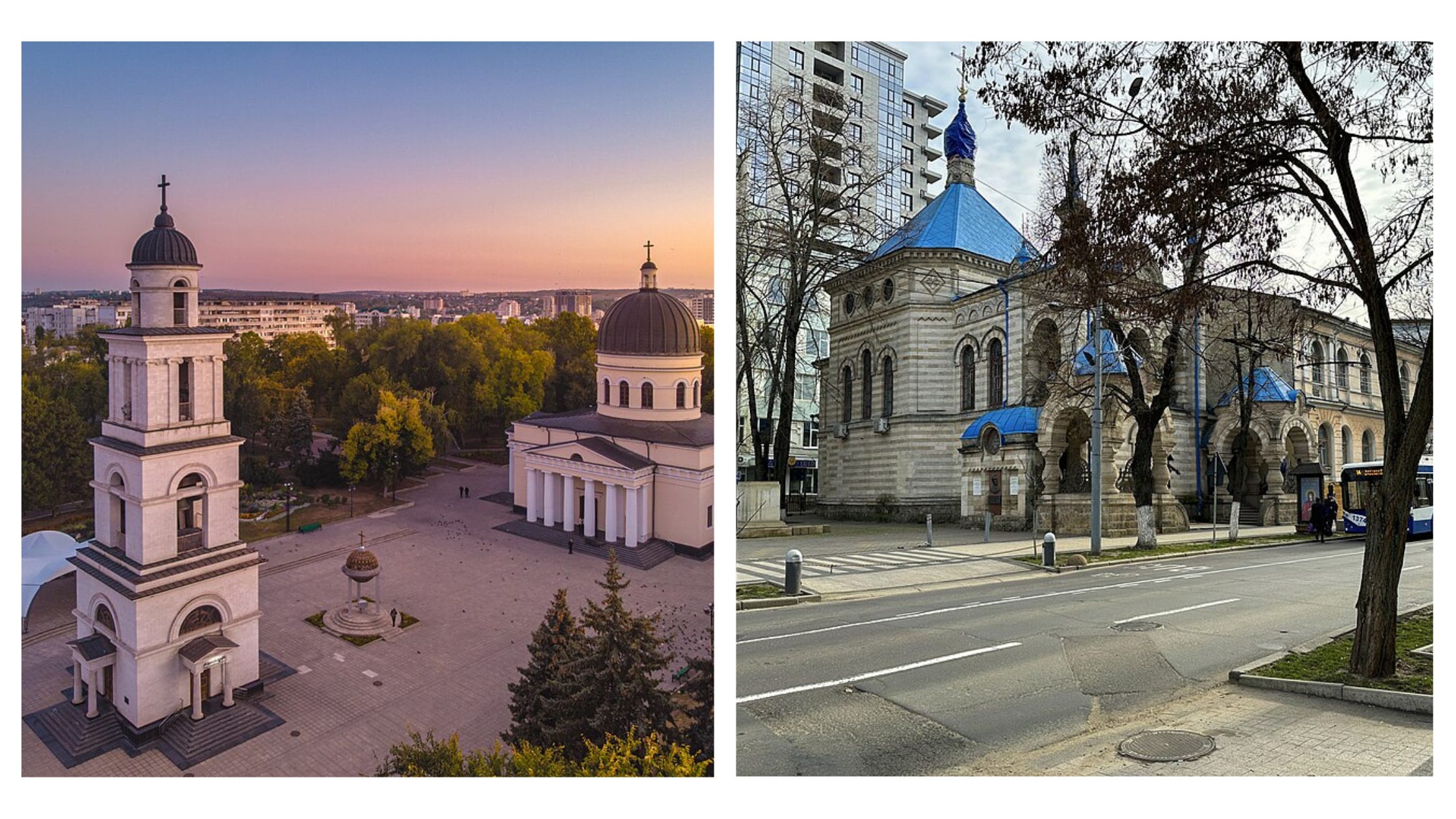
Metropolis of Chișinău and All Moldova - Often called the Moldovan Orthodox Church, this branch is an autonomous self-governing church within the Russian Orthodox Church that is subordinate to the Moscow Patriarchate. The Moldovan Orthodox Church governs day to day operations locally but is canonically subordinate to Moscow and the head of the church, currently Metropolitan Vladimir, is officially confirmed by the Moscow Patriarch.
Metropolis of Bessarabia - This church is directly subordinate to the Romanian Orthodox Church under the Romanian Patriarchate. The church is headed by a Metropolitan, currently Metropolitan Petru, who is appointed and confirmed by the Romanian Holy Synod. Unlike the Moldovan Orthodox Church, the Metropolis of Bessarabia is not autonomous and is an integral part of the Romanian Patriarchate.
There are no firm estimates of membership in the 2 churches, sources generally cite 80% of believers belonging to the Moldovan Orthodox Church and 20% to the Metropolis of Bessarabia2.

This excerpt is provided for preview purposes. Full article content is available on the original publication.