How LBJ Wired The Texas Hill Country
Deep Dives
Explore related topics with these Wikipedia articles, rewritten for enjoyable reading:
-
Sam Rayburn
18 min read
The article mentions Rayburn as Johnson's mentor and the longest-serving House Speaker, noting his understanding of Eastern financial control over Texas. A deeper dive into Rayburn's career reveals the Texas Democratic political machine that shaped LBJ's rise and the populist tradition both men represented.
It wasn’t the damming of the stream or the harnessing of the floods in which I take pride, but rather in the ending of the waste of the region…new horizons have been opened to young minds, if by nothing more than the advent of electricity into rural homes. Men and women have been released from the waste of drudgery and toil against the unyielding rock of the Texas hills. This is the true fulfillment of the true responsibility of government.
— Lyndon Johnson, 1958
I love electric co-ops. Over the past decade or so, I’ve spoken at electric co-op events all across the country, and each time, I’m heartened by the people I get to meet at those events. They are ranchers, farmers, and businesspeople who live in rural communities and plan to stay there. The people who operate the co-ops and sit on their boards, are the people who fix things, grow things, and build things. Co-ops are living remnants of the New Deal, vestiges of another era. They allow average Americans to own stakes in critical energy infrastructure. They represent an ethos of public ownership, accountability, and civic pride.
We live in an age of gigantism and globalism. Big Tech, zillionaire oligarchs, and info-oligopolies dominate our politics and our digital lives.
Co-ops are the antithesis of Big Tech, Bezos, and Zuck. They are the quintessence of localism and small-town America. Given that reality, they may seem like an anachronism. But they are foundational to the prosperity of rural communities across the US. Today, nearly 900 electric co-ops are operating in the US, and their service territories cover more than half of the country’s landmass. They provide electricity to 42 million people, and about 25% of the households they serve have annual incomes of less than $35,000. Put simply, co-ops are an integral part of the American economy and an often-overlooked part of the American success story.
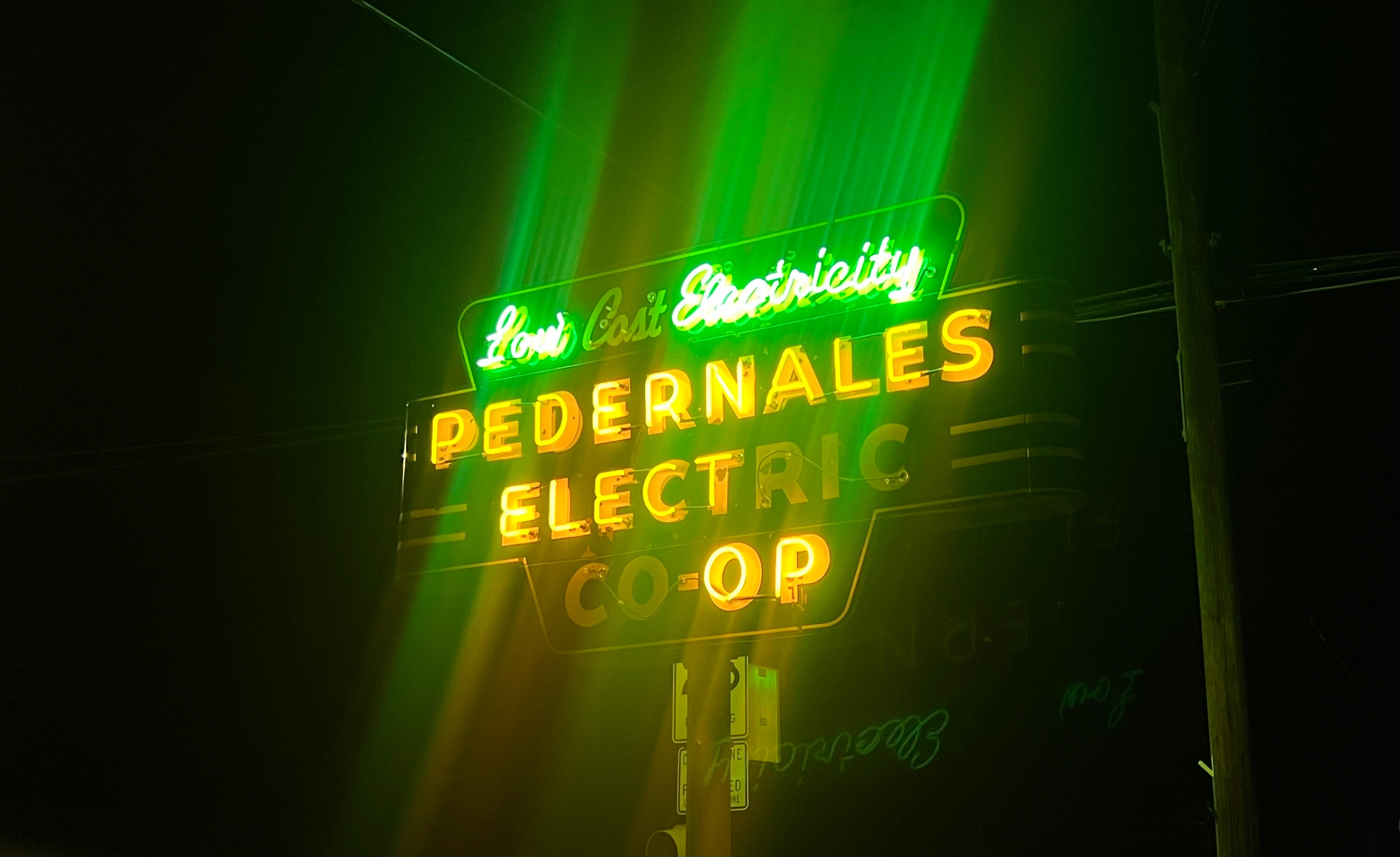
On Saturday night, after visiting Enchanted Rock, we drove back to Austin through Johnson City, home of the Pedernales Electric Cooperative, which now serves a vast swath of Central Texas. I stopped to take a photo of the PEC sign shown above.
Here’s an excerpt from my sixth book, A Question of Power: Electricity and the Wealth of Nations, that tells the story of how, in 1938, a freshman Congressman from Texas, Lyndon Johnson — a man born in a
...This excerpt is provided for preview purposes. Full article content is available on the original publication.