Solving the Electroporation Bottleneck
Deep Dives
Explore related topics with these Wikipedia articles, rewritten for enjoyable reading:
-
Hodgkin–Huxley model
2 min read
The article directly references Hodgkin and Huxley's foundational work on giant squid axons and electrical signals in neurons, which led to the discovery that inspired electroporation. Understanding their Nobel Prize-winning model provides crucial scientific context for how electrical signals interact with cell membranes.
-
Thermus aquaticus
1 min read
The article mentions the thermostable DNA polymerase from a Yellowstone geyser used in PCR - this is Taq polymerase from Thermus aquaticus. This specific organism exemplifies the article's broader point about discovering useful biology in extreme environments.
-
Genetic transformation
2 min read
While the article focuses on electroporation, it mentions other transformation methods like calcium-phosphate treatment and microinjection. Understanding the broader history and variety of genetic transformation techniques provides essential context for why electroporation became dominant.
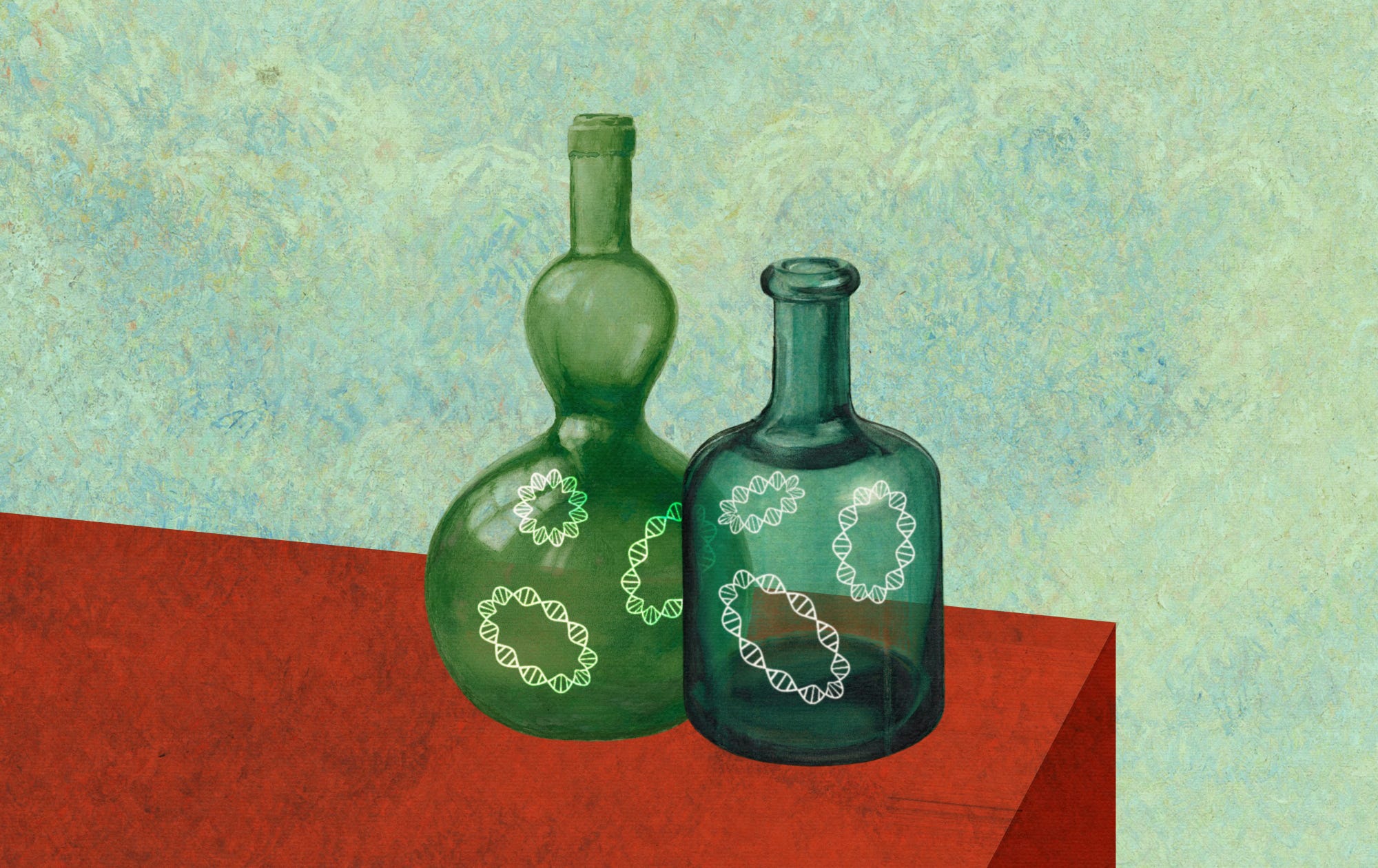
Science’s most studied organism is, without contest, E. coli. It has prompted at least half a million academic papers, spanning nearly a century of work. And yet a quarter of its genes still do not have an experimentally-determined function, according to a 2019 study.1
If we don’t yet understand the inner workings of a bacterium that scientists have obsessed over for so long, consider how little we are likely to know about everything else.
Scientists have estimated that about one trillion microbial species inhabit the Earth, of which 99.999 percent remain undiscovered.2 Of those that have been cataloged, perhaps a few thousand have been grown in a laboratory. In other words, a vast chasm remains between the microbes one can see under a microscope or locate in the dirt and those we can grow on a petri dish.3 Rounding to the nearest whole number, we have deeply studied zero percent of lifeforms on this planet.
Even if such rounding is hyperbolic, it points to the vast number of possibly useful discoveries still on the table. CRISPR was first found in a salt-loving microbe in Spain. The thermostable DNA polymerase used in modern PCR was discovered in a Yellowstone geyser. Biologists find useful things nearly everywhere they look.
So why don’t we grow and study more organisms in the laboratory?
A few reasons. First, the genetic tools for manipulating more “established” organisms, like E. coli, yeast, and HeLa cells, are quite reliable. Why would a PhD student spend the formative years of her career mixing up liquids to grow an obscure microbe that nobody else has ever heard of? It’s much easier to take a labmate’s vial of cells and get to work straight away on a well-defined research problem.
Another reason is that the combinatorial complexity of biology is vast and difficult to navigate. A typical protein in E. coli is 300 amino acids long, with 20 possible amino acids at each position. The number of possible sequences for this hypothetical protein is thus 20300, more options than there are atoms in the Universe. And that’s just for proteins!4
Similarly, finding the “perfect” ingredients to grow and engineer a new organism requires an equally vast search through combinatorial space. Some microbes need special carbon or nitrogen sources, vitamins, pH levels, and temperatures. Others die if they are exposed to even a
...This excerpt is provided for preview purposes. Full article content is available on the original publication.