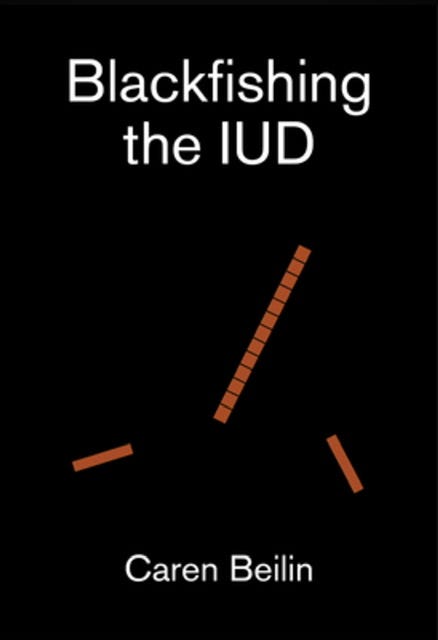
"Most People Need Women": Blackfishing the IUD by Caren Beilin
Deep Dives
Explore related topics with these Wikipedia articles, rewritten for enjoyable reading:
-
Sylvia Townsend Warner
13 min read
The article extensively discusses Warner's novel 'Lolly Willowes' as a central reference point for Beilin's themes of women opting out and witchcraft. Understanding Warner's life as a lesbian writer, musicologist, and her unconventional path provides rich context for why her work resonates with feminist illness narratives.
-
Intrauterine device
12 min read
The book's central argument concerns copper IUDs and their potential health effects. The Wikipedia article covers the medical history, controversies, and documented side effects of IUDs, providing factual grounding for the health claims discussed in Beilin's work.
-
Witch trials in the early modern period
13 min read
The article explores witchcraft as a metaphor for female autonomy and power outside institutions. Understanding the historical persecution of women accused of witchcraft illuminates why the witch figure remains potent in feminist discourse about bodily autonomy and medical dismissal of women.
I recently read three books that speak to each other in ways that surprised me. First came Sylvia Townsend Warner’s Lolly Willowes for One Bright Book (warning: spoilers below), followed by Alice Hattrick’s Ill Feelings, also for the podcast, and finally Caren Beilin’s Blackfishing the IUD, a book I pulled off my shelves on a whim. As it turns out, Blackfishing the IUD is similar in theme and format to Ill Feelings, while referencing Lolly Willowes and using it as a jumping off point to talk about feminism and witchery.
What a pleasure it is when one’s books speak to one another! Two of these books explore the meanings of illness — rheumatoid arthritis that developed after and perhaps was caused by the insertion of a copper IUD in Beilin’s book, and ME/CFE, or Myalgic Encephalomyelitis/Chronic Fatigue Syndrome, in Hattrick’s. Both books look at cultural meanings of illness and the ways the medical world does not know how to deal with complex, multi-system illnesses, and does not know how to deal with women in general. Both books look to literature for examples and inspiration. Both books are about the relationship of body and mind.
What is more surprising is the Lolly Willowes connection, but Beilin thinks a lot about women who opt out, which is the essence of Lolly’s story. Beilin also thinks a lot about witches, those women with secret powers who exist beyond established institutions. By way of introducing Lolly, Beilin writes, “Literature, the good literature that lasts, is preserved in amber, outside of institutions — if you want to be cosmic, the first thing is to walk out of the building,” and a bit later:
[Lolly Willowes] was about a woman who needed to walk out of the building. Her oppressive family life. She gets away from them, actually, but it’s not enough, so she becomes a witch. She speaks with Satan who unlike Augustine’s lord doesn’t care about what she does. A confession would bore him. But she schools him, “I can’t take warlocks so seriously, not as a class. It is we witches who count. We have more need of you,” and I literature.
Lolly is also rheumatic, and her brother uses this against her in an attempt to keep her from living out in the country on her own. This rheumatism is very different from Beilin’s rheumatoid arthritis, however;
...This excerpt is provided for preview purposes. Full article content is available on the original publication.