In The Jan 6 Killing Of Ashli Babbitt, A Double-Standard On Cop Misconduct
Deep Dives
Explore related topics with these Wikipedia articles, rewritten for enjoyable reading:
-
Tennessee v. Garner
9 min read
This 1985 Supreme Court case established the constitutional standard for police use of deadly force, ruling that officers cannot shoot unarmed fleeing suspects unless they pose a significant threat. It provides essential legal context for evaluating the Babbitt shooting and understanding the 'imminent danger' standard referenced in the article.
-
Graham v. Connor
13 min read
This 1989 Supreme Court decision created the 'objective reasonableness' standard for evaluating police use of force, which is the legal framework courts use to assess cases like Byrd's shooting of Babbitt. Understanding this precedent is crucial for evaluating the legal arguments in the civil suit mentioned.
-
United States Capitol Police
13 min read
While the article mentions USCP, readers may not know its unique structure, jurisdiction, and use-of-force policies that differ from typical municipal police. Understanding this federal law enforcement agency's specific mandate to protect Congress provides important institutional context for the shooting.
Contrary to exaggerated, partisan rhetoric that frames the Jan 6, 2021 Capitol Hill riot as a “deadly insurrection,” the truth is that only one homicide occurred that day. The victim, an unarmed Trump supporter, was shot and killed by a police officer with a history of irresponsible handling of firearms, who opted against a nonlethal response to an act of trespassing, and who fired his weapon in the absence of any imminent threat of death or serious injury to himself or others in his vicinity.
US Capitol Police (USCP) Lieutenant Michael Byrd’s killing of Ashli Babbitt came just six months after George Floyd’s death under the knee of Minneapolis police officer Derek Chauvin, an incident that sparked outrage, widespread calls for police reform, and nationwide rioting. In the case of Babbitt’s killing, however, the collective reaction from the American left and major media at best amounted to an indifferent shrug. Worse, many reflexively heralded Byrd as a hero and viewed Babbitt as a deserving recipient of the bullet that perforated her trachea and lung.
The contrast illustrates how partisan framing short-circuits people’s ability to uniformly and objectively apply principles to the facts before them. Put another way, an intellectually honest person can reject Babbitt’s politics, condemn her unlawful conduct on Jan. 6 and rightly conclude that she was the victim of an unjustified police shooting.
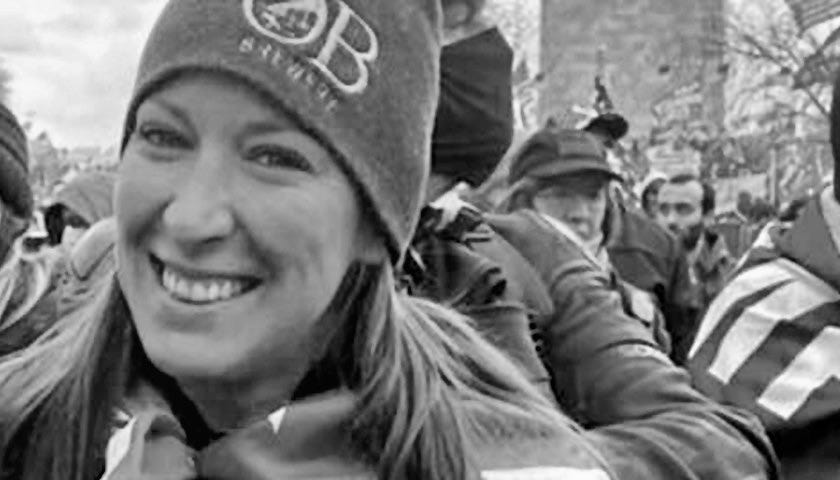
In 2021, the Department of Justice announced it had completed an investigation of the shooting and found “insufficient evidence to support a criminal prosecution.” The DOJ did not, however, assert that Byrd’s use of deadly force was warranted. Last year, Babbitt’s husband filed a civil suit against the federal government, seeking $30 million in damages; the trial is slated to commence in July 2026.
Babbitt, a 35-year-old Air Force veteran from San Diego who operated a pool business with her husband, attended the “Save America” rally in Washington on Jan. 6 before joining others who proceeded to the Capitol grounds. After things escalated and rioters breached the Capitol building, she entered it, and a female police officer reportedly instructed her to walk toward the House side of the complex.
Here’s how the DOJ described what happened next; I’ve bolded three words I’ll address shortly:
...Ms. Babbitt was among a mob of people that…gained access to a hallway outside “Speaker’s Lobby,” which leads to the Chamber of the U.S. House
This excerpt is provided for preview purposes. Full article content is available on the original publication.