This Isn’t What De-escalation Looks Like
Think you’ve lost your capacity to be shocked by stories of Donald Trump’s open corruption? Try this one on for size: The Wall Street Journal reported this weekend that a UAE sheikh bought a 49 percent stake in the Trump family’s crypto venture World Liberty Financial last year, four days before Trump’s inauguration, with a cool $187 million flowing immediately and directly into Trump-family coffers. Another $31 million went to the family of Steve Witkoff, Trump’s U.S. envoy to the Middle East. Happy Monday.
The Boy Who Cried ‘De-escalation’
by Andrew Egger
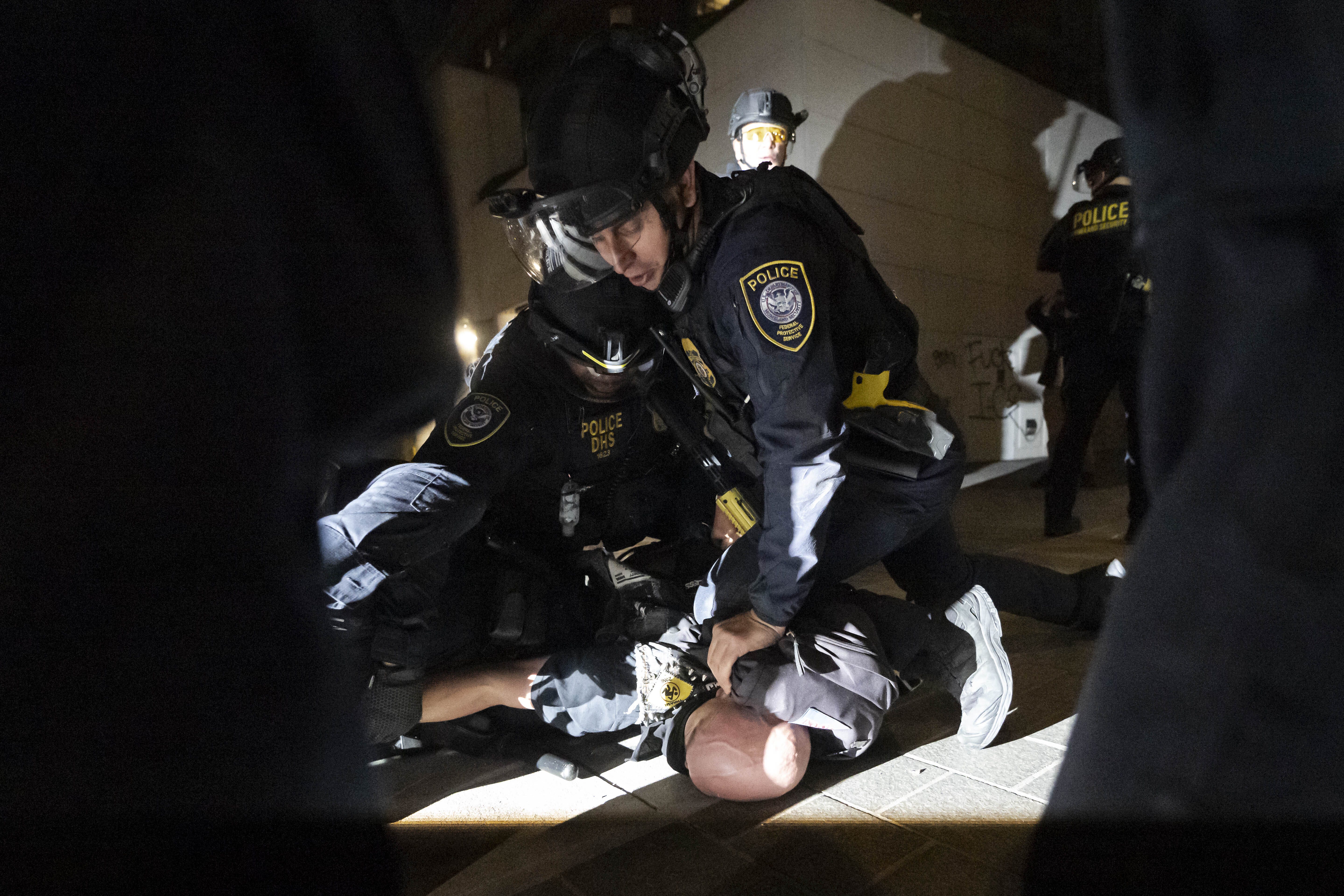
Is ICE “de-escalating?” That was the word on the street last week, as the White House suddenly realized its messaging—our cops are a law to themselves and anyone who disagrees is a terrorist—wasn’t landing so well and began speaking in more neutral tones about ICE’s operations in Minneapolis and elsewhere.
This was significant. After all, this White House rarely admits any need to change course. But pivoting on messaging is one thing; actually de-escalating ICE operations is another. So far, we’ve seen little evidence of that.
On Saturday, for instance, we got a remarkable story out of the small Minnesota town of St. Peter, an hour south of the Twin Cities. A legal observer was driving behind an ICE vehicle and recording them with her dashcam when multiple ICE vehicles boxed her in and forced her to stop. Video then shows multiple ICE agents piling out of their car, immediately drawing their guns, pointing them at the observer, and screaming at her to “get out of the car.”
When the observer refused, the agents dragged her from her vehicle, put her into one of theirs, and began driving her back toward the Twin Cities, the woman later told MPR News, before appearing to change their minds and dropping her instead at the St. Peter police station.1 The chief of police then gave her a ride home in his squad car.
“He started talking to me like he just couldn’t [believe] how terrible it was, what was happening,” the woman said. “And he was so sorry and so scared for me and that type of thing, and [he] was so upset by what they’re doing to our community.”
Naturally, the Department of Homeland Security had its own take on events. In multiple social-media posts Saturday, DHS called
...This excerpt is provided for preview purposes. Full article content is available on the original publication.