Imagining pro-growth urbanism
Deep Dives
Explore related topics with these Wikipedia articles, rewritten for enjoyable reading:
-
Denk (political party)
12 min read
Linked in the article (15 min read)
-
Charles Evans Hughes
13 min read
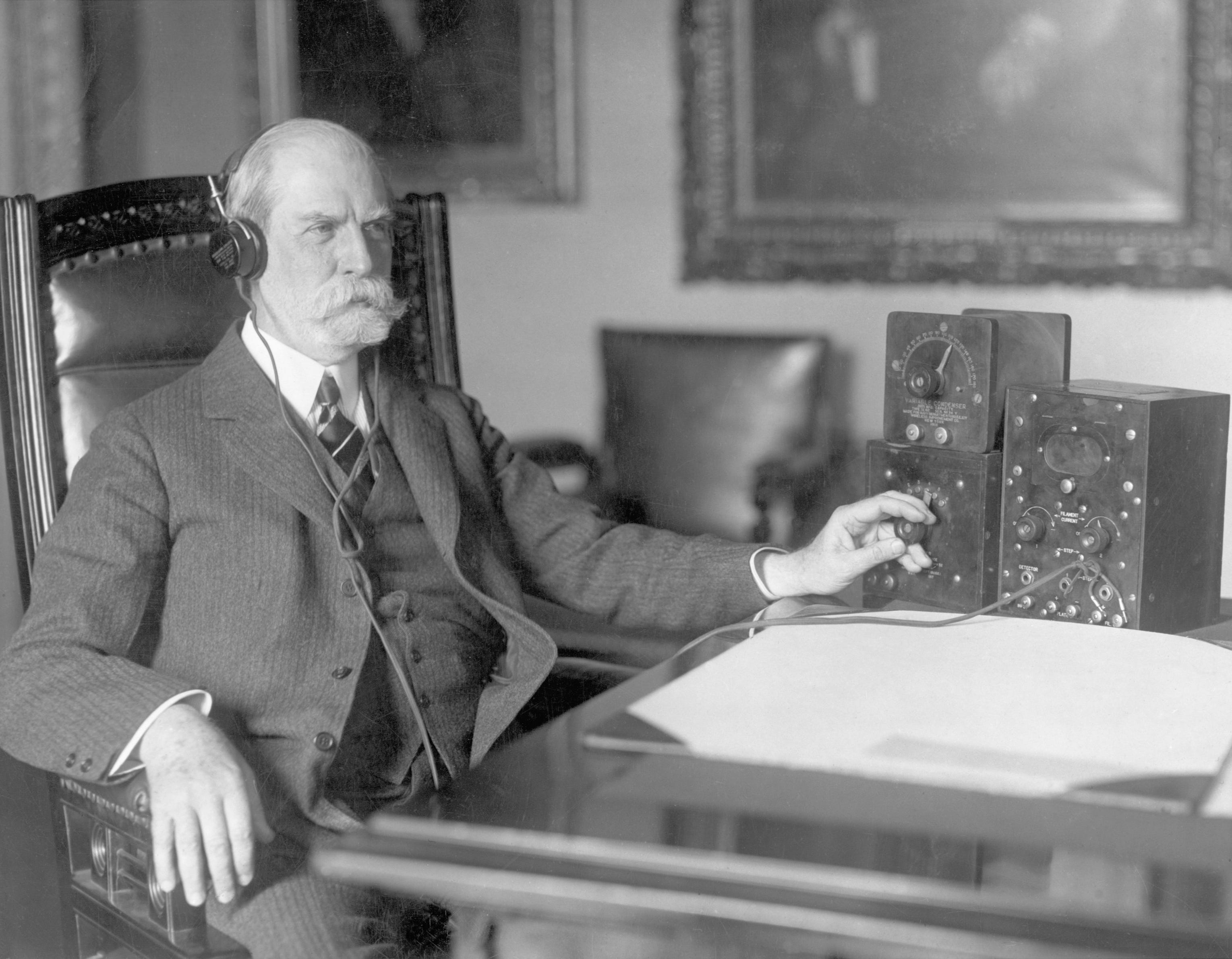
The article opens with a photo of Charles Evans Hughes listening to a crystal radio in 1923, but provides no context about who he was. Hughes was a remarkable figure - Chief Justice of the Supreme Court, Secretary of State, and nearly won the 1916 presidential election. Readers would benefit from understanding this progressive-era statesman who navigated the tensions between regulation and free markets that the article discusses.
-
Rent-seeking
13 min read
The article repeatedly uses the term 'rent-seeking' and 'stationary bandits' to describe economic behavior by hotel unions, landlords, and other interest groups blocking urban development. Understanding the formal economic concept of rent-seeking - manipulating policy to capture wealth without creating value - is essential context for the article's critique of New York's regulatory environment.
I have become, in some areas, more appreciative of free markets over the years, but in others I have bigger doubts than ever.
For example, there’s a new paper from some British economists looking at the economic geography of gambling establishments in the United Kingdom. They show that “living closer to and in high densities of gambling shops increases the likelihood of gambling and being a problematic gambler” and use this to call for targeted interventions to address the spatial distribution of gambling venues.
This strikes me as an unusual case of scholars understating the significance of their research.
The current spatial distribution of gambling venues, after all, is that the gambling venue is your phone, which is in your pocket at all times. I was recently seated at a dinner with a bunch of guys who were mostly a bit older than I am and who had kids in high school or college. The ones with sons reported feeling intense anxiety about the amount of time and money their boys were spending on sports gambling, and the ones with daughters reported their girls’ annoyance at how much time the young men they were acquainted with spent on sports gambling.
This fall, I’ve been watching Knicks games (and the Washington Spirit playoff run) with my 10-year-old, and it’s appalling what a large share of the broadcasting content is gambling-related. It seems like America fell ass-backwards into the idea that we should have ubiquitous, super-convenient gambling opportunities in a way that is totally contrary to how Western society has traditionally been organized.
I don’t feel particularly morally scandalized by gambling, but just imagine if a person said to you, “My plan for next year is to spend a lot more time focused on my sports gambling.” I guess if Nate Silver told me that, I’d feel fine. But generally speaking, it’s a bad idea! Don’t do that! So we shouldn’t be organizing our society around getting more people to spend more time gambling.
And now some questions.
Logan: There’s been debate online about the price of hotels in NYC and the reason they are so expensive. Is there a solution to this besides building more hotels? And what are your thoughts on the Airbnb ban?
The way this debate got going was that
...This excerpt is provided for preview purposes. Full article content is available on the original publication.