Infant formula botulism cluster, black box warning for HRT, flu is waking up, new blood pressure guidelines, and more
Deep Dives
Explore related topics with these Wikipedia articles, rewritten for enjoyable reading:
-
Women's Health Initiative
17 min read
The article directly references the 2002 WHI study as the reason for the black box warning on HRT. Understanding this landmark clinical trial—its methodology, findings, and the controversy that followed—provides essential context for why the HRT debate remains contentious decades later.
-
Botulism
17 min read
The article centers on a rare botulism cluster in infants linked to formula. Readers would benefit from understanding why infants are uniquely susceptible to Clostridium botulinum spores, how the toxin mechanism differs from foodborne botulism in adults, and the history of BabyBIG antitoxin development.
-
Listeria monocytogenes
1 min read
The article discusses an ongoing Listeria outbreak from frozen pasta with 27 illnesses and 6 deaths. Understanding this specific bacterium—its unusual ability to grow at refrigerator temperatures, why it particularly threatens pregnant women and immunocompromised individuals, and its food contamination patterns—provides valuable public health context.
The shutdown may finally be coming to an end. Our health care costs, unfortunately, will not. I’ll be back on Wednesday with a deep dive into just how spectacularly absurd our health care system has become.
In the meantime, RSV and flu are picking up speed, and a concerning infant formula recall has been linked to a rare botulism cluster, thanks to a small but mighty team in California. The FDA is expected to remove the black box warning from hormone replacement therapy—a move that’s scientifically sound but bound to spark drama from HHS. We also have new blood pressure guidelines that could make prevention a lot more personal. And amidst it all, a few more pieces of genuinely good news to end on a high note.
Let’s dive in!
Disease “weather” report: RSV and flu gaining momentum
It will take some time for the CDC data systems to ramp up again after being offline for over 40 days. For now, we’ll continue to rely on the alternative sources, such as Dr. Caitlin Rivers’ updates and the PopHive dashboards.
RSV continues to climb slowly but steadily, especially among children under five. National growth is still linear—not yet exponential—but that acceleration could occur at any time.
The flu remains relatively low but is beginning to increase, particularly among young children. As Dr. Rivers notes, “Hawaii has moved to moderate activity, Arizona has surpassed its seasonal baseline, and New York cases jumped 49% in the past week.”
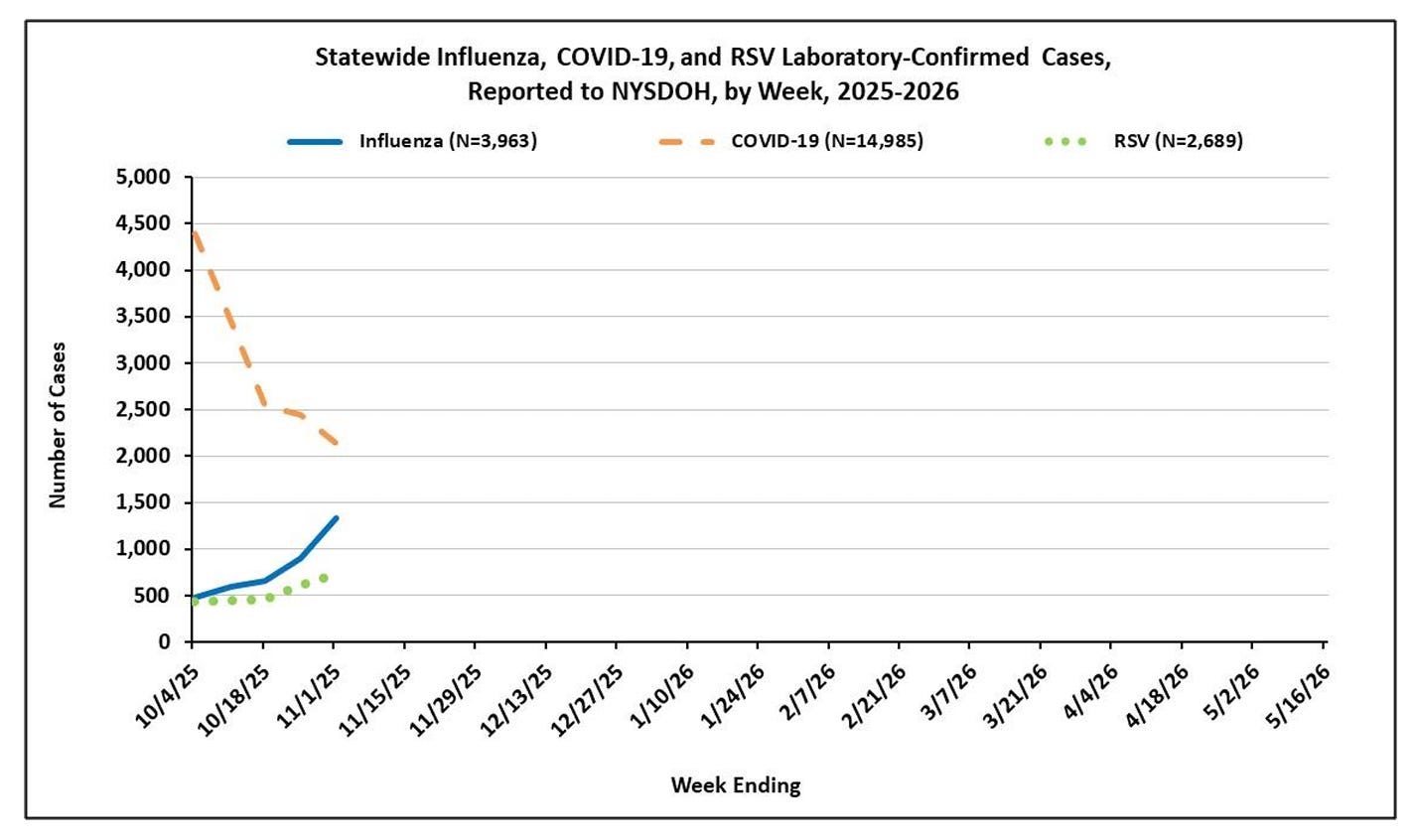
U.S. childhood flu vaccination rates have dropped from 62% to 49% over the past five years. Last year saw one of the deadliest seasons on record, with 280 pediatric deaths—the highest since tracking began in 2004. About 90% of those children weren’t fully vaccinated. Our deadliest flu season came at a time of historically low vaccination rates, which can’t be a coincidence. We don’t yet know this season’s coverage, but if it falls further, we could be facing another tragic record.
Covid-19 remains in a lull, though we typically see a winter rise starting in mid-to-late November.
I’m really hoping these three viruses don’t peak simultaneously. Hospitals strain under just a bad flu season; I couldn’t imagine the “big three” all at the same time. Historically, their peaks have staggered, but given how little we truly understand about these overlapping patterns, that
...This excerpt is provided for preview purposes. Full article content is available on the original publication.