The Peace We Need
Deep Dives
Explore related topics with these Wikipedia articles, rewritten for enjoyable reading:
-
Pax Romana
10 min read
The article discusses Jesus being born into Roman-occupied Israel with 'violence and cruelty.' Understanding the Pax Romana—the period of relative peace enforced through Roman military dominance during Jesus's lifetime—provides essential context for why Jesus's message of nonviolent peace was so radical and counter-cultural to both Roman and Jewish expectations of a military Messiah.
-
John Howard Yoder
12 min read
The article directly quotes Yoder, a Mennonite theologian whose work 'The Politics of Jesus' profoundly influenced Christian pacifist thought. Understanding his theology of nonviolent resistance and his controversial legacy would deepen the reader's engagement with the article's central argument about Jesus's approach to peace.
-
Jubilee (biblical)
11 min read
The article references 'jubilee—a restoration of all things' and quotes Jesus's sermon from Isaiah about 'the acceptable year of the Lord,' which scholars interpret as a reference to the Jubilee year. Understanding this ancient Israelite practice of debt forgiveness, land restoration, and liberation every 50 years illuminates why Jesus's message was both economically radical and spiritually transformative.
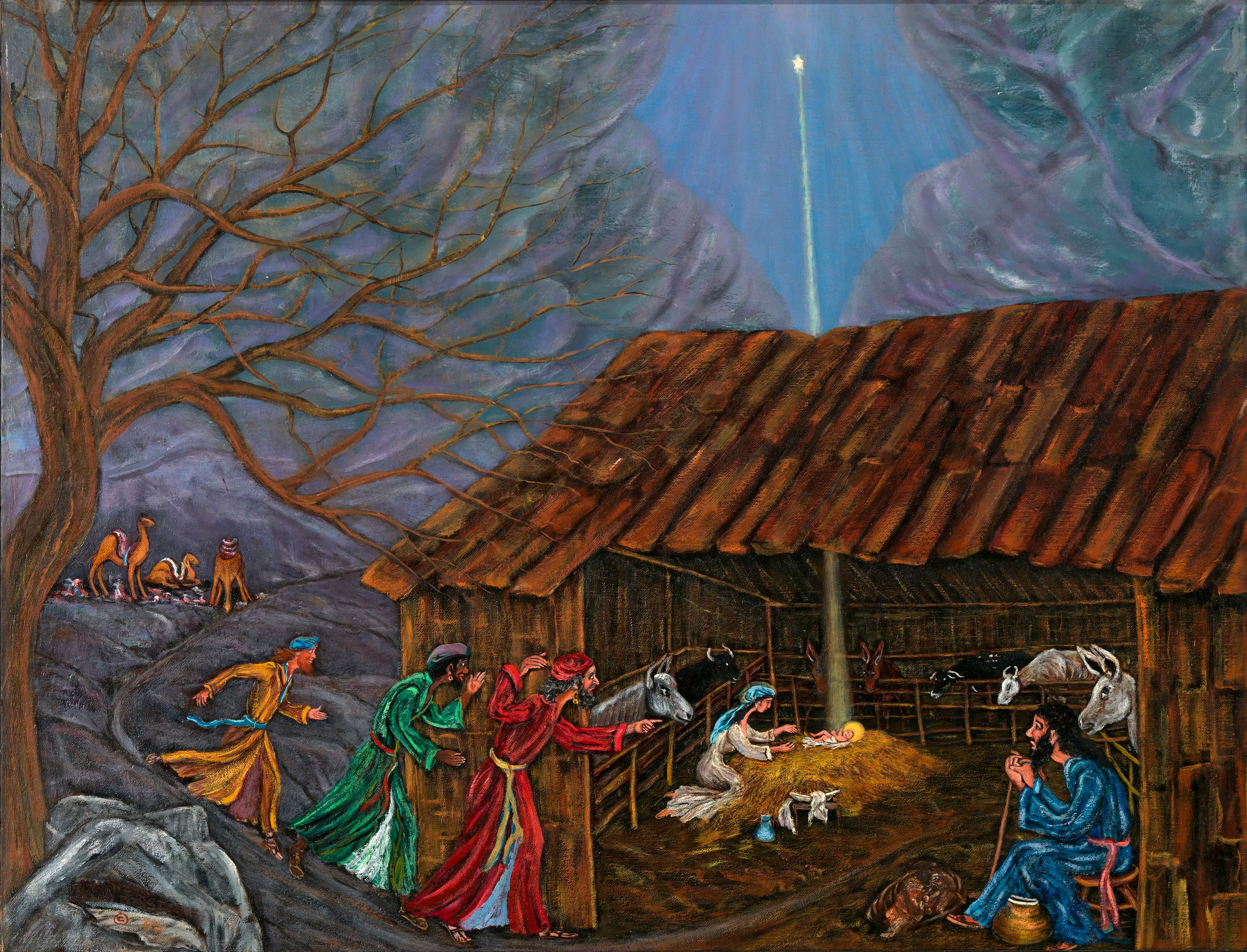
What did the heavenly hosts have in mind when they proclaimed “Peace on Earth” to the shepherds?
For many of us, the peace we want is passive. We want peace to be a state of being, a feeling; we want someone or something to change so that we experience peace. And we seek the kind of justice that avenges, punishes, and destroys.
But Jesus offers us an active peace rooted in how we see and act in the world. When we experience conflict, he calls on us to change. When he calls for justice, he calls for the type of justice that restores, reconciles, and makes us whole. It is in this frame of mind that I am brought to think about the paradox of a heavenly king finding warmth on his first night on Earth in a meager manger, in an otherwise little-known town.
It makes sense to me that God’s highest manifestation of love is an innocent, houseless child born in a stable filled with filth and straw.
I suspect on that night, if we were to stand outside that stable as Mary gave birth, we could hear both her weeping and her shouts of joy (see Ezra 3:9–11). There is always pain before a child is born, and in this child, God’s love becomes tangible in the midst of suffering. Peace is made flesh.
Jesus came into the world, not to give us the peace we want. Instead, he came to give us the peace we need.
Jesus was born into a dangerous world. His community was also in social, political, and religious conflict. The Roman Empire occupied Jesus’s homeland with violence and cruelty. Families faced divorce and estrangement. Poverty and disease ran rampant. Political, religious, and ethnic polarization divided the people of Israel. The Romans punished political dissent with death.
Like today, many of Jesus’s contemporaries assumed the end was near and prayed for deliverance from the conflicts that surrounded them. People felt helpless and begged God to send a Messiah who would save them, destroy their enemies, and usher in a time of peace, power, and prosperity.
During his first public sermon, Jesus drew upon a Messianic scripture in Isaiah to give us our first clue about how he would approach the topic of peace.
...The Spirit of the Lord is upon me, because he hath anointed me to preach the gospel to the poor;
This excerpt is provided for preview purposes. Full article content is available on the original publication.