Countering Russian Cruise Missiles and Long-Range Drones
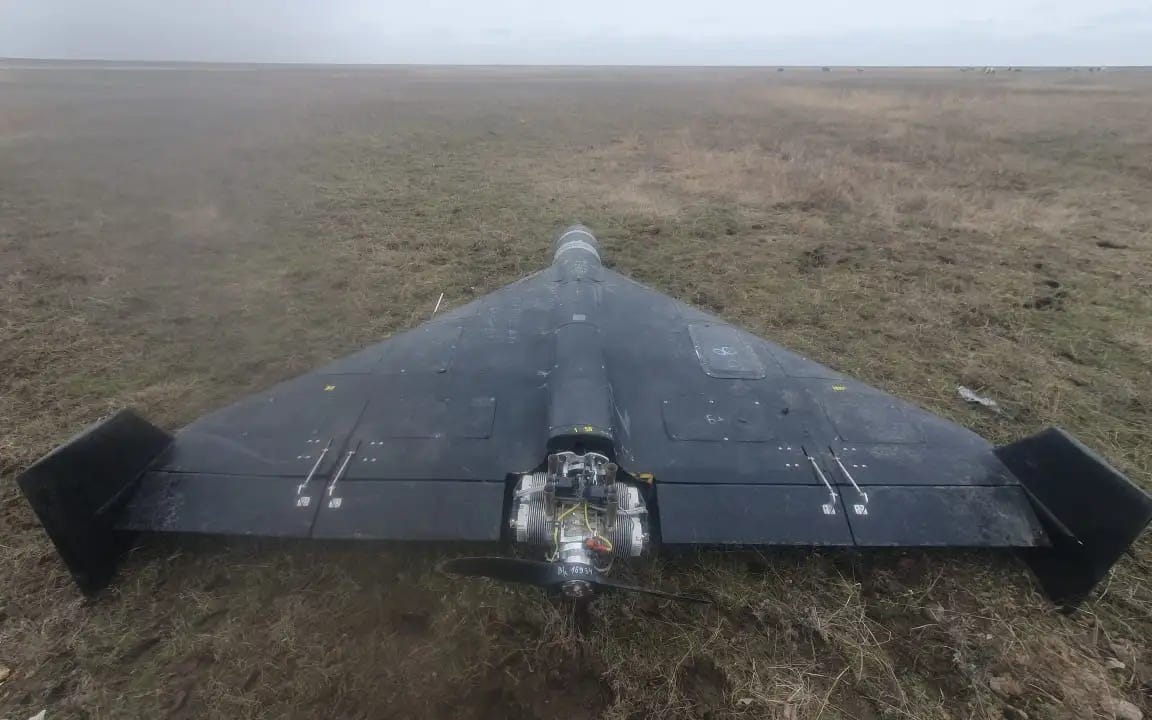
Over the past week, Russia has launched over 1,800 Geran-2 (the indigenized version of the Iranian Shahed-136) alongside decoy long-range drones. This marks a sharp increase in the average intensity of long-range drone attacks per day, peaking at 728 combined drones and decoys on 9 July. This is on top of dozens of cruise and ballistic missiles being launched at Ukraine.
Beyond the quantitative increase, Russia has recently introduced qualitative changes that both enhance the lethality of its long-range drones and make them harder to intercept (while likely also making them more expensive).
This post reviews recent developments in the long-range drone domain and assesses the capacity of the Western defense industrial base to respond to airbreathing missile threats, including Geran-2-type drones and land-attack cruise missiles.
It is the second part of my analysis of Europe’s missile defense capabilities in the context of Russia’s growing missile production. Last week’s post examined Russian ballistic missile capabilities and Western missile defense. You can access it here.
Qualitative Russian long-range drone and cruise missile developments
Recent reports indicate that Russia has increased the payload capacity of its Geran-2 drones. While earlier versions carried a 20–40 kilogram warhead, newer variants are equipped with payloads of up to 90 kilograms.
The lethal radius of a warhead scales with the cube root of its yield, so doubling or more of the payload does not automatically translate into a proportional increase in lethality. However, when combined with reported increases in overall and terminal velocity in some Geran-2 variants, resulting in deeper warhead penetration into the target structure, this has enabled Russia to greatly enhance the overall destructiveness of its long-range drone attacks.
In addition, debris has revealed that some Geran-2 drones now deploy terminal guidance seekers in the form electro-optical and infrared cameras, increasing their accuracy. Upgraded electronics improving their resistance to jamming efforts have also been reported.
When evaluating these developments, it's important to remember that such upgrades come at a cost. Increasing the drone’s velocity, for instance, likely requires a more advanced turbojet rather than a turboprop engine, which can significantly raise expenses. This eats into the budget and undermines one of the drone’s key advantages: its relatively low cost compared to more expensive missile systems. These enhancements, therefore, are not always an obvious or cost-effective choice.
However, the relative success of recent Russian long-range drone strikes indicate that Russia appears to have struck
...This excerpt is provided for preview purposes. Full article content is available on the original publication.