189. The Breezy Inequity of Trump v. Orr
Deep Dives
Explore related topics with these Wikipedia articles, rewritten for enjoyable reading:
-
Shadow docket
14 min read
The article discusses emergency applications and unsigned orders from the Supreme Court, which are central to the 'shadow docket' - the informal term for orders issued outside the Court's normal briefing and argument process. Understanding this practice is essential context for the procedural criticisms raised.
-
Rational basis review
11 min read
The article references the equal protection standard from Trump v. Hawaii about 'bare desire to harm a politically unpopular group' - this relates to rational basis review, the lowest level of judicial scrutiny. Understanding constitutional scrutiny levels illuminates the legal debate about transgender passport policies.
-
Administrative Procedure Act
12 min read
The article mentions the APA as one of the statutory bases for the plaintiffs' challenge. This 1946 law governs how federal agencies make rules and is fundamental to understanding challenges to executive branch policies like the passport sex marker requirement.
Welcome back to “One First,” a (more-than) weekly newsletter that aims to make the U.S. Supreme Court more accessible to lawyers and non-lawyers alike. I’m grateful to all of you for your continued support, and I hope that you’ll consider sharing some of what we’re doing with your networks:
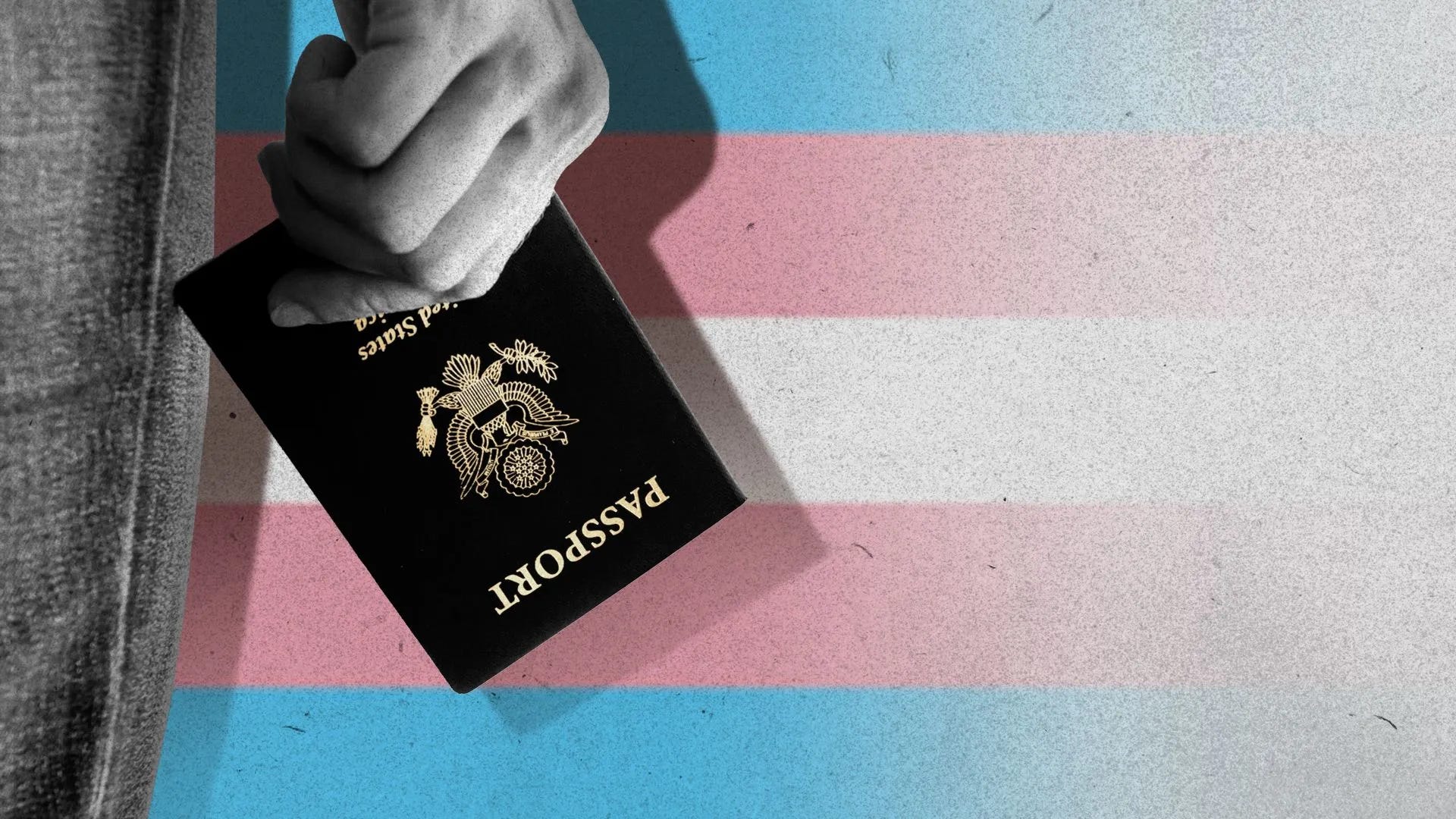
I was impelled to write yet another post (the fourth of this week) in response to the Supreme Court’s Thursday afternoon ruling in Trump v. Orr, in which the justices, over a dissent from the three Democratic appointees, put back into effect a Trump administration policy that requires all new passports to reflect the bearer’s biological sex at birth—even if they are transgender or non-binary.
Specifically, as I elaborate upon below, the ruling provides an unusually accessible example of two of the problematic moves a majority of the justices keep making with respect to Trump-related emergency applications (and no others): The assertion without any deep analytical support that the lower-court ruling at issue is inflicting “irreparable harm” on the executive branch; and the refusal to seriously consider whether that harm is more-than-outweighed by the harm it would cause to put the blocked policy back into effect. The ruling also includes one of the uglier sentences I’ve seen a majority of the Supreme Court sign onto in quite some time. Thus, beyond being the 24th consecutive grant of emergency relief to the Trump administration, the cryptic ruling in Orr is a reminder of just how bankrupt the Court’s proffered justifications are in these cases—both legally and in other ways, too.
The Background
The lawsuit in Orr arose out of a new policy the State Department adopted on January 22, requiring all passports issued from that date onward to reflect the bearer’s biological sex at birth. From 1992 to 2010, the Department had allowed individuals who had undergone surgical reassignment to have their passports reflect as much; from 2010 through this year, it allowed individuals to submit a doctor’s certification that they had received clinical treatment for gender transition. But the new policy reverted to the pre-1992 regime—based on an executive order President Trump signed that described transgender identity as “false” and “corrosive” to American society, and which asserted that “the policy of the United States” is “to recognize two sexes, male and female,” which it defined based on the sex assigned “at conception.”
The policy shift was challenged on
...This excerpt is provided for preview purposes. Full article content is available on the original publication.