Scaling Bio 005: Eli Lilly's Aliza Apple on Building Collaborative AI Infrastructure for Drug Discovery
Deep Dives
Explore related topics with these Wikipedia articles, rewritten for enjoyable reading:
-
Federated learning
14 min read
The article centers on TuneLab's use of federated learning as its core privacy-preserving technology. Understanding the technical foundations of how machine learning models can be trained across decentralized data without sharing raw information provides essential context for grasping why this approach is revolutionary for pharmaceutical collaboration.
-
Drug discovery
14 min read
The article discusses AI's role in transforming drug discovery but assumes readers understand the traditional process. Learning about the historical stages of drug discovery—from target identification through clinical trials—illuminates why AI infrastructure and data sharing could dramatically accelerate what has traditionally been a decade-long, billion-dollar endeavor.
-
Tirzepatide
11 min read
The article mentions Mounjaro and Zepbound (both tirzepatide) as Lilly's blockbuster drugs generating over $16 billion in 2024. Understanding the science behind this dual GIP/GLP-1 receptor agonist—how it works, its development history, and why it's been so successful for diabetes and weight management—provides concrete context for Lilly's drug discovery capabilities.
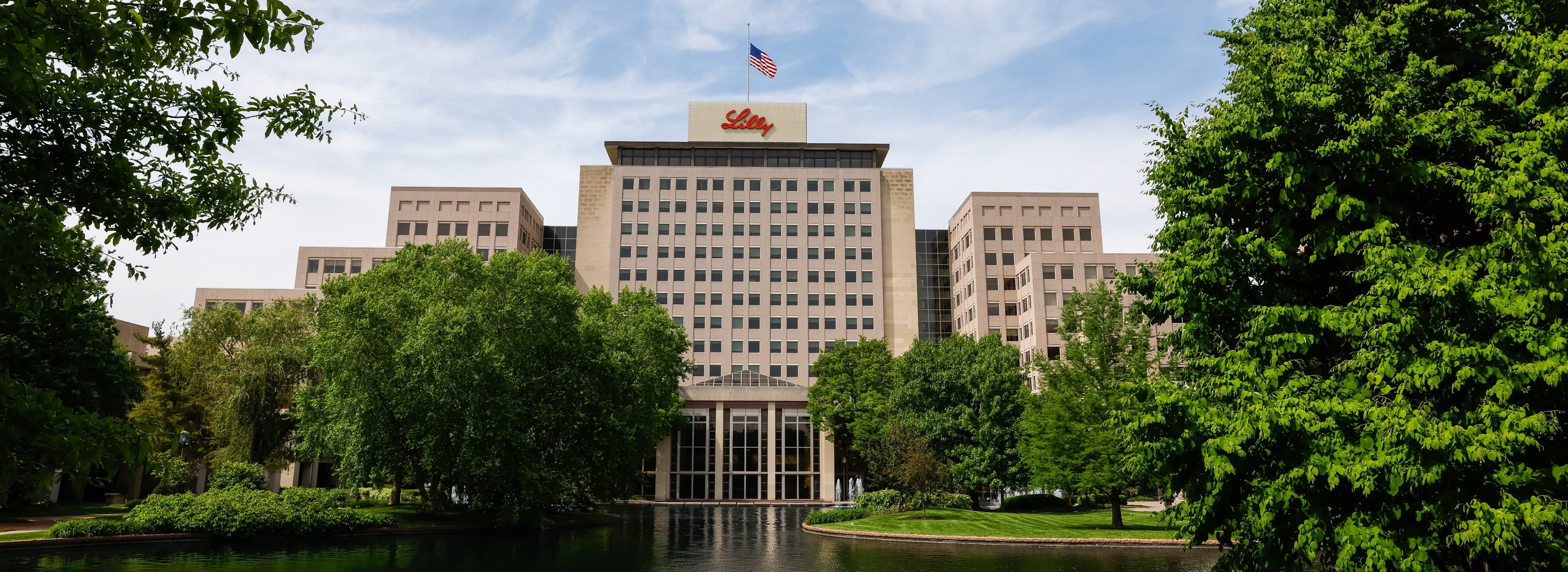
Eli Lilly is rethinking how the next wave of drug discovery will happen. Rather than guarding internal tools, the company is building shared infrastructure that others can tap into. Through TuneLab, launched in September 2025, Lilly is opening its proprietary AI models to biotech partners. These models draw on Lilly’s internal databases and many years of discovery work, and they run through a federated learning setup so partners can use their own data without giving anything away. As each group trains the models, the whole system quietly gets better.
Aliza Apple leads TuneLab as Vice President of Catalyze360 AI and ML. She has been shaping how Lilly works with the broader biotech community and how open collaboration can unlock new scientific ground. We asked Aliza to share how she sees this shift unfolding and what it means for the future of innovation at the intersection of pharma and AI.
In this conversation, we explore:
Why Lilly is opening access to proprietary models it spent decades building.
The push to solve complex in vivo prediction through the Insitro partnership.
The roadmap toward AI that autonomously selects and orchestrates its own models.
How adopting a “SaaS co-creation” mindset is finally breaking down historical data silos.
How federated learning builds trust by moving compute to data, not data to compute.
Background
About Eli Lilly
Eli Lilly and Company, founded in 1876 and headquartered in Indianapolis, is one of the world’s leading pharmaceutical companies with a legacy spanning nearly 150 years of medicine discovery and development. The company develops therapeutics across diabetes, oncology, immunology, and neuroscience, with 2024 annual revenues at $45B and over 40,000 employees worldwide1.
Eli Lilly’s portfolio includes some of the pharmaceutical industry’s most impactful medicines (revenues quoted for FY20242):
Mounjaro (tirzepatide) for Type II Diabetes: $11.45B
Zepbound (tirzepatide) for Chronic Weight Management: $4.9B
Trulicity (dulaglutide) for Diabetes: $5.25B
Verzenio (abemaciclib) for Breast Cancer: $5.3B
Eli Lilly’s AI Strategy
In October 2025, Lilly announced a partnership with NVIDIA to build what it claims will be “the most powerful supercomputer owned and operated by a pharmaceutical company,” featuring over 1,000 NVIDIA B300 GPUs. “We have a strong belief that the medicines of the future...are going to be discovered by AI, with the help of AI, over the next several years,” said Diogo Rau3, Lilly’s Chief Information and Digital Officer.
Lilly
...This excerpt is provided for preview purposes. Full article content is available on the original publication.