Classical statues were not painted horribly
Deep Dives
Explore related topics with these Wikipedia articles, rewritten for enjoyable reading:
-
Villa of Livia
12 min read
Linked in the article (8 min read)
-
Kouros
17 min read
Linked in the article (20 min read)
-
Boxer at Rest
10 min read
Linked in the article (6 min read)
This article originally appeared in the first print issue of Works in Progress, Issue 21. If you subscribe now, you will get the second print issue of Works in Progress when it is released in mid January. You can now buy a 12-month gift subscription to Works in Progress in the US, UK, Canada Australia, and the European Union.
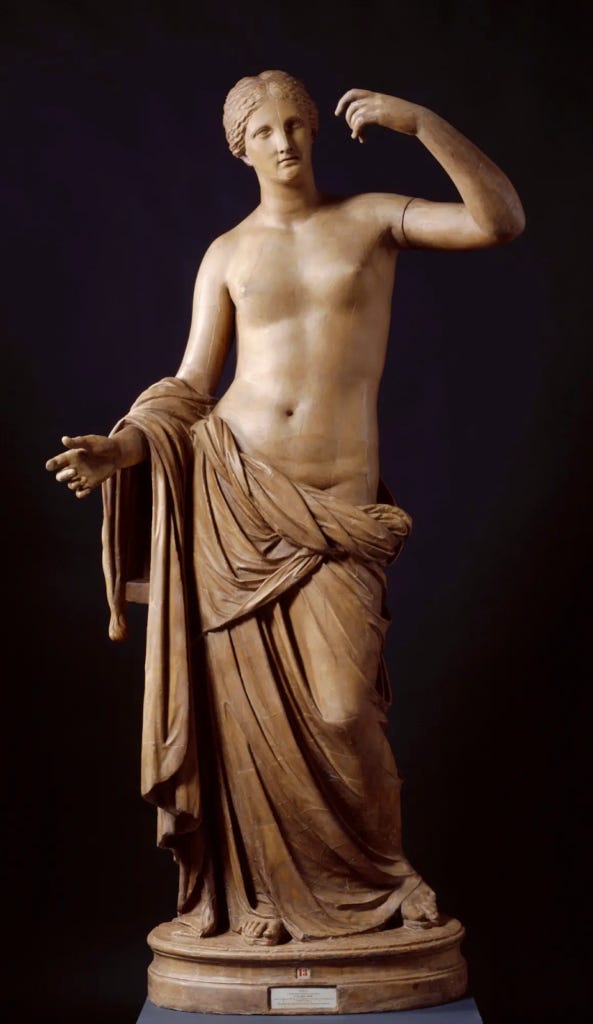
This is a Roman statue located in the British Museum.
It depicts the goddess Venus, perhaps originally holding a mirror. Something you will notice about it is that it looks great.
Below is a Greek sculpture from half a millennium earlier.
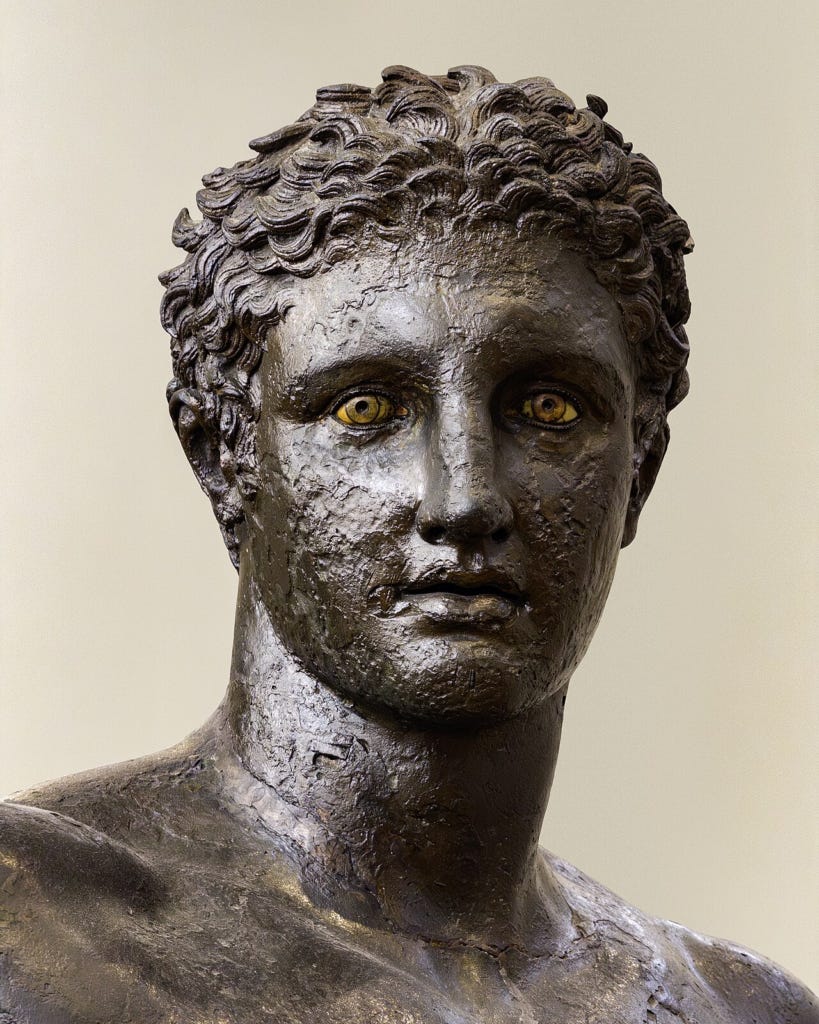
One of the treasures recovered from the first-century BC Antikythera shipwreck, this statue is composed of bronze with inlaid stone eyes. It has been variously interpreted as representing Paris, Perseus, or a youthful Heracles. Whatever interpretation is correct, it is a stunning work of art.
Here is a detail from a wall painting in Rome. This has undergone two thousand years of wear and tear, but it is still beautiful to us.
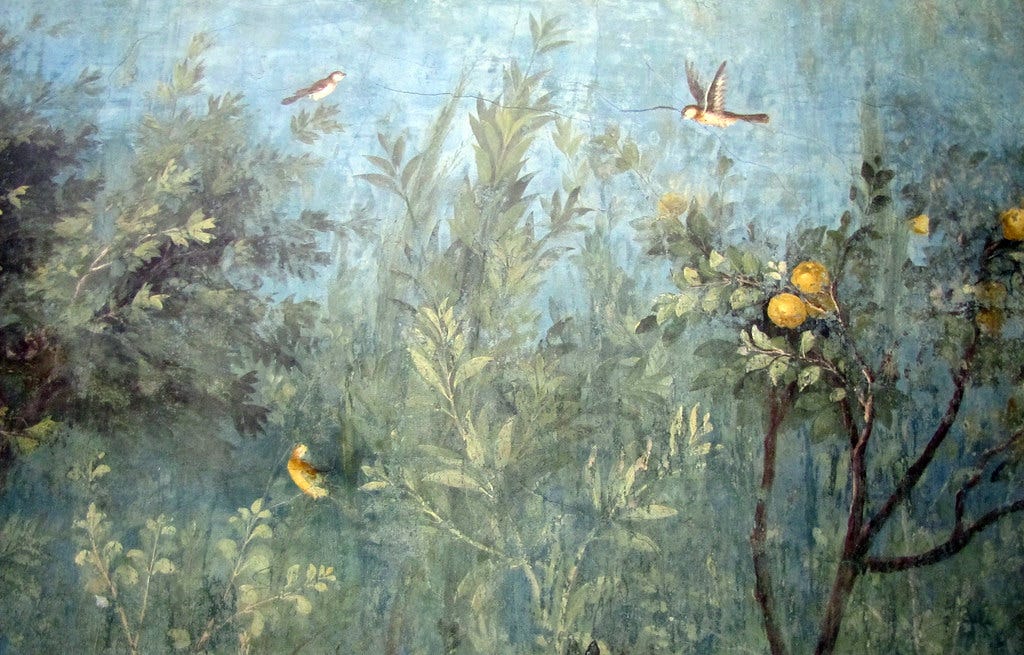
There is a general pattern to these observations. Ancient Greek and Roman art tends to look really good today.
This is not a universal rule. The Greeks weren’t always the masters of naturalism that we know: early Archaic kouroi now seem rather stilted and uneasy. As in all societies, cruder work was produced at the lower end of the market. Art in the peripheral provinces of the Roman Empire was often clearly a clumsy imitation of work at the center. Even so, modern viewers tend to be struck by the excellence of Greek and Roman art. The examples I have given here are far from exceptions. Explore the Naples Archaeological Museum, the British Museum, the Louvre, or the Metropolitan Museum and you will see that they had tons of this stuff. Still more remarkable, in a way, is the abundance of good work discovered in Pompeii, a provincial town of perhaps 15,000 people.
Here is another Roman statue, this time depicting the Emperor Augustus. It is called the Augustus of the Prima Porta after the site where
...This excerpt is provided for preview purposes. Full article content is available on the original publication.