IRIS-T SLM Reports Successful Ballistic Missile Intercepts
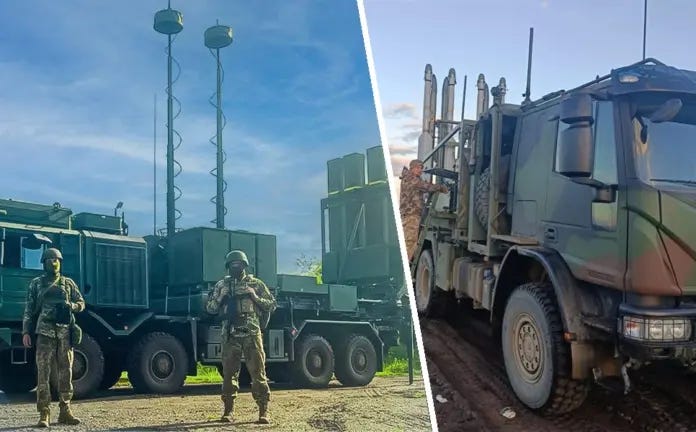
Picture: Ukrainian Air Force
According to Oleksii Makeiev, Ukraine’s ambassador to Germany, the German IRIS-T SLM system has reportedly succeeded in intercepting ballistic missiles, as revealed in an interview with European Pravda on July 28.
Citing Ukrainian military reports, Makeiev stated that IRIS-T SLM — though according to the manufacturer not originally designed for this purpose — had in some cases managed shot down ballistic missiles. He offered no details regarding the missile types or engagement conditions.
Diehl Defence has also declined to comment on specific incidents. A spokesperson only noted that “the customer has repeatedly expressed a satisfaction rate of 100 percent”, a figure likely reflecting the system’s performance against long-range drones and cruise missiles rather than ballistic threats.
Interception of ballistic missiles
The ability of IRIS-T SLM to counter ballistic missile threats is not a total surprise but likely highly dependent on the type of incoming ballistic missile and the conditions of the engagement.
The German Bundeswehr, for example, explicitly lists short-range ballistic missiles as part of the system’s engagement envelope. As stated on the official Bundeswehr website: “The IRIS-T SLM system from Diehl Defence is considered the most advanced, combat-proven, and modular air defense missile system for countering airborne attacks. It provides 360-degree protection from close range up to medium distances (effective range 40 kilometers) and engages enemy aircraft, helicopters, cruise missiles, and guided weapons, including short-range ballistic missiles”.
Without additional information, it is impossible to determine which specific ballistic missiles were intercepted in the cases cited by the ambassador.
According to well-informed sources, one key factor behind the air defense system’s high success rate is its use of Hensoldt’s TRML-4D high-precision radar. This radar allows the system to guide an IRIS-T missile with great accuracy toward its target before the interceptor’s terminal guidance seeker takes over, increasing the likelihood of a successful intercept.
The radar is integrated with long-range sensors, which provide early warning and target data to the IRIS-T SLM. This enables the system to detect and track a broad spectrum of ballistic threats. If paired with a sufficiently detailed threat database, the system could — in theory — generate effective fire control solutions against ballistic missile threats and guide interceptors accordingly, at least within the system’s optimal engagement envelope.
IRIS-T SLM-like systems intercepting ballistic missiles would also not be unprecedented. Missile defense systems have been able to intercept missile threats they are not nominally
...This excerpt is provided for preview purposes. Full article content is available on the original publication.