Biggest Updates in AI and Education This Week – Sept 8th Edition
Here are the top 10 things you need to know to stay up-to-date in AI in Education today:
1️⃣ The White House recently announced its Presidential AI Challenge, a nationwide competition inviting K–12 students, educators, and community teams to design AI-powered solutions that address real-world problems in their schools or communities.
Participants can enter one of three tracks: Track I (Proposal), where student teams develop a detailed plan for how AI could solve a community issue; Track II (Technical/Implementation), where student teams build and demonstrate a functional AI solution; and Track III (Educator Projects), where educators either create innovative ways to teach AI concepts or design AI-based tools to enhance classroom learning. Projects must be submitted by January 20, 2026, to be recognized with Presidential Certificates and can advance through state, regional, and national levels for awards and prizes.
2️⃣ OpenAI Edu Academy’s Global Faculty AI Project offers a free, open-access speaker series showcasing how professors worldwide are reimagining teaching with AI. More than 300 faculty across 30+ disciplines contributed ways they have incorporated AI into their classrooms, with 89 faculty videos made available to watch and inspire your own teaching.
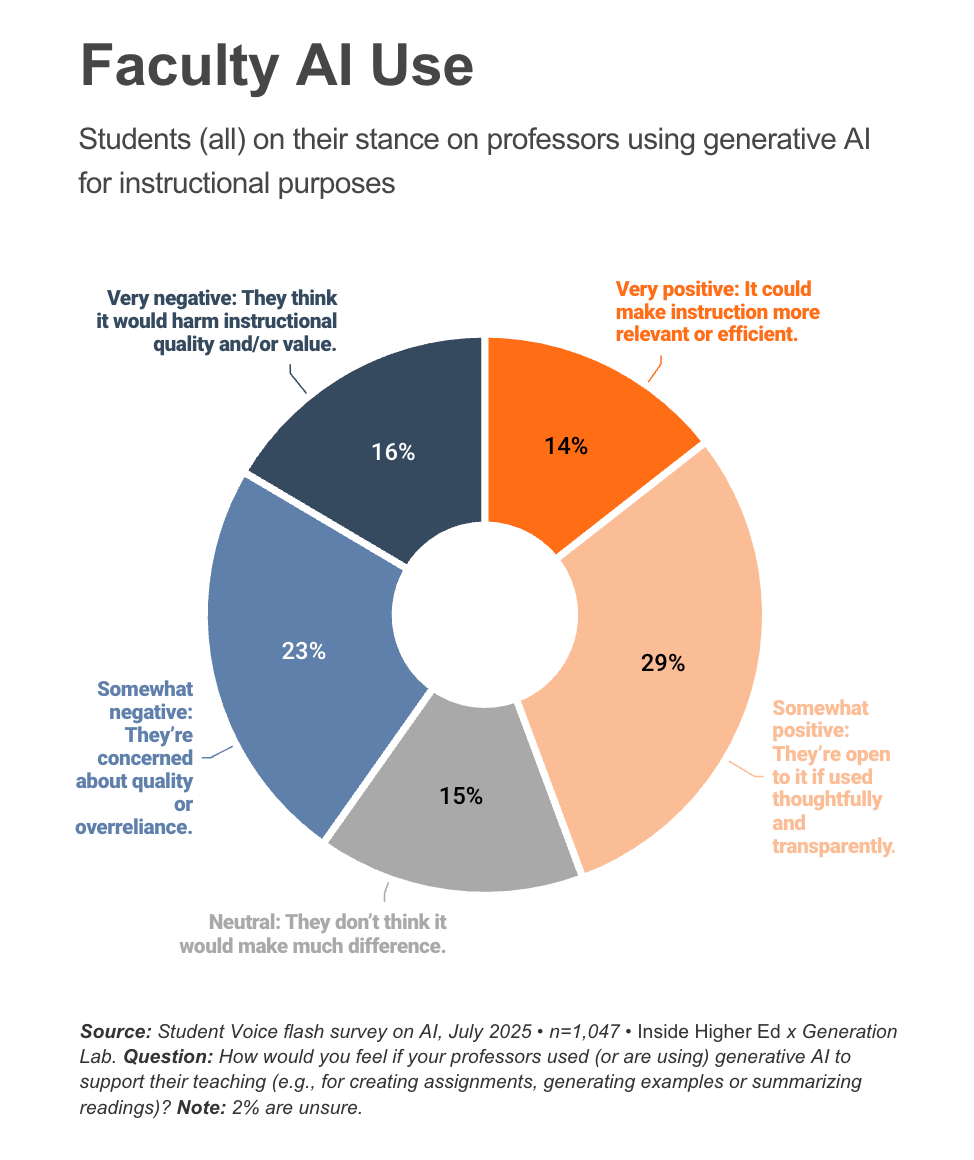
3️⃣ Inside Higher Ed’s student survey on generative AI offers a snapshot of how college students currently view AI in their academic experience. Findings revealed mixed opinions on faculty use of AI for teaching and highlighted student perspectives on its impact on critical thinking, academic integrity, and more.
4️⃣ In the Atlantic article, “I’m a High Schooler. AI Is Demolishing My Education,” a New York high school senior reflects on how AI is reshaping student life and learning. While tools like ChatGPT can support studying and exploration, the student observes widespread misuse: peers are copying annotations in English class, solving math problems instantly, and bypassing deadlines. These shortcuts, she argues, are eroding academic discipline, collaboration, and critical thinking, even affecting extracurriculars like debate.

5️⃣ Stanford education researcher Victor R. Lee explores what the data really reveals about students using AI to cheat in the Vox article, “I study AI cheating. Here’s what the data actually says.” His research shows that while AI has changed how students cheat, it hasn’t significantly increased the overall prevalence. In high
...This excerpt is provided for preview purposes. Full article content is available on the original publication.